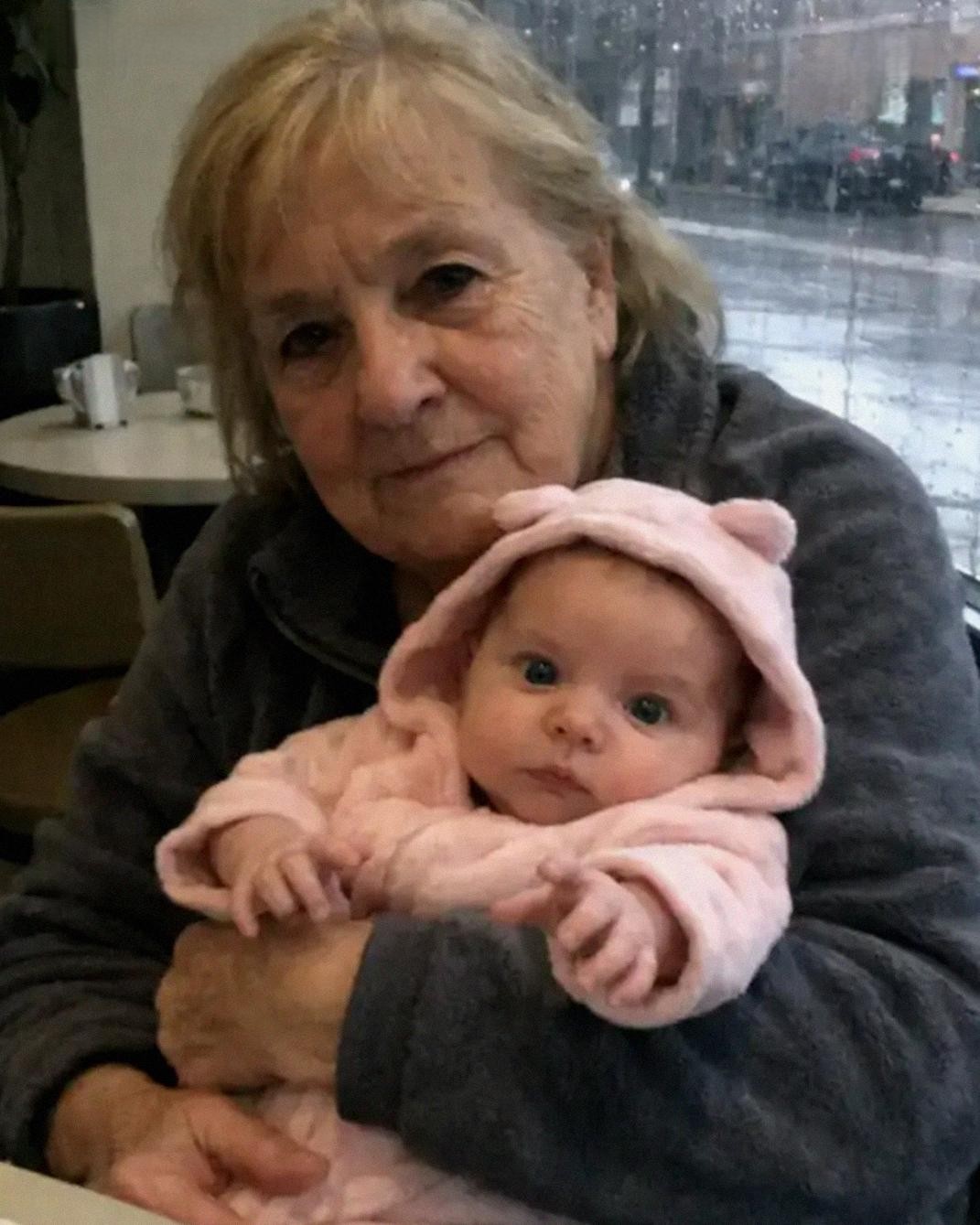
The heavy, iron-gray sky had threatened to break all morning, and by the time I stepped out of the pediatrician’s office, it finally gave way. Rain poured down in cold, relentless sheets, soaking through my thin jacket in seconds. At seventy-two, my joints protested every step, my back aching from a morning spent soothing a colicky infant. In my arms was Amy, my miracle granddaughter, currently expressing her displeasure with the world at the top of her lungs.
Amy is all that remains of my daughter Sarah, who died during childbirth a year ago—a grief that still presses on my chest like a weight. Her father, a man of paper-thin resolve, vanished shortly after the funeral, leaving only a meager check and a hole where a parent should be. It was just us: a weary grandmother and a demanding, vibrant baby, navigating a world that often feels too fast and too cold.
Spotting a café across the street, I dashed for shelter. Amber light spilled onto the wet pavement, a promise of warmth. I pushed open the door, and the comforting scent of roasted beans and cinnamon enveloped me. I collapsed near a window, fumbling with the diaper bag, trying to calm Amy.
But the sanctuary was an illusion. At the next table, a woman with a sharp, pinched face recoiled dramatically, glaring at us like we were a stain. “Ugh, this isn’t a daycare,” she muttered, loud enough to carry over the espresso machine’s hiss. Her companion added, “Yeah, why don’t you take your crying brat outside? Some of us have standards.”
My face burned with shame. I looked around for sympathy, finding only turned heads and glowing smartphone screens. I tried to explain, voice trembling, that I only needed five minutes to feed her. The woman scoffed. “You couldn’t do that in your car? If you can’t control your child, don’t bring her out.”
Then, a young waitress appeared, timid and nervous. “Um, ma’am… the manager thinks it would be better if you fed her outside,” she whispered, her eyes darting anxiously. I felt my chest tighten; in my day, struggling parents were met with help, not doors.
Suddenly, Amy, who had been screaming, went still. Her tiny hand pointed toward the door. Two figures entered from the storm—police officers. My heart dropped. Had I become a criminal for feeding a baby?
The older officer, Christopher, had a face like a weathered cliff—solid and dependable. The younger, Alexander, carried a quiet competence. They approached.
“Ma’am,” Christopher said, voice steady, “we were told there was a disturbance here. A manager named Carl called us.”
“A disturbance?” I gasped. “Officer, I just came in to feed her. She’s hungry. I was going to order, I swear.”
Carl appeared, emboldened. “She’s refusing to leave, officers. Upsetting my customers. Bad for business.”
Christopher looked at Carl, then at the woman, then at Amy, who stared at Alexander’s shiny badge. A slow smile spread across his face. “So, the ‘disturbance’ is a hungry baby?”
Alexander stepped forward. “May I?” he asked, reaching for Amy. I handed her over. Within seconds, she was sucking the bottle, tiny eyes closing in relief.
“Disturbance over,” Christopher announced. He turned to Carl. “Now, bring us three coffees and three slices of apple pie with ice cream. On one check. We’ll make sure she isn’t ‘disturbed’ further.”
The café fell silent. The woman’s phone suddenly seemed fascinating; her companion returned to his coffee. Carl, purple-faced, scurried to fulfill the order.
The next hour was the sweetest I had had in months. Christopher and Alexander listened to my story about Sarah, my life as a solo guardian, the struggles and small triumphs. They paid for the meal despite my protests, and before leaving, Alexander asked for a photo of me and Amy “for the report.”
Three days later, my cousin Elaine called, shrill with excitement. “Maggie! You’re the lead story in the Gazette! It’s all over the internet!”
Alexander’s sister, a local reporter, had turned our afternoon into a viral sensation. Outrage at a grandmother threatened with the police for feeding her grandchild spread through the community.
A week later, I returned to the café, curious but hesitant. A new sign greeted me: Babies Welcome. No Purchase Necessary. Carl was gone; the young waitress greeted me with a genuine smile.
“Everything’s on the house today,” she said, guiding me to the best table. As I fed a quiet Amy and savored a slice of pie, I realized something vital: sometimes the world isn’t as cold as it seems. Sometimes, it just takes a little rain and a couple of good men to remind us that we’re all part of the same village.