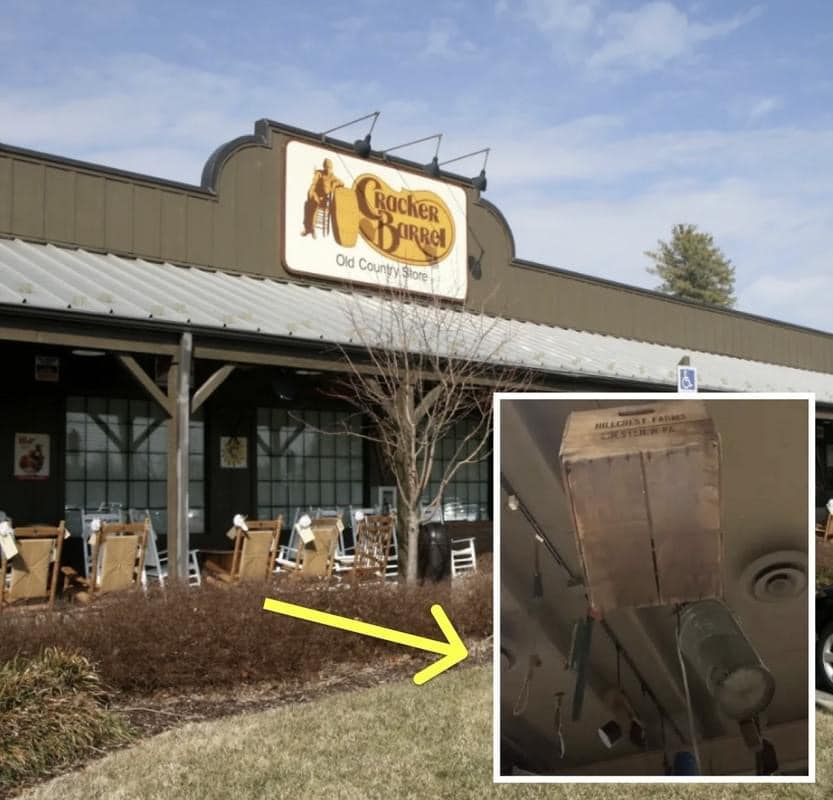
Within the landscape of American casual dining, few restaurants are as instantly recognizable for their visual identity as Cracker Barrel Old Country Store. For generations, the brand has carefully cultivated an atmosphere rooted in rural nostalgia—wooden porches, rocking chairs, warm fireplaces, and walls crowded with vintage Americana meant to evoke a simpler past. Yet maintaining spaces filled with thousands of historical objects also carries an inherent risk: items created in one era may be perceived very differently through a modern cultural lens. That challenge came into sharp focus recently at a Cracker Barrel location in Connecticut, where a single decorative detail sparked a broader discussion about historical symbolism and cultural sensitivity in public spaces.
The situation unfolded when a guest noticed an object hanging from the ceiling as part of a display of antique tools. The item was an old soldering iron, a common piece of equipment from earlier periods of manual labor. However, the way its cord was wrapped and suspended created a shape that many found disturbing. To numerous patrons, the silhouette closely resembled a noose—a symbol deeply associated with racial terror, violence, and historical trauma in the United States. Although the object was intended to represent craftsmanship and industry, its presentation unintentionally evoked a painful and oppressive chapter of American history.
Once the concern was brought to light, Cracker Barrel’s corporate team and local management responded quickly and decisively. Emphasizing that guest comfort and emotional safety are central to the brand’s mission, the company issued a heartfelt apology to anyone affected by the display. Leadership explained that there was no deliberate symbolism behind the way the tool had been hung; it was simply placed there as part of a decorative arrangement without awareness of how it might be interpreted. Still, the company acknowledged an important reality: lack of intent does not erase the impact. The soldering iron was immediately removed, signaling that the concerns were taken seriously and addressed without hesitation.
The incident soon expanded beyond the single location, sparking meaningful conversations within the local community and among Cracker Barrel patrons more broadly. In the days that followed, management engaged openly with guests and community members, listening to differing perspectives about how historical artifacts can influence a shared environment. For some, the tool remained just an antique. For others, its appearance triggered a deeply emotional response rooted in lived experience and collective memory. These conversations underscored a critical lesson for contemporary businesses: curating public spaces today requires not only historical knowledge but also cultural awareness and empathy.
Feedback poured in from customers across the country, many encouraging Cracker Barrel to reevaluate the decor displayed throughout its hundreds of restaurants. The company welcomed this input, reaffirming its longstanding goal of creating a “home away from home” that truly feels inclusive and welcoming. While the brand proudly draws inspiration from the past, leadership emphasized that its values are firmly grounded in the present. That means ensuring that every decorative element—no matter how authentic—fits appropriately within today’s social and cultural context.
Beyond addressing the immediate issue, the Connecticut episode offered a broader lesson in thoughtful design and corporate responsiveness. Public spaces belong to everyone, and the objects within them carry meaning beyond their physical form. Nostalgia, when shared, can be comforting—but when it unintentionally excludes or harms, it must be reconsidered. Cracker Barrel’s choice to act swiftly and without defensiveness helped prevent further division. By placing guest well-being above strict adherence to a decorative theme, the company demonstrated a level of empathy that resonates strongly with modern consumers.
As expectations around cultural awareness continue to rise in retail and hospitality, businesses are increasingly judged by how thoughtfully they navigate these moments. The resolution of this situation illustrates how companies can honor tradition while adapting to evolving sensitivities. Meaningful apologies, prompt corrective action, and genuine engagement with the community all play a vital role in maintaining trust.
Cracker Barrel has stated that it will treat this experience as an opportunity for growth. Moving forward, the selection and placement of vintage decor will likely involve broader perspectives to reduce the risk of unintended messages. The aim is to preserve the charm of the “Old Country Store” while ensuring that every guest feels respected and included.
Ultimately, the story of the Connecticut soldering iron highlights the power of dialogue. It began with one guest speaking up about discomfort and concluded with a company willing to listen, reflect, and adapt. In a time when public discourse can easily become polarized, this moment stands as an example of how businesses and communities can work together to improve shared spaces. By removing a single item, Cracker Barrel reinforced its commitment to inclusivity—showing that empathy and awareness are the most valuable tools any brand can possess.