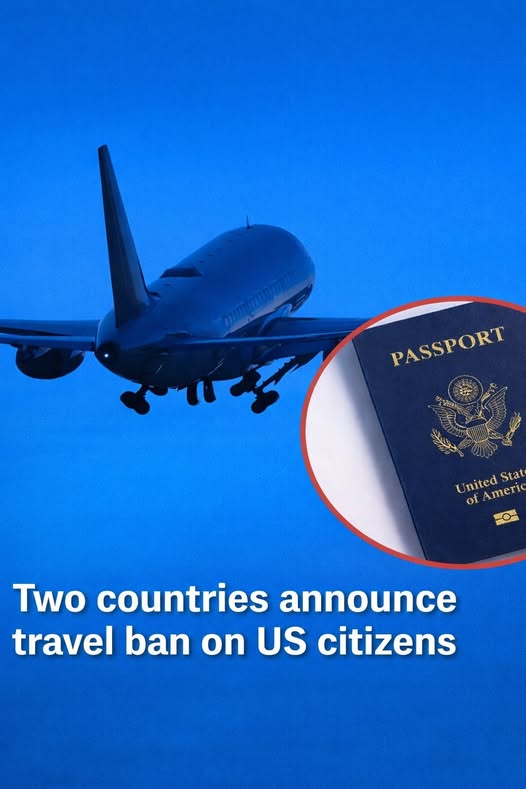
The geopolitical dynamics of West Africa are experiencing a profound transformation, measured less in military deployments or trade sanctions and more in the subtle, yet powerful, imprint of a passport stamp. For decades, the American passport symbolized near-unlimited access, granting holders the freedom to traverse the globe with ease. Yet, as 2026 progresses, a quiet but decisive diplomatic shift is emerging across the Sahel. Nations such as Mali, Burkina Faso, Niger, and Chad have begun enforcing stringent entry requirements for U.S. citizens, turning what was once a routine border crossing into a high-stakes assertion of sovereignty and political leverage.
This change is not merely bureaucratic. It is a deliberate response to long-standing inequities in global mobility. Leaders in these countries are rejecting a system in which Western citizens enjoy unrestricted access to the Global South, while their own nationals face steep fees, rigorous interviews, and arbitrary denials when seeking entry into the United States. By tightening their borders, these governments are signaling that reciprocity is no longer optional—it is a fundamental principle. In this view, a visa is not simply a travel authorization; it is a statement of equal standing and mutual respect on the international stage.
The human consequences of this policy shift are immediate and tangible. Families are being separated at border crossings, unable to reunite due to suddenly invalidated documents. Humanitarian workers, essential to relief efforts in a region frequently challenged by climate crises and conflict, are stranded or delayed. Infrastructure and development projects, meticulously planned to improve health and education, have stalled as critical personnel are denied access. The daily disruption underscores how geopolitical maneuvers ripple down to affect ordinary lives, turning high-level diplomacy into a direct human cost.
Washington has largely described these measures as “routine security updates,” but the rhetoric fails to capture the deeper grievances motivating the change. To Sahelian leaders, this is a test of dignity and respect. They are unwilling to accept a status quo in which their security concerns are secondary to Western convenience. As these nations navigate internal transitions and assert autonomy from historical Western influence, border control has become both a practical tool and a symbolic assertion of sovereignty. Travel policy is now being wielded as a mirror reflecting historical imbalances in the global order.
For scholarship recipients unable to reach their research sites and local collaborators whose projects are stalled, the consequences are acute. These individuals are collateral victims of a diplomatic standoff. Their experiences reveal a central truth about globalization: connectivity is not universal, and mobility remains a privilege for the few. The barriers U.S. citizens face in West Africa are not just physical—they are emblematic of a long-standing psychological and political divide.
Resolving this emerging border crisis will require more than technical fixes or faster visa processing. It demands the rarest commodity in modern diplomacy: candid, constructive dialogue that addresses historical injustices. Leaders in Mali, Burkina Faso, Niger, and Chad are seeking recognition that their borders, and their concerns, are equally legitimate. They are calling for genuine reciprocity in travel policy—a system that does not merely restrict but fosters mutual respect and shared security.
The path forward lies at the intersection of fairness, security, and historical awareness. Rebuilding trust requires moving beyond the rhetoric of “security necessity” to confront deeper questions of dignity. The United States and Sahelian nations must collaborate to create travel frameworks that protect borders without obstructing movement, acknowledging that freedom of travel is both a practical necessity and a symbolic assertion of equality.
As this standoff continues, West Africa sends a clear signal: the era of unilateral mobility is ending. The Sahel is asserting its place in global travel hierarchies, reminding the world that respect is a reciprocal obligation. Visa stamps are no longer just procedural marks—they have become symbols of sovereignty, dignity, and the broader struggle for equality in international relations.
Only through sustained partnership, acknowledgment of past inequities, and a commitment to fairness can a new travel paradigm emerge—one that honors national sovereignty while allowing essential exchanges of people, knowledge, and aid. Until then, the seemingly small mark of ink on a passport remains a frontline in the evolving struggle for equality on the world stage.