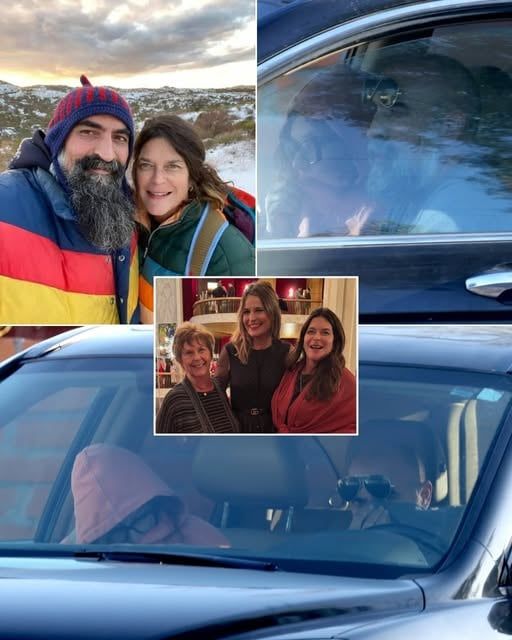
Annie Guthrie could barely lift her head as she stepped into the harsh Arizona sunlight. Her movements were slow, almost mechanical, as though the weight of the moment had pressed down on her spine. Beside her, her husband pulled the hood of his sweatshirt over his face, shielding himself from the swarm of cameras that seemed to materialize out of nowhere. The lenses clicked relentlessly, freezing private grief into public spectacle. This was no longer just a family crisis—it had become a national fixation.
Savannah Guthrie was suddenly gone from the airwaves. The familiar morning presence millions trusted to deliver the day’s news had vanished from her seat, replaced by an unbearable silence. The reason was every parent’s nightmare: her 84-year-old mother, Nancy Guthrie, was missing. Even worse, her Arizona home had been sealed off by investigators, transformed overnight into an active crime scene. Blood had been found inside. A disturbed trail marked the ground outside. And most chilling of all, a ransom note had surfaced—one that referenced intimate details, including what Nancy was wearing that night. Whoever took her hadn’t acted blindly. They had been watching.
The family moved through Tucson like figures trapped inside a storm they couldn’t outrun. Annie Guthrie and her husband, poet Tommaso Cioni, tried to keep their faces half-hidden as they drove through familiar streets now crawling with law enforcement and media vans. But anonymity was impossible. Overnight, they were no longer just relatives of a beloved television anchor—they had become central figures in a terrifying timeline. Tommaso was the last known person to see Nancy alive, having dropped his mother-in-law off at her home after what had seemed like an ordinary dinner. By morning, she was gone.
Inside Nancy’s house, investigators documented signs that shattered any hope this was a simple disappearance. Blood evidence suggested injury. Doors and entry points showed signs of force. Outside, a visible disturbance in the dirt and gravel hinted at a struggle—one that may have unfolded in the dark, unseen by neighbors. Each detail pushed the investigation further away from the possibility of confusion or wandering and closer to something far more deliberate.
As the hours passed, the response escalated. The local sheriff’s department coordinated with federal authorities, bringing the FBI into the search. Evidence teams combed through every inch of the property while analysts reviewed surveillance footage, phone records, and timelines. The ransom note loomed over everything—its specificity suggesting not only intent, but familiarity. Someone knew Nancy’s habits. Someone knew her routine. Someone had waited.
For Savannah, the crisis was deeply personal and painfully public. She stepped away from her role at Today and abandoned her Olympic coverage without hesitation, trading studio lights for interrogation rooms and prayer-filled nights. Instead of reading headlines, she was living one—pleading quietly for her mother’s return while trying to hold her family together. Friends, colleagues, and viewers rallied around her, but nothing could soften the terror of waiting for news that might change everything.
As daylight turned into sleepless nights, the Guthrie family clung to one another, suspended in a state of raw uncertainty. Every phone call sent hearts racing. Every knock at the door carried the possibility of answers—or devastation. Hope existed, but it was fragile, stretched thin between fear and faith.
The search continued, methodical and relentless, as Tucson held its breath. Somewhere between evidence markers and unanswered questions, a family waited—praying that the next update would bring clarity, not more dread, and that Nancy Guthrie would somehow be brought home.