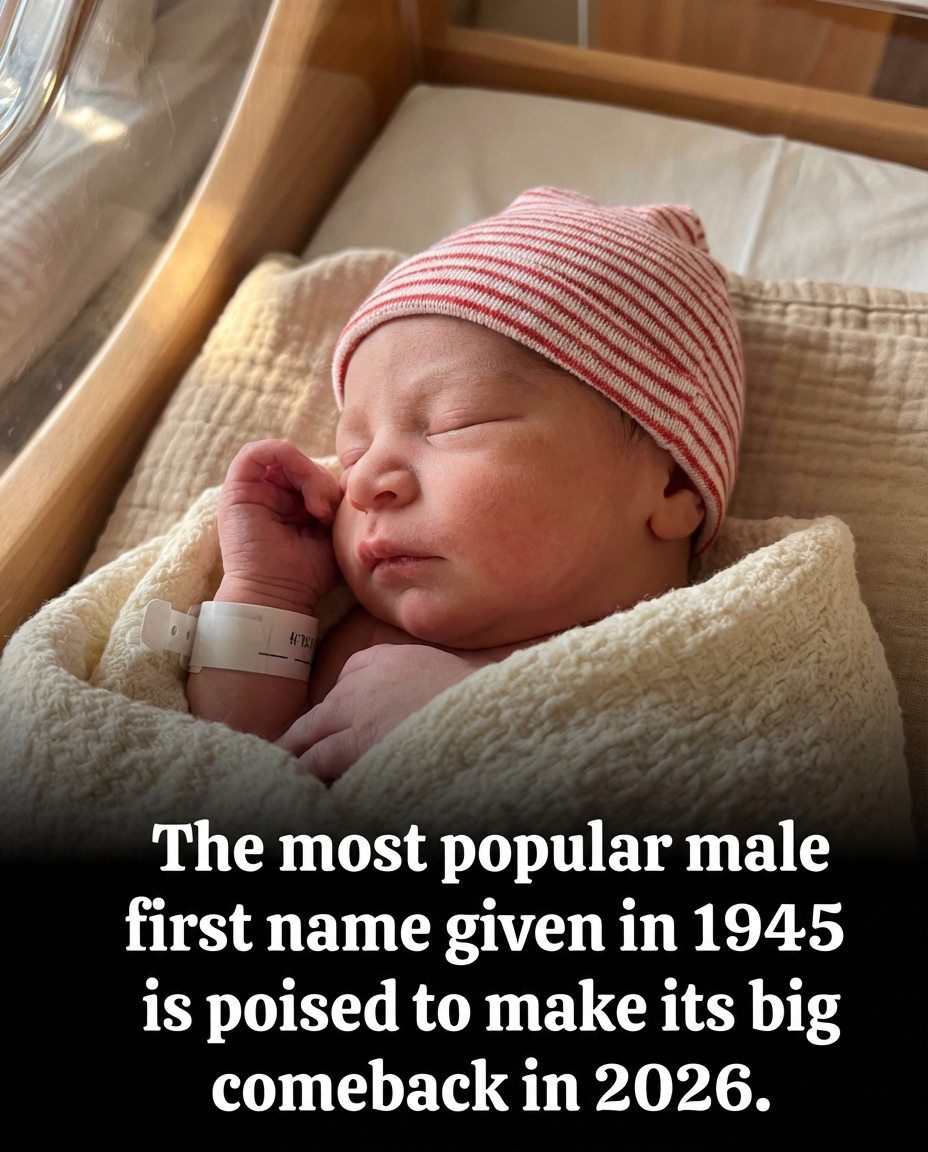
The landscape of personal names is rarely subject to sudden, overnight revolutions. Rather, it moves like a slow, imperceptible tide, shaped by the subtle currents of culture, family traditions, and the shifting values of society at large. Over time, these currents accumulate, creating visible patterns and long-term trends that reveal more than just the preferred syllables of a generation—they reflect collective aspirations, anxieties, and even unspoken ideals about identity, legacy, and belonging. In 2026, experts at the Official Book of First Names have identified a particularly intriguing and counterintuitive trend that is quietly reshaping birth registries across the globe. After years dominated by a push for hyper-modernity, maximal uniqueness, and digital-era “cool,” a wave of neo-vintage nostalgia is sweeping the naming landscape. Parents are turning away from the flashy, the futuristic, and the algorithmically generated, instead seeking names that carry the weight of history, timeless elegance, and authentic character.
At the forefront of this revival is a name that, until very recently, was largely consigned to the dusty annals of family trees: Marcel. For decades, Marcel was often viewed as the relic of a distant era. It conjured images of sepia-toned portraits, meticulously pressed suits, and the reserved formality of great-grandfathers whose stories were recounted in quiet living rooms. To younger ears, it sounded archaic, almost irrelevant—a name that seemed to belong to the past and, therefore, unfit for the rapidly evolving modern world. Yet it is precisely this long dormancy that has allowed Marcel to emerge in 2026 as the ultimate neo-vintage choice. Having been absent from the cyclical trends of the 1980s, 1990s, and early 2000s, it has avoided overexposure, and to contemporary parents, it now feels like a rediscovered treasure—timeless, elegant, and uncannily fresh.
The reemergence of Marcel is far from an isolated phenomenon. It is emblematic of a broader cultural movement in which parents consciously seek “grounding” for their children amid an era defined by technological acceleration, global transience, and the relentless digital noise of social media. In response to a world that seems increasingly fleeting and disjointed, parents are anchoring their children with names that feel stable, enduring, and meaningful. Names such as Augustin, Léonie, Eugène, Colette, and Marcel serve as linguistic bridges to a time perceived as simpler and more tangible, where character and personality were not mediated through algorithms or curated online personas. Marcel, in particular, exemplifies this dual appeal: it possesses historical depth while remaining accessible, practical, and versatile enough to work across cultures, languages, and generations.
Naming experts point to Marcel’s “quiet character” as central to its appeal. In a society dominated by performative visibility—where social media amplifies the loudest voices and every child’s existence can be broadcast globally—many parents are deliberately avoiding names that feel like self-promotional branding. They want a name that allows the child’s personality, abilities, and individuality to shine naturally, rather than demanding attention for its own sake. Marcel, with its soft, melodic consonants and understated cadence, projects intelligence, empathy, and a quiet strength. It is a “Goldilocks” choice—not so common as to fade into anonymity, yet not so obscure as to feel eccentric or burdensome. This balance, experts argue, is increasingly seen as the holy grail for Millennial and Gen Z parents, who seek authenticity over flashiness in every facet of life, from parenting choices to professional aspirations.
Beyond its melodic charm, Marcel also reflects a contemporary reevaluation of masculinity. For decades, baby boys were often given names that projected assertiveness, aggression, or unyielding strength, while softer or invented names were frequently deemed whimsical or ineffective. Marcel occupies a middle ground. It signals a modern ideal of masculinity that prizes emotional intelligence, sensitivity, and quiet confidence alongside competence and resilience. From toddlerhood to adulthood, Marcel ages gracefully. The same name is equally at home whispered in a nursery, announced at a university graduation, or listed on the credentials of a professional executive. For parents weary of “fast-fashion” trends in names—names that may peak in popularity for a single generation before fading—Marcel offers enduring utility, charm, and dignity.
Cultural versatility is another factor in Marcel’s resurgence. In an increasingly interconnected world, parents are looking for names that can cross borders effortlessly, blending seamlessly with multiple languages and cultural contexts. Marcel carries a distinctly European aura, conjuring visions of Parisian streets, French cafés, and Mediterranean coastlines. Yet it is also eminently accessible to English, German, and Spanish speakers alike, making it ideal for families with international ties, expatriates, or parents who value a name with broad global intelligibility. In this way, Marcel functions as a “global classic,” providing a sense of heritage and sophistication without tying a child to any one cultural or national identity.
The revival of Marcel is not purely aesthetic; it is laden with symbolic meaning. Choosing a name is one of the first—and arguably most significant—acts of parental curation. By opting for a forgotten or overlooked classic, parents are making a conscious statement about the values they hope to instill: respect for the past, appreciation for simplicity, and belief in endurance over trendiness. In rejecting the disposable, transient nature of contemporary naming trends, parents are expressing a desire for permanence, substance, and thoughtful intentionality. Each Marcel born in 2026 carries not just a moniker but a statement about family, history, and cultural continuity.
As more registries fill with Marcels, Colette, Léonie, and Augustin, the era of “Refined Traditionalism” becomes evident. This movement is not a retreat into the past out of fear or nostalgia but a strategic reassessment of what makes a name successful across time and context. Names like Marcel possess an inherent “vibrational” quality—they feel satisfying to say, balanced on the tongue, and pleasing to hear. The combination of consonant and vowel, the gentle rise and crisp ending, is almost musical, invoking a sense of harmony and reliability that resonates deeply with modern parents. In a world where much feels artificial, curated, and fleeting, a name like Marcel carries a tactile authenticity that is increasingly rare and sought after.
Furthermore, the rise of Marcel hints at broader societal currents in identity formation and personal expression. In an era where social and professional identities are increasingly fragmented across digital platforms, the stability and subtle elegance of a classic name provide psychological grounding. Names become more than labels; they are anchors, markers of belonging, and repositories of familial and cultural memory. Marcel functions not only as a personal identifier but as a signal of careful thought, deliberate choice, and intergenerational continuity.
The endurance of Marcel also underscores the cyclical nature of culture itself. Names frequently disappear from popular usage, only to be resurrected with new meaning and renewed relevance. What was once a marker of age and tradition becomes, when revived, a symbol of discernment, taste, and understated sophistication. Marcel is no longer merely a name associated with old men or bygone eras; it has become emblematic of forward-thinking parenting, signaling a commitment to elegance, practicality, and lasting value.
In conclusion, Marcel’s rise is both a cultural statement and a deeply personal choice for parents in 2026. It represents a desire to blend heritage with modernity, tradition with practicality, and subtlety with distinction. It embodies values of emotional intelligence, versatility, and endurance, offering a name that is at once rooted in history and attuned to the needs of a globalized, interconnected world. The name Marcel is poised to leave a lasting mark, not only in birth registries but in the identities and lives of those who carry it. It is a quiet revolution—one that reminds us that sometimes the most forward-thinking choice a parent can make is not to chase novelty, but to rediscover what has already stood the test of time. By embracing the elegance of Marcel, today’s parents signal a profound appreciation for names with soul, substance, and the timeless resonance of classic foundations. It is not merely a return of an old name; it is the emergence of a cultural ethos that prizes integrity, authenticity, and enduring beauty.