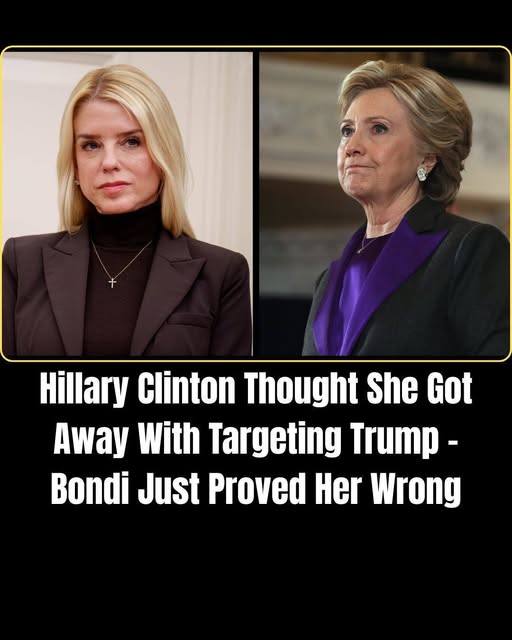
The emails in question were never intended to see the light of day. Originally drafted, exchanged, and buried in the secure servers of the Department of Justice and related agencies, they were the kind of internal communications that rarely escape the control of bureaucrats and career prosecutors. Yet now, after years of secrecy, those messages have found their way into the hands of Congress, setting off a political and legal firestorm that has captivated the nation. At the center of the revelations is a veteran FBI agent, a figure long respected for his service and integrity, who has come forward to testify that he faced direct threats, institutional pushback, and explicit warnings when he asked what many had quietly wondered for years: who truly funded the infamous Steele dossier. According to the agent, the inquiry he attempted to pursue was met not with cooperation but with obstruction, a pattern of behavior that points to a disturbing level of internal protectionism within the Justice Department.
The Steele dossier itself, compiled by former British intelligence officer Christopher Steele, contained numerous allegations concerning the 2016 presidential campaign, some salacious and all politically explosive. Its origins have long been the subject of debate, but the newly surfaced emails suggest that senior DOJ officials were fully aware that the dossier had been paid for, at least in part, by the Clinton campaign and the Democratic National Committee. Rather than addressing this issue transparently, those officials—according to the whistleblower—took steps to silence the agent, warning him off and effectively preventing the kind of inquiry that might have exposed political motivations behind an intelligence product that played a pivotal role in subsequent investigations. For the agent, the experience was both professionally and personally harrowing: he witnessed firsthand how the machinery of the Justice Department could be used to protect political allies while intimidating those who sought accountability.
Senator Chuck Grassley, a long-time overseer of DOJ and intelligence matters, has now thrust these long-buried decisions back into the national spotlight. Grassley’s efforts are not merely procedural; they are an attempt to force the Justice Department to confront a period of its history that it had hoped would remain hidden. The stakes are significant. Beyond mere emails, this is about the credibility of the institutions tasked with enforcing the law impartially. Grassley has emphasized that the whistleblower’s claims of “unambiguous concealment” cannot be ignored: when the agent raised concerns about the funding of the Steele dossier, senior officials did not simply dismiss him—they actively sought to prevent his inquiries from moving forward. To many observers, this represents a troubling pattern of selective enforcement, where the zeal of investigators and prosecutors seems contingent upon the political alignment of those under scrutiny.
The narrative takes on further weight when considering the subsequent Arctic Frost probe, the investigation that eventually led to former President Trump being charged with alleged election interference. The very same DOJ officials implicated in suppressing questions about the Steele dossier also played instrumental roles in steering Arctic Frost. Critics argue that this juxtaposition raises profound questions about consistency, fairness, and the potential for political bias within prosecutorial decisions. One side of the political spectrum appears to have been treated with leniency, while the other faced aggressive legal scrutiny—a disparity that fuels fears that the scales of justice may not merely tilt, but be actively manipulated to achieve partisan outcomes.
The broader picture is striking. The Clinton campaign and the DNC, who reportedly funneled more than a million dollars into opposition research, faced only modest civil fines for misreporting their spending. By contrast, the Trump investigation evolved into a sprawling criminal case, commanding extensive federal resources, generating relentless media coverage, and placing a former president under criminal scrutiny. Now, with the emails in Congress’s hands and a seasoned FBI agent publicly affirming the concealment he witnessed, the American public is confronted with an unsettling scenario: if these allegations are accurate, the Justice Department’s actions were not simply bureaucratic oversights or errors—they were calculated moves that benefited some political actors while disadvantaging others. The implication is stark: the mechanisms of accountability, transparency, and fairness within the federal justice system may have been compromised by partisan considerations at the highest levels.
Legal analysts, political commentators, and scholars alike are now dissecting the potential consequences. The disclosure of these emails could catalyze further investigations, congressional hearings, and possibly even internal DOJ reviews. Yet the broader societal impact is perhaps more profound: Americans are left grappling with the unsettling notion that the justice system, ideally a neutral arbiter, can be weaponized in ways that serve political interests rather than the rule of law. For the whistleblower agent, this revelation is deeply personal. His career, credibility, and sense of duty were tested in real time, and his willingness to come forward has provided a rare glimpse into the inner workings of an institution often shrouded in secrecy. It underscores the courage required to challenge entrenched hierarchies and the personal cost of confronting potential misconduct at the highest levels.
As the investigation continues to unfold, the country faces a tense moment of reckoning. Congress now holds the key documents, the emails that trace the flow of decisions, memos, and communications during a highly volatile period. Citizens are left to interpret the implications: Were the actions taken against the Steele dossier whistleblower isolated incidents, or do they represent a broader culture of selective enforcement within the DOJ? Was Arctic Frost pursued with impartiality, or did political motivations shape the investigation’s scope and intensity? These are not theoretical questions; they strike at the very heart of public trust in institutions designed to uphold the law.
Ultimately, the emails serve as a reminder that oversight and accountability are essential components of a functioning democracy. They expose how quickly the lines between legal obligation and political expediency can blur, and how critical it is for mechanisms of transparency to exist when the stakes are highest. With the whistleblower’s account corroborated by internal communications, and with Senator Grassley leading the charge to examine the record, the American public is left to confront a daunting, possibly unsettling truth: the pursuit of justice may not always be impartial, and the consequences of concealment and selective enforcement reverberate far beyond the confines of any single investigation. The nation now watches, debates, and waits, acutely aware that the resolution of these questions will not only shape historical understanding but could also redefine expectations for fairness, accountability, and the very meaning of justice in a polarized political landscape.