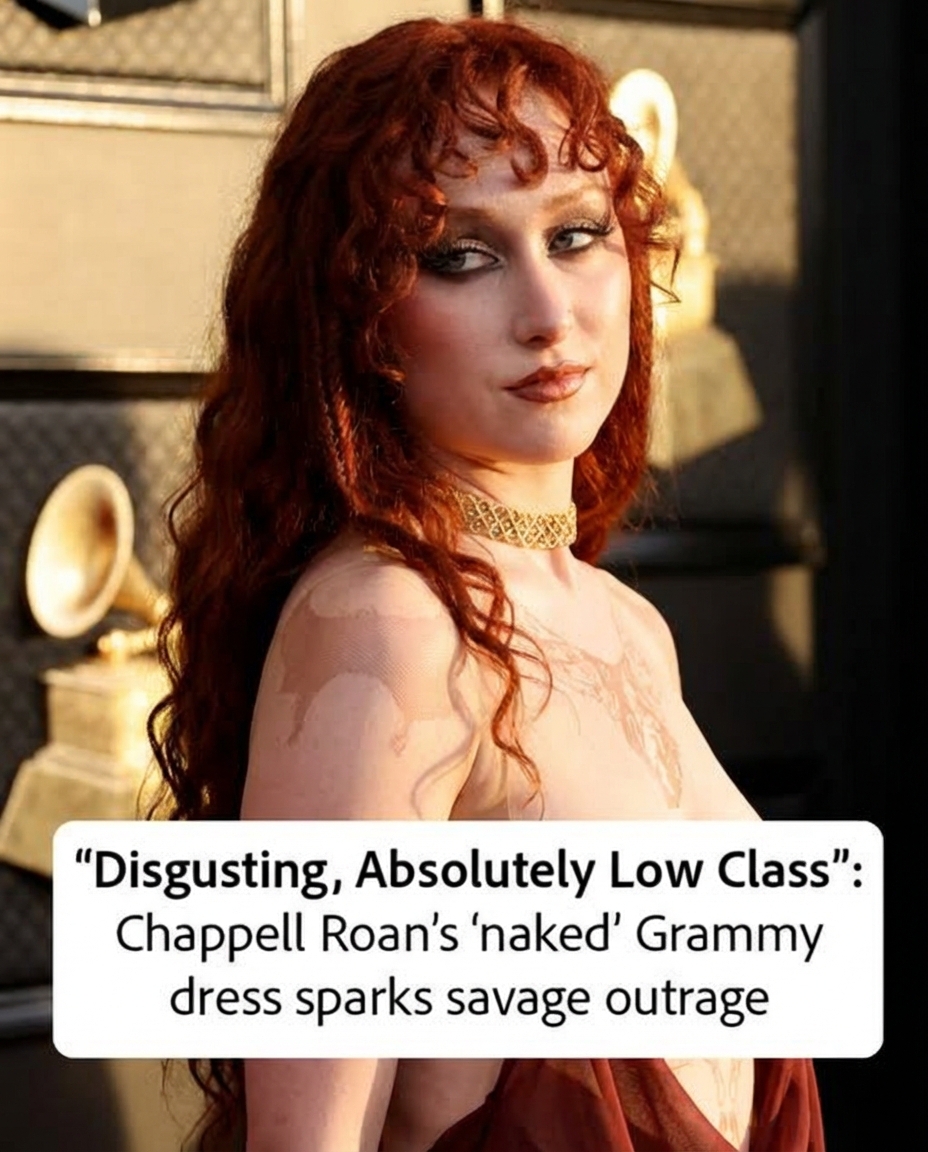
The 2026 Grammy Awards red carpet has long been a high-stakes stage where avant-garde fashion collides with mainstream celebrity culture, but this year, the energy reached unprecedented heights the moment Chappell Roan made her entrance. In an era dominated by instantaneous digital commentary, where public perception can pivot in minutes, Roan’s stylistic choices did more than capture attention—they ignited a polarized cultural debate that continues to dominate conversations long after the final “Album of the Year” trophy was presented and packed away. Known for a meteoric rise defined equally by her sonic innovation and her commitment to visual theater, Roan stepped into the flashing bulbs in a look that challenged conventional definitions of red-carpet elegance.
At the center of the discussion was a meticulously crafted sheer maroon gown, a piece of wearable architecture that felt both nostalgic and futuristic simultaneously. The garment was an intentional tribute to the late-1990s archives of the legendary fashion house Mugler, a brand celebrated for its theatricality, its sculptural approach to the female form, and its daring subversion of norms. Redesigned for the 2026 stage by creative director Miguel Castro Freitas, the gown showcased Mugler’s iconic “wasp waist” and sweeping, dramatic lines that evoked a sense of dark, operatic romance. To fashion historians and industry insiders, Roan’s ensemble was a triumph: they recognized in her a muse capable of embodying the gravitas of high-fashion history, praising the craftsmanship, the depth of oxblood hues against her pale skin, and the way her signature fiery curls complemented the overall effect. For supporters, the outfit transcended clothing—it was a statement on couture’s enduring power as a medium for storytelling.
Yet, as images circulated on social media, a sharply different reaction emerged. Vocal segments of the public and more traditionalist fashion critics quickly voiced disapproval, creating a stark divide in perception. Criticism largely revolved around the “naked dress” trend that has dominated awards shows for the past decade. Many detractors argued that the gown’s sheer, skin-baring design leaned toward shock value, claiming that the novelty of such looks has reached oversaturation. Conversations on platforms like X and Instagram debated whether these daring statements still challenge conventions or have devolved into predictable attempts at virality. Critics contended that when spectacle overtakes artistry, the true purpose of the evening—the celebration of music—is overshadowed.
This backlash tapped into a broader cultural fatigue with ultra-transparent red-carpet fashion. Over recent years, celebrities have increasingly embraced daring fabrics and revealing silhouettes as symbols of empowerment, self-expression, and body positivity. While some audiences celebrate these choices as bold declarations of autonomy, others yearn for a return to more “elegant,” conservative, or opaque styling. The discourse surrounding Roan became emblematic of this tension: should fashion provoke discomfort and push boundaries, or should it preserve the polished, aspirational aesthetic traditionally expected of such events?
For Roan, however, being at the center of controversy is nothing new. Since her emergence on the national stage, she has cultivated a “drag-inspired” pop persona that uses high-concept fashion to build a distinct visual world. For her devoted fans, the Grammy red carpet look was a natural extension of that identity. To them, Roan isn’t merely a singer who wears clothing; she is a performance artist, and the red carpet is her stage. The sheer maroon gown represented a fearless claim to space and confidence, a refusal to adhere to conventional celebrity norms. Supporters framed critics as gatekeepers uncomfortable with a woman unapologetically asserting her presence.
The conversation also highlighted the complexities of celebrity styling in the contemporary landscape. Miguel Castro Freitas, tasked with merging Mugler’s historic legacy with Roan’s modern persona, opted for a deep maroon palette over more traditional black or metallic shades, creating a look simultaneously grounded in moody sophistication and provocative transparency. Industry observers noted that such tension is often intentional: in today’s attention-driven economy, a gown that evokes universal approval rarely generates the same buzz as one that inspires debate. By sparking a “fierce fashion discussion,” Roan and Freitas ensured that both the Mugler name and Roan’s brand dominated the public’s attention that night.
Beyond aesthetics, the discourse has also taken on philosophical dimensions regarding the role of red-carpet appearances. Some commentators suggested that award shows establish clearer dress codes to prevent fashion spectacle from overshadowing musical artistry. Yet, historical precedent contradicts this approach. The Grammys have long been home to iconic and boundary-pushing fashion—from Cher’s feathered headdresses to Lady Gaga’s infamous meat dress. To label Roan’s ensemble as “too much” is, in essence, to disregard the music industry’s legacy as a platform for bold, provocative, and avant-garde expression.
As days passed, the conversation showed no signs of abating. Fashion publications published in-depth essays analyzing the Mugler influence, while daytime talk shows debated the merits and drawbacks of sheer trends. Through it all, Roan remained composed, embracing the visibility to highlight her Grammy nominations and upcoming projects. Her adept handling of the media storm reflects a sophisticated awareness: in 2026, generating discussion—even controversy—serves as a form of cultural currency.
Ultimately, the debate surrounding Chappell Roan’s Grammy gown illuminates more about society than it does about the artist herself. It underscores a collective struggle with public nudity, artistic expression, and the commercialization of spectacle. Whether the gown is admired as a masterful nod to fashion history or criticized as a bid for attention, it accomplished what all great art strives to do: it elicited a reaction. On a night devoted to celebrating influential voices in music, Roan demonstrated that commanding presence requires no microphone. She succeeded in making the world observe, debate, and reflect—and in the high-stakes theater of the red carpet, that is a triumph. The maroon gown is destined to be remembered not merely for its audacity or beauty, but as a lightning rod that captured the cultural zeitgeist of the evening.