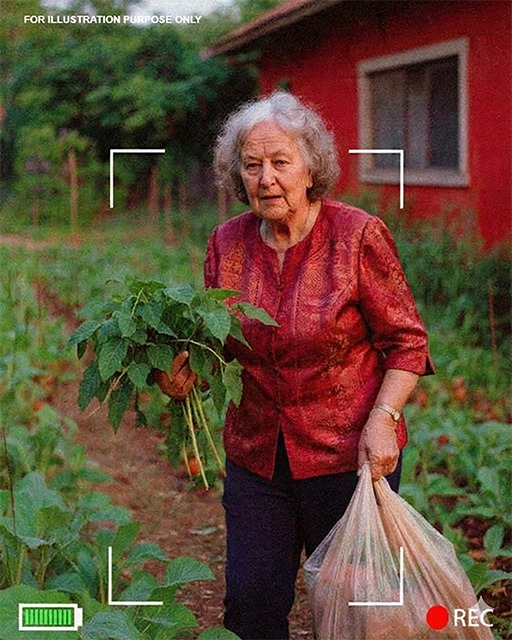
I never imagined that gardening would become my lifeline.
At sixty, seven years into widowhood, I had tried countless ways to fill the deafening quiet that settled over the house after Arthur passed. I joined book clubs I barely enjoyed, volunteered at church more out of routine than passion, and filled my evenings with the static hum of television just to drown out my own thoughts. Friends suggested hobbies with good intentions, yet nothing ever stuck—until I finally let my hands touch the soil.
Arthur had always joked that I was incapable of keeping anything alive. “You’ve got the opposite of a green thumb,” he would tease whenever a houseplant wilted under my care. He was practical, methodical, the one who mowed the lawn, fixed leaky faucets, and believed that anything worth growing demanded patience and consistency. When he died, patience became all I had in abundance, and consistency was all that remained of my life’s rhythm.
One restless spring morning, driven more by boredom than inspiration, I cleared a small patch of earth behind the shed. It had been ignored for years, but to me, it felt like a blank page. I planted tomatoes, cucumbers, and peppers with little expectation, spending nights watching tutorials and making every beginner’s mistake imaginable. I talked to the plants as though they could respond. Slowly, stubbornly, they began to thrive.
By the second year, the garden had flourished. Tomato vines wound around their supports, strawberries spilled like tiny rubies, zucchini leaves fanned wide and confident, and a lemon tree demanded constant care from its pot near the fence. I treated the garden like a beloved pet—checking soil moisture, dusting leaves, and shielding the plants from harsh weather. It became my sanctuary.
Each morning, I stepped outside with tea in hand, breathing in the earthy scent and letting the sun warm my shoulders. Here, I felt closest to Arthur. I spoke to him aloud sometimes, sharing a new blossom or asking if he thought the tomatoes were ready. It was my private ritual, quietly structuring my days and giving them purpose.
Then, one morning, I found devastation.
I had gone out for a few ripe tomatoes, basket tucked under my arm. The first row stopped me cold. The vines were bare, where plump red fruit should have hung. I moved closer. Cucumbers were gone. Strawberries vanished. Broken branches littered the soil, and the lemon tree had been stripped of its new fruit.
For a moment, I froze, hands trembling. I told myself raccoons must be responsible. But the cuts were clean, precise. This wasn’t chaos—it was deliberate. Someone had been in my garden.
Days passed, and it happened again. And again. By the fourth occurrence, denial was impossible. Someone was systematically stealing from the one place that had healed me. Each loss shook me, not because of the produce, but because my sanctuary had been violated.
I confided in my daughter Helen during a phone call. She was busy with her own family but understood the garden’s importance.
“That’s awful, Mom,” she said, sharp with concern. “You should call the police.”
“For vegetables?” I replied, voice faltering. “It sounds ridiculous.”
“It doesn’t matter,” she insisted. “It’s yours.”
I hesitated. I wanted no conflict, didn’t want to be the lonely widow making a fuss. But I had my suspicions.
Denise, my next-door neighbor, had moved in three years prior. She was around my age, lived alone, and always seemed too curious about my yard. She complained about my oak tree leaves, the sound of my mower, and the jasmine’s fragrance. She often remarked, “That’s a lot of food for one person,” or, “It would be a shame if it all went to waste.” Her words had unsettled me from the start.
One sleepless night, I watched from the window. Hours passed. Then, a shadow slipped through the gate.
Denise.
She moved through my garden efficiently, basket in hand, clipping and plucking as though she belonged. Watching her felt surreal, like witnessing a stranger walk into my living room. Anger surged, hot and sharp. But I waited. I needed proof.
The next morning, I acted. With my grandson’s help, I installed a small security camera. I also sprinkled a harmless, telling powder—flour mixed with bright green food coloring—over the plants. Whoever touched them would carry evidence.
That night, the camera captured everything.
The next morning, Denise’s sleeves and hands bore bright green streaks. Proof.
I walked over calmly. “Good morning, Denise.”
She jumped. “Oh, hello.”
“Been gardening?” I asked lightly.
She frowned. “What?”
I nodded to her stained sweatshirt. “Someone’s been stealing from my garden.”
Her face drained. “That’s absurd.”
“Is it?” I said, showing her the footage.
She tried to deflect, but I stopped her. I explained what the garden meant to me—how it had saved me, tied me to my late husband, and gave me purpose. I gave her a choice: apologize, replace the stolen produce, and stay out of my yard, or I would bring the evidence to the police.
She complied.
A week later, she showed up with bags of cheap groceries. I handed them back.
“I don’t want your groceries,” I said evenly. “I want respect.”
Word spread quickly. Neighbors distanced themselves from Denise, the fence line quieted, and my garden remained mine.
That autumn, harvesting the final tomatoes, I felt peace settle in. I had defended what mattered. Denise assumed weakness because I was a widow. She was wrong.
Grief had not broken me. It had taught me what was worth protecting. My garden, my sanctuary, would never be trampled again.