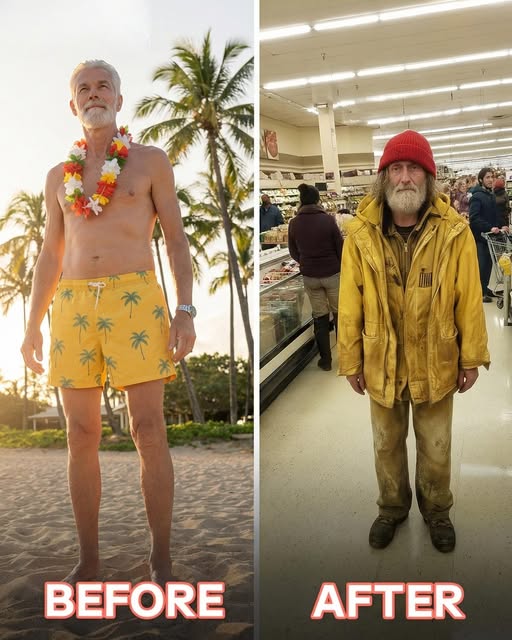
My name is Hutchins, and I am ninety years old.
For seven decades, I built something most people know well—often before they ever know me. It started modestly after the war: a small grocery tucked into a shadowy corner of the city, one narrow aisle, one cash register, and me handling every task myself. Over time, that single store grew into Texas’s largest grocery chain. Hundreds of locations. Thousands of employees. Wealth beyond anything I could have imagined as a young man mopping floors at sunrise and counting spare change late at night.
People like to believe success fills every hollow space in a life.
It doesn’t.
My wife passed away in 1992. We never had children. No birthday parties littered with ribbons and cake crumbs. No grandchildren echoing through hallways. Only a massive house that magnified my loneliness—fifteen thousand square feet of quiet. Cold marble floors that seemed to chill more deeply with every passing year.
One sleepless night, surrounded by that silence, a question refused to leave me alone:
Who should inherit all of this when I’m gone?
I’d watched families collapse over money. Warm embraces at funerals, legal battles days later. People who smiled at you while privately calculating what your death might be worth. I wanted no part of that ending. If what I built was going to outlast me, it needed to belong to someone who valued people more than control.
So I chose to vanish.
Not gently. Not conveniently.
I hacked my hair short, glued on a grimy, uneven beard, and pulled on torn clothes reeking of neglect. I smeared dirt across my skin, took an old cane, and finished by dousing myself in sour milk. When I looked at my reflection, I didn’t see a wealthy founder.
I saw someone society prefers to ignore.
Exactly what I intended.
I walked into my flagship supermarket—the very store where my name sat engraved on a bronze plaque near the entrance. Everything gleamed: spotless floors, bright lighting, seamless efficiency. A monument to a lifetime of work.
No one recognized me.
The reactions came quickly. Glances filled with discomfort. Wrinkled noses. Thinly veiled contempt.
A cashier leaned over and muttered, “He smells awful.”
A man drew his child closer and whispered, “Don’t look.”
Then a floor manager approached—a man I had personally promoted years earlier.
He didn’t ask if I needed help. He didn’t soften his tone.
“You need to leave,” he said sharply. “You’re making customers uneasy. We don’t want your type here.”
Your type.
I had built the system that empowered him. Signed his promotion. Paid for every light shining above his head.
Yet what hurt wasn’t the insult.
It was the clarity.
This was how my empire behaved when it believed no one important was watching.
I turned toward the exit, my experiment already confirming my fears.
Then someone took my hand.
Firmly. Purposefully. As if I mattered.
I turned.
She was young—maybe mid-twenties—with worn sneakers, a faded apron, and hair pulled back without concern for appearances. Her name tag read Maria. She’d been stocking shelves nearby and had clearly seen everything.
She met my eyes and asked softly, “Sir, are you alright?”
No condescension. No judgment. Just genuine care.
Before I could answer, she placed something in my palm.
A granola bar.
“I don’t have much,” she whispered, “but you shouldn’t be hungry.”
The manager snapped her name. “Maria, back to work!”
She nodded calmly. No protest. No scene. Before walking away, she leaned in and said, “Please take care of yourself.”
And then she was gone.
I stood there holding that granola bar as if it were priceless.
No cameras. No praise. No audience.
Just a choice made when no one was watching.
I left the store silently.
That night, she occupied my thoughts—not because she bent company rules, but because she followed something far more important. Something most people abandon early in life because it’s inconvenient.
Over the following weeks, I visited other stores in different disguises.
The pattern repeated.
Indifference justified as policy. Cruelty hidden behind professionalism. Rules enforced without compassion.
And every time, Maria’s face returned to me—quiet bravery, kindness without calculation.
I had my legal team look into her discreetly.
Single mother. Two children. Works double shifts. No complaints. No disciplinary records. Volunteers at a food pantry on weekends. Never once sought praise.
She didn’t know who I was.
But I knew exactly who she was.
A month later, I invited her to corporate headquarters.
She almost declined—afraid she’d done something wrong.
When I entered the room clean-shaven and dressed in a tailored suit, confusion crossed her face. Then recognition. Then shock drained the color from her cheeks.
“It was you,” she whispered.
I nodded.
She immediately began apologizing—explaining herself, promising it wouldn’t happen again.
I stopped her.
“You passed,” I said.
She stared. “Passed what?”
“My final test.”
I told her everything. The disguises. The visits. The question that haunted my nights. How compassion shown without witnesses mattered more to me than profits ever had.
Then I told her she would inherit the majority of my estate—with one condition: that the business invest in its workers, train with humanity, support communities, and write dignity into every policy.
She broke down in tears.
She didn’t ask how much.
She asked, “Are you certain?”
In that moment, I was.
Money cannot fill an empty house. It cannot silence loneliness.
But knowing that everything I built will live on through someone who chose kindness when it cost her something—that finally gave me peace.
For the first time in years, I slept soundly, without the echo of my own footsteps following me through the dark.