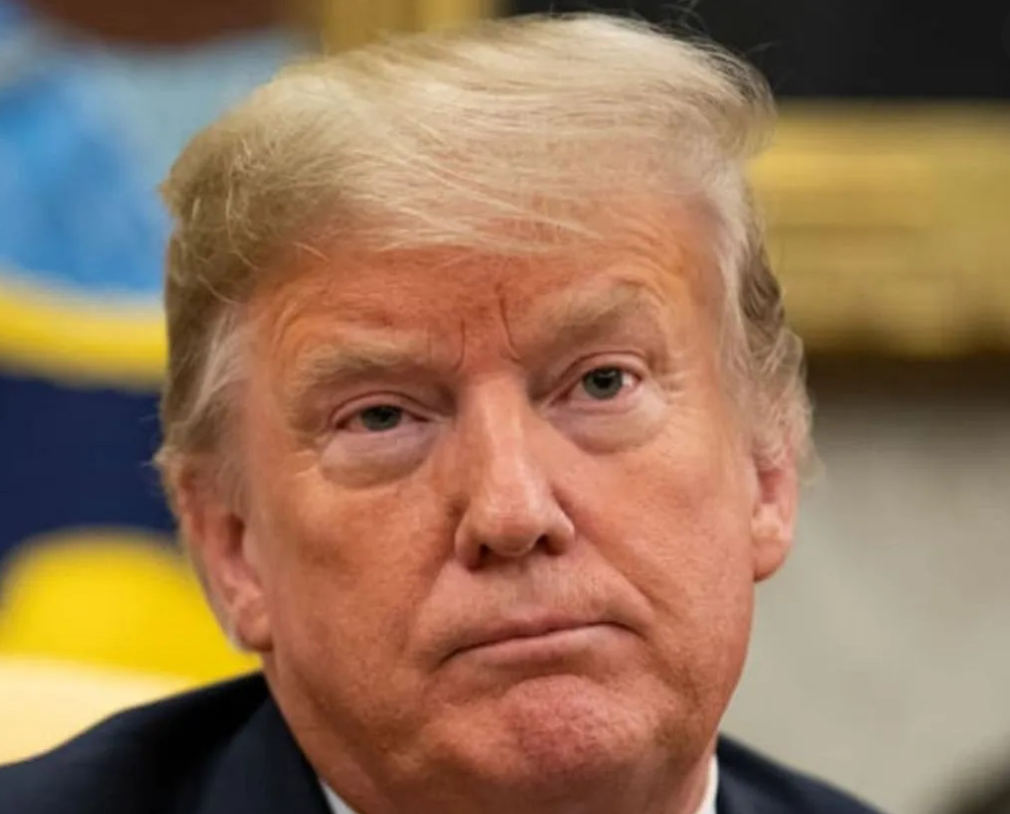
The room froze for a heartbeat before it laughed, a pause so sharp that the hum of conversation seemed to vanish entirely. For once, all the bravado and the theatricality that had become synonymous with Donald Trump’s public persona fell into temporary suspension. Trump, standing under the bright, unforgiving lights of the stage, flashed that familiar, almost rehearsed grin, a gesture meant to diffuse tension but carrying a hint of something more vulnerable beneath the surface. He called himself “the bottom of the totem pole,” a phrase so casual that it might have been lost if not for the strange cadence in his voice that suggested he was teasing—but perhaps also confessing. Then, almost in the same breath, he added a line that cut deeper than any punchline usually could: if he ended a war, “maybe they’ll let me in.”
The audience laughed, yet the laughter was not clean, unrestrained joy. It was jagged, punctuated by nervous glances and the subtle shifting of feet. It carried an undercurrent of disbelief and curiosity, a feeling that they had just witnessed something unintentional, a crack in the armor of a man who rarely, if ever, allows cracks to show. In that moment, Trump had done something rare: he had acknowledged, even if only obliquely, weakness—or at least the appearance of weakness. It was a fleeting vulnerability, a glimpse behind the carefully constructed persona of confidence, power, and untouchable dominance. The audience didn’t quite know how to process it. The laughter arrived late, fractured at the edges, a mix of amusement, relief, and an almost imperceptible tension as if they had just glimpsed the machinery behind the performance.
And then came the second part of the remark, the one that hung in the air long after the laugh had subsided. “Maybe they’ll let me in,” he said, almost offhandedly, yet it landed with the gravity of a confession. What was meant to be a witticism, a clever aside, reverberated in the minds of those listening as something more profound. The line implied that power, recognition, and redemption were not necessarily measured through traditional means—through policy achievements, strategic victories, or political alliances—but could be granted in response to a single, defining action. A war ended. A gesture completed. Approval earned. It was transactional, almost mercantile in its framing of human respect and validation, and yet oddly intimate, as if he had whispered the secret desire that even those who knew him best might never have suspected.
The audience laughed a second time, but this laugh was different from the first. It was a protective mechanism, a reflexive attempt to smooth over the sudden gravity of what had been said. They were laughing to avoid interrogating the deeper question: what did he truly mean when he suggested that ending a war might secure his acceptance? Was it a political quip, or an unguarded revelation about ambition, insecurity, and the need for external validation? The line lingered in the room like an invisible weight, and yet, as with so many of Trump’s public statements, the ambiguity was part of its power. He had mastered the art of threading vulnerability through bravado, leaving audiences to parse whether they had witnessed sincerity, strategy, or performance.
Even the timing of the remarks carried significance. In the middle of an event filled with applause, rhetoric, and predictable entertainment, the line pierced through the usual noise. It was brief, almost throwaway, yet its impact was magnified by its context. Here was a man whose entire life and career had been built on projecting strength, certainty, and dominance, acknowledging in a single breath both the fragility of perception and the desire for acknowledgment. To an observer attuned to political theater, it was a masterclass in dual messaging: appear strong while admitting just enough vulnerability to feel human, all without relinquishing authority.
And so, for a fleeting moment, the audience found themselves suspended between two conflicting impulses: the urge to laugh at a clever turn of phrase, and the compulsion to consider the unspoken subtext of what had just been shared. The laughter, though present, carried a hollow echo, a signal that people were both entertained and unsettled, intrigued yet cautious. Trump’s words had done what so many public figures strive for but few achieve: they had commanded attention not just through style or spectacle, but by hinting at the complexity and contradictions of the person behind the performance.
In essence, the room’s reaction—first frozen, then nervously laughing—revealed as much about the audience as it did about the speaker. Their discomfort mirrored the subtle power of the statement itself: that even the most polished, confident figures carry desires, insecurities, and private hopes that occasionally surface in the most ordinary or humorous moments. That single remark, delivered casually, resonated far beyond its immediate context, leaving listeners to wonder what part of it was jest, what part calculation, and what part a fleeting glimpse of a more human, unguarded self.