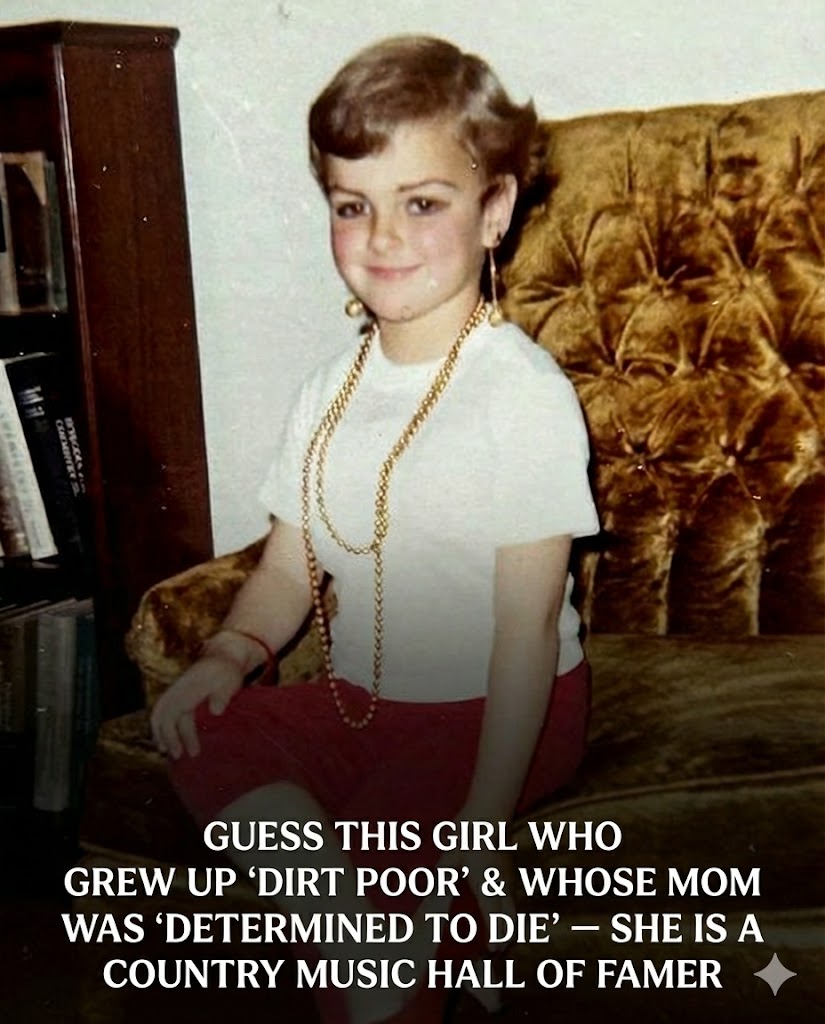
She grew up hungry, invisible, and lied to. Fame didn’t save her. Love betrayed her. Even her own name was an act of survival. As a child in Appalachia, Wynonna Judd learned early that life was often cruel and unrelenting. She understood that secrets were currency and that adults, those entrusted to protect her, might instead spend her trust to cover their own shame. Meals were scarce, warmth was fleeting, and attention even scarcer. Every day carried a quiet lesson in disappointment, a constant reminder that the world could be indifferent, even hostile, to a child’s needs.
Long before the lights of Nashville or the roar of sold-out arenas, Wynonna’s universe was one of survival. The Appalachian hills framed her childhood, their beauty starkly juxtaposed with the poverty and neglect she faced at home. Food was sometimes rationed, clothes handed down, and affection measured in fleeting smiles or rare words of encouragement. It was within this harsh environment that she discovered her first refuge: music. Not as a pastime, but as an essential lifeline, a way to momentarily escape the grinding weight of scarcity and instability. Singing with her mother Naomi wasn’t just creative expression—it was a bridge out of poverty, a fragile pathway from survival to possibility, and the first taste of a world beyond fear and hunger.
Yet even as fame arrived, it didn’t erase the echo of childhood wounds. In arenas packed with screaming fans and red carpets glittering under flashing cameras, Wynonna carried with her an invisible burden. The loneliness she had learned to endure in small Appalachian rooms became amplified under the scrutiny of the public eye. Bodies that had once been a refuge from cold and hunger became vessels for shame, as Wynonna struggled to reconcile self-image with a world eager to define her. Fame magnified, rather than diminished, the ache she carried—the gnawing sense of isolation, the shame sewn into early experiences, and the constant question of who she truly was beyond the persona of a superstar.
The revelation at thirty—that the man she had always called “Dad” was not her biological father—detonated the fragile sense of identity she had carefully built. In a single moment, years of foundational trust were undermined. The betrayal was seismic, reverberating through every corner of her life: family, career, and self-perception. She felt rage, confusion, and grief, all while the world watched and applauded, unaware of the private devastation unfolding behind closed doors. It was a cruel reminder that personal tragedy often doesn’t pause for public success, and that acclaim cannot shield someone from betrayal, lies, or heartbreak.
Public heartbreak followed: marriages faltered, relationships strained, and the weight of loss pressed down relentlessly. Then, the ultimate heartbreak: the loss of Naomi, her mother and creative partner, to suicide just before their Hall of Fame induction. The pain was unthinkable—a combination of sorrow, guilt, and unresolved grief that no stage, microphone, or audience could soothe. Yet Wynonna chose to continue singing. She chose to face her pain directly, to carry it on stage with her and transform suffering into art. Standing before fans, often in the throes of vertigo, anxiety, or deep mourning, she turned scars into testimony, vulnerability into strength, and private grief into a shared emotional experience that countless fans found healing in.
Through it all, Wynonna’s story refuses to be neat or easy. Her life demonstrates that resilience isn’t about having every answer, solving every problem, or erasing the past. It is about continuing to show up, to sing, to parent, to create, even when the weight of history threatens to collapse on you. Her legacy is complicated: a mother’s shadow, a daughter’s pain, and a star’s dazzling success are woven together in ways that are sometimes painful, sometimes uplifting, always authentic.
In honoring her mother’s complex legacy, protecting her own children, and continuing to perform with honesty and power, Wynonna proves that survival is not merely enduring—it is daring to re-enter the light again and again. Every note sung, every lyric shared, carries with it decades of lived experience, trauma transformed into art, and vulnerability given as a gift to the world. Her life is a testament to the fact that true courage is not always heroic in the conventional sense; sometimes it is the quiet act of walking forward, step by step, carrying every wound, every betrayal, and still choosing to sing.
Even as Wynonna Judd continues to grace stages and audiences worldwide, her story remains a reminder that the human spirit is tenacious. It is capable of enduring unimaginable sorrow, confronting impossible truths, and finding beauty amidst pain. In every song, in every note, she carries the full spectrum of survival—from a hungry Appalachian girl to a woman who transformed heartbreak into music that speaks to millions. The journey is ongoing, messy, and profoundly human—a beacon of resilience, proof that the light of survival and the power of voice can illuminate even the darkest of pasts