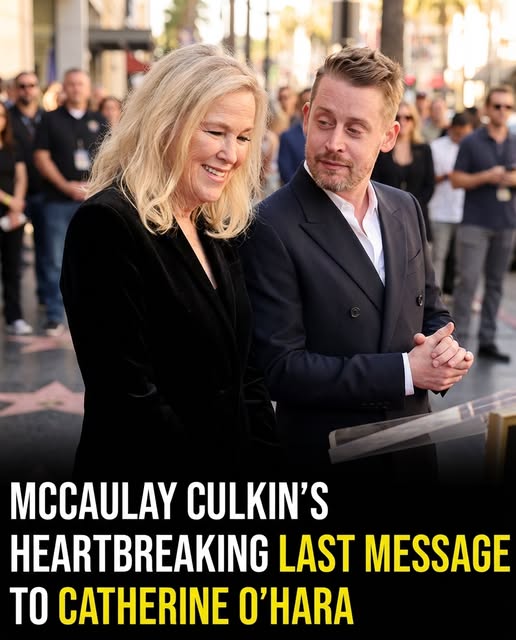
The passing of Catherine O’Hara at the age of 71 marks the end of a monumental chapter in the history of entertainment. An Emmy-winning powerhouse and a foundational figure in modern improvisational comedy, O’Hara was a rare talent who could move effortlessly between slapstick absurdity and profound emotional depth. As more details emerge regarding her final hours, the global community of fans and colleagues has begun a solemn vigil for a woman whose characters—from the frantic Kate McCallister to the incomparable Moira Rose—have become permanent fixtures in the cultural lexicon.
Though her death was sudden, the timeline provides some clarity. Her management confirmed that she succumbed to a “brief illness.” The emergency began in the early hours of Friday, January 30, 2026, when paramedics were dispatched to her Brentwood, California residence around 4:48 a.m. She was transported to a nearby Los Angeles hospital in serious condition, but despite the efforts of medical staff, she passed away shortly thereafter. She leaves behind her husband of over thirty years, production designer Bo Welch, and their two sons, Matthew and Luke.
To grasp the weight of this loss, one must consider the breadth of her influence. O’Hara was not simply an actress—she was a pioneer. Beginning in the 1970s with Toronto’s Second City Television (SCTV), she worked alongside legends like John Candy and Eugene Levy, carving out a space for female comedians defined by intellect and fearlessness. She didn’t just play characters; she inhabited them fully, making them feel like real, eccentric people. Whether delivering a biting satire of a fading starlet or grounding a surreal Tim Burton world in Beetlejuice, she brought precision and authenticity to every role.
Her role in the 1990 blockbuster Home Alone cemented her status as a global icon. As Kate McCallister, she provided the emotional stakes that transformed a comedy of booby traps into a heartwarming story of maternal devotion. Decades later, she achieved a rare “second act” that eclipsed even her early successes. In Schitt’s Creek, her portrayal of Moira Rose—a woman of fallen fortune with a distinctive, mid-Atlantic-influenced accent—became a masterclass in comedic layering. She won the “Big Four” acting awards in a single season, cementing her reputation as one of the greatest performers of her generation.
Tributes from colleagues have been heartfelt and deeply personal. Perhaps the most moving came from her onscreen son, Macaulay Culkin. In an Instagram post that resonated worldwide, Culkin shared: “Mama. I thought we had time. I wanted more. I wanted to sit in a chair next to you. I heard you. But I had so much more to say. I love you. I’ll see you later.” His words reflect the admiration of countless actors who looked to O’Hara as both a mentor and a maternal figure in a demanding industry.
O’Hara’s genius lay in making the absurd feel familiar. She found the ache in comedy and the joy in tragedy, building a body of work both intellectually sharp and widely accessible. Her collaborations with Christopher Guest on mockumentaries like Best in Show and A Mighty Wind demonstrated her range as a character actress capable of finding quiet, soulful desperation beneath comedic exteriors. She never chased fame for its own sake; she pursued the truth of her characters, often hiding her own beauty behind wigs, prosthetics, and mannerisms to better serve the story.
In her personal life, O’Hara was grounded and private, a contrast to many of the flamboyant women she portrayed on screen. She and Bo Welch shared one of Hollywood’s most enduring marriages, built on mutual respect and shared creative passions. Those who knew her off-camera described her as meticulous in her craft yet generous with her time, always seeking to elevate the performances of those around her.
As the lights dim on a career spanning more than half a century, Catherine O’Hara’s legacy is one of uncompromising excellence. She showed that women in comedy could be brilliant, strange, fierce, and vulnerable all at once. From the snowy streets of a Chicago suburb to the quirky town of Schitt’s Creek, her voice will continue to echo in the laughter of all who found joy in her work.
The world has lost a comedian, a mother, and a trailblazer. While the specifics of the “brief illness” that claimed her remain private, the impact of her life is public and permanent. Catherine O’Hara didn’t just make us laugh—she made us appreciate the strange beauty of being human. She will be remembered not only for the roles she played but for the standard of excellence she set for generations to come.