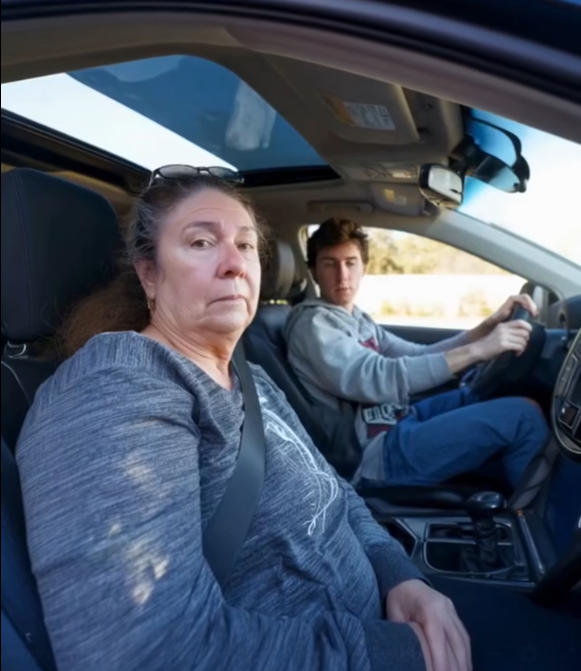
In the early days of our relationship, Harry seemed like the man I had always hoped to find: independent, attentive, grounded. He had built a successful life on his own—or so I believed. There were little signs, of course—subtle ones that I chose to interpret as virtues. He called his mother, Stephanie, every single day, sometimes twice. He consulted her on everything—from wardrobe choices to career decisions—treating her opinions as sacred. I told myself it was sweet. She was a widow who had raised him alone, and I admired his loyalty. I didn’t yet realize I wasn’t marrying a man who loved his mother; I was marrying a man who had never truly left her.
The shift came the moment the wedding bells stopped ringing. Once we moved into our apartment, the hierarchy became clear. If Stephanie called during dinner, Harry would hold up a finger to silence me mid-sentence. Our plans were discarded the moment his mother felt “lonely” or needed a lightbulb changed. The breaking point arrived on our first anniversary. While we sat at a candlelit table, Harry’s phone buzzed. Without even checking it, he claimed his mother was having a “hard night” and needed him. I spent our anniversary alone with two cooling plates, watching the candle flicker like the slow burn of my resentment.
When my grandmother passed, grief weighed on me like a physical burden. She had been my anchor, teaching me that true love is steady and respectful. She left me a modest inheritance of twenty thousand dollars—a final gift of security. Harry, ever the opportunist, suggested I buy a car. When I reminded him I couldn’t drive, he touched my hand with practiced sweetness.
“I’ll drive you, darling,” he promised. “I’ll take you to work, handle errands—it’ll make our lives so much easier. That’s what good wives do—they invest in their family.”
I bought the car with my grandmother’s money. For two weeks, Harry kept his word. Then the vehicle transformed into Stephanie’s personal chariot. My commutes were sidelined by her grocery runs, salon visits, and Bible study meetings. Eventually, Harry stopped driving me altogether, claiming his mother’s stops were more urgent. I found myself back on the bus, watching my own car drive past, with Stephanie in the passenger seat and Harry at the wheel. When I confronted him, he sneered: Did I expect him to let a perfectly good car sit while he fulfilled his “duty” to the woman who raised him?
The ultimate humiliation came on a Saturday afternoon. Heading out as a group, I walked to the front passenger door, only for Harry to intercept me and open it for his mother instead. “This isn’t for you,” he said. “Mom deserves the best seat; she’s the number one woman in my life.” Stephanie slid in, eyes meeting mine with smug triumph. I climbed into the back, relegated to the periphery of my own marriage.
I didn’t cry that night. I began to build. I secretly enrolled in driving school, telling Harry I was working late. My instructor, Miguel, was patient, encouraging, and respectful—the opposite of Harry. Learning to drive made me expansive. Every mile was a mile closer to freedom.
Three months later, I passed my test on the first attempt. I tucked the license into my wallet and waited for the perfect moment. It arrived on my birthday. Harry had made dinner reservations—likely at a place Stephanie preferred. As we walked to the car, the familiar choreography began: Harry reached for the keys, Stephanie gravitated toward the passenger door.
I paused at the rear and smiled. “Oh, wait,” I said casually. “There’s a surprise in the garage. Go grab it first, so we can celebrate.”
Greed lit Harry’s face; Stephanie followed, chirping about my thoughtfulness. Once they disappeared, I held out my hand. “Give me the keys, Harry. I’ll get the air conditioning running.” He tossed them without a second thought.
I slid into the driver’s seat. The engine purred—a sound of liberation. Inside the white box were not gifts but divorce papers, signed and finalized. I didn’t wait for screams. I shifted into reverse, backed out, and drove away.
My phone erupted with calls and texts. Harry demanded to know where I was; Stephanie called it “unreasonable” and “cruel.” I sent one text: “Please contact my lawyer regarding asset division. Since I paid for this car with my inheritance, it stays with me. Enjoy the walk.” Then I blocked them both.
The divorce was contentious, but my bank records were indisputable. While Stephanie tried to poison our social circle, I drove—to work, to the ocean, to my grandmother’s grave, telling her I had finally learned to be the protagonist of my own story.
Harry once said his mother deserved the front seat more than I did. I realized he was right—they deserved each other, trapped in their codependent cycle. Me? I stayed behind the wheel. I am no longer a runner-up in someone else’s life. I am the one driving, and I will never move to the back again.