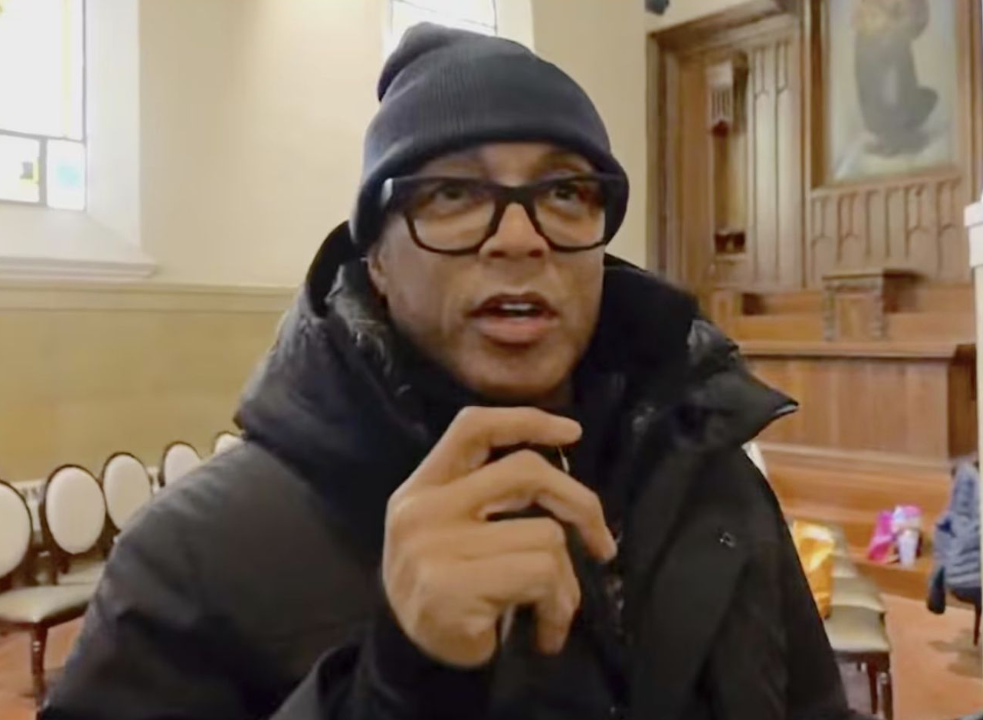
Former CNN anchor Don Lemon was taken into federal custody in Los Angeles on Friday while covering the Grammy Awards, according to law-enforcement sources. His arrest is connected to his presence at a Jan. 18 protest inside Cities Church in St. Paul, Minnesota, which disrupted a worship service.
The demonstration, organized by anti-immigration-enforcement protesters, drew national attention as tensions over federal immigration policies in Minnesota have grown in recent weeks. Lemon, who identifies as an independent journalist, livestreamed portions of the event and engaged with both participants and congregants, as shown in videos reported by the Daily Mail.
Federal authorities have charged Lemon with conspiracy to deprive rights and violating the FACE Act, which prohibits interfering by force with someone’s First Amendment right to worship freely and without intimidation. These are serious charges, potentially carrying significant legal consequences if prosecutors can prove their case in court.
Last week, a federal magistrate judge in Minnesota refused to sign a criminal complaint against Lemon, citing a lack of probable cause at that stage. This ruling temporarily limited the government’s ability to pursue charges, but federal prosecutors have continued their efforts to secure formal indictments against him and others involved.
Lemon’s attorney, Abbe Lowell, has condemned the arrest as an unprecedented attack on press freedom. He emphasized that Lemon was present in his professional capacity as a journalist, documenting events rather than organizing or leading the disruption. “Don has been a journalist for 30 years, and his constitutionally protected work in Minneapolis was no different than what he has always done,” Lowell said.
Lemon himself has publicly stated that he attended the protest only to cover the story. He did not participate in planning or orchestrating any disruption. His presence was purely journalistic, consistent with decades of reporting on high-profile and contentious events.
The protest took place amid escalating concerns over federal immigration enforcement in Minnesota. In recent weeks, demonstrations have targeted U.S. Immigration and Customs Enforcement (ICE) policies, especially after previous confrontations between federal agents and local communities. The incident at Cities Church highlighted the intersection of immigration enforcement, religious freedom, and public protest, raising questions about constitutional rights and federal authority.
As of Friday, Lemon remained in federal custody in Los Angeles, awaiting further legal proceedings. Authorities have been largely silent about the details of the investigation, leaving Lemon’s supporters concerned about potential overreach. Many view the arrest as a symbolic test of press freedom in a highly polarized political climate.
Lowell also pointed out what he sees as an inconsistency in federal law enforcement. He argued that federal agents who were involved in the shooting and killing of Minneapolis agitator Alex Pretti remain under internal investigation, yet Lemon was arrested for covering protests. The attorney framed this as an example of selective enforcement and unequal treatment.
Attorney General Pam Bondi has publicly pledged that the Department of Justice will continue pursuing criminal charges against individuals involved in the church protest, including Lemon. Speaking on Fox News, Bondi stated that federal prosecutors are committed to enforcing laws protecting worshippers and places of worship.
“If you protested and went into that church on Sunday, and you terrorized the parishioners, we are coming after you,” Bondi declared. She emphasized that no individual, regardless of status, is above the law. Her comments singled out Lemon by name, calling him a “failed CNN journalist,” and reinforcing the federal government’s stance on protecting religious services.
Bondi further stated that the U.S. does not operate like a “third-world country” and highlighted the importance of defending houses of worship from interference or intimidation. Her remarks have fueled debate about the balance between constitutional rights for protesters, journalists, and the government’s responsibility to protect citizens in religious spaces.
In addition to Lemon, three other individuals involved in the protest—Nekima Levy Armstrong, Chauntyll Louisa Allen, and William Kelly—were arrested earlier this week. Their charges relate to the same disruption of the church service, though court documents have not yet been publicly released.
A Biden-appointed federal judge has ordered these defendants released from custody after determining they were not flight risks. This ruling underscores the complex legal dynamics surrounding the protest, as the federal system navigates First Amendment rights, public safety, and the prosecutorial discretion of the DOJ.
The case raises larger questions about the treatment of journalists covering protests. Advocates for press freedom argue that reporters should not face criminal charges simply for documenting public demonstrations, while others insist that participation, even indirectly, in disruptive actions may warrant legal consequences.
Supporters of Lemon have expressed outrage over what they perceive as a politically motivated arrest. Social media has seen widespread discussion framing the case as a test of journalistic independence and a warning about federal overreach. Critics, however, argue that the rule of law must be applied equally, and that disruptions to religious services cannot be tolerated.
Legal experts note that the charges—conspiracy to deprive rights and violating the FACE Act—carry complex legal interpretations. Proving intent and involvement will be central to the prosecution’s case, and Lemon’s defense will likely hinge on his journalistic intent and lack of direct participation.
The Minnesota protest itself has become a focal point for broader national debates about immigration policy, policing, and civil liberties. The federal response, including Lemon’s arrest, adds another layer of controversy, sparking intense discussions in both media and political circles.
Observers note that this case highlights tensions between local communities, federal authorities, and the press. Lemon’s arrest is unusual because journalists covering public events are rarely detained for reporting, even in highly charged situations. The incident raises concerns about precedent for future reporting on protests or contentious political events.
As the case proceeds, the legal, political, and ethical implications will continue to unfold. Lemon’s supporters call for the protection of press freedom, while federal authorities insist they are enforcing the law fairly. The outcome may have lasting consequences for journalists, protesters, and government accountability in cases involving civil liberties.
At the center of it all is Don Lemon, a veteran journalist whose career has spanned decades, now facing federal scrutiny. The situation underscores the challenges of reporting in a polarized environment, the delicate balance between public safety and individual rights, and the ongoing debate over the role of the press in democratic society.