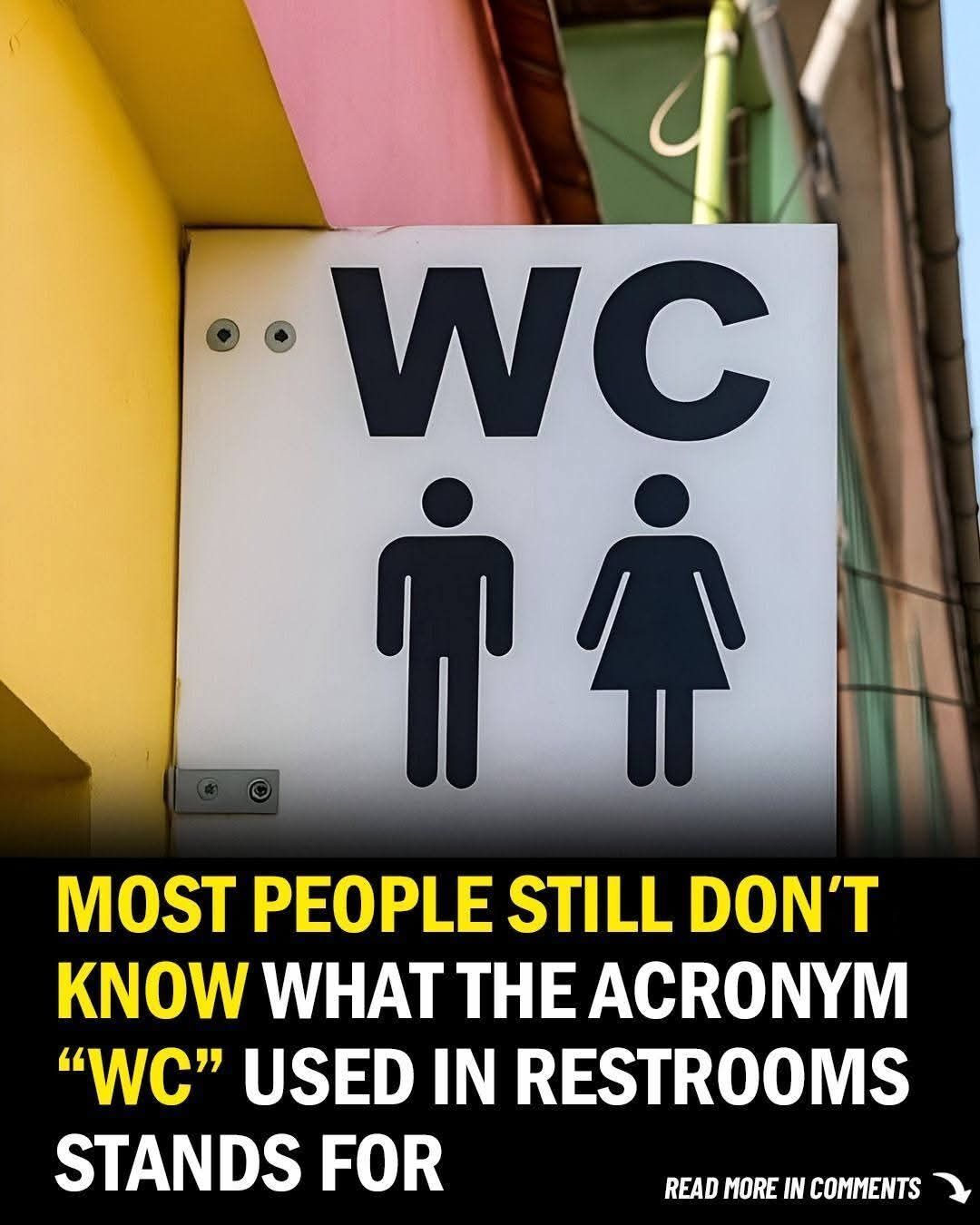
If you’ve ever traveled internationally, explored airports, train stations, or even just stepped into a public restroom somewhere in Europe or Asia, you’ve probably noticed a simple, unassuming sign that reads “WC.” It’s one of those things we see so often that we barely think twice about it. But have you ever paused to ask yourself: what does it actually mean? And more curiously, why doesn’t everyone just use the words “toilet,” “bathroom,” or “restroom” like in the United States? The answer, as it turns out, is surprisingly historical—and has a touch of old-world charm.
What “WC” Really Means
The abbreviation “WC” stands for Water Closet.
Yes, you read that right: “closet.” And it’s not a mistake or a weird quirk of language—it actually makes perfect sense when you dive into the history. The term dates back to the 19th century, around the time when indoor plumbing started becoming a novelty in Europe, particularly in the United Kingdom. Back then, toilets were installed in small, private rooms that often resembled tiny closets. These were not just functional spaces—they were designed to be discreet and somewhat elegant. So, a “Water Closet” literally referred to a small, enclosed room (a closet) that contained a water-flushing toilet. Simple, descriptive, and polite, especially for the Victorian sensibilities of the era.
A Historical Peek
In the 1800s, running water inside the home was still considered a luxurious feature. Flush toilets themselves were a relatively new invention, and they were often tucked away from the main living spaces. Bathrooms as we know them today—complete with sinks, showers, and tiles—did not exist yet. So the “Water Closet” became the preferred, upper-class way of referring to these small, functional rooms. It was a term that suggested both utility and refinement, a sort of euphemism for a place people needed but didn’t want to discuss openly.
Over the years, the abbreviation “WC” started appearing everywhere: on architectural blueprints, hotel signs, railway stations, and public buildings. And though language and culture evolved, the term stuck—especially across Europe and parts of Asia. Even today, countries like Germany, France, Italy, and Japan continue to use “WC” on restroom signs, often alongside local language terms.
Why “WC” Remains Today
So, why hasn’t this seemingly old-fashioned abbreviation faded into obscurity? The answer lies in universality.
While words like “bathroom,” “restroom,” or “toilet” vary widely depending on the country and language, “WC” has become an international symbol. Tourists, travelers, and locals alike instantly recognize it as a place to relieve themselves, no matter what language they speak. In some cultures, it’s also considered more polite or discreet. For instance, in parts of Europe, saying “toilet” out loud can feel too blunt or direct. “WC” offers a courteous, neutral alternative that carries the elegance of history while serving a practical purpose.
Fun Examples Around the World
Depending on where you are, the term might change—or be accompanied by a local variation:
United Kingdom: “Loo” or “WC”
United States: “Restroom” or “Bathroom”
France: “Toilettes”
Germany: “WC” or “Toilette”
Italy: “Bagno”
Japan: “Toire” (トイレ, borrowed from English “toilet”)
No matter which name or symbol is used, the goal is universal: helping people find that small, essential room when nature calls, without confusion.
The Modern Twist
Interestingly, the influence of “WC” has even carried over into contemporary architecture and design. Many modern building plans, technical drawings, and floor layouts still use the term “WC” to label bathrooms, showing how deeply entrenched the term has become. It’s a reminder that some words, no matter how old, persist because they work. And for travelers, spotting a “WC” sign is now second nature—an unspoken, cross-cultural code that quietly unites history, practicality, and etiquette.
In Short:
WC = Water Closet
Originated in 19th-century England
Referred to early indoor toilets in small private rooms
Became a polite, upper-class euphemism
Still used globally as a universal symbol for restrooms
A Final Thought
It’s funny how something as simple as two letters can carry over a hundred years of history and social etiquette. The next time you travel and see a sign marked “WC,” remember: it’s more than just a bathroom—it’s a tiny, historical nod to the past, a symbol of courtesy, and a reminder of how human needs shaped language and culture. So go ahead, walk through that little door with confidence, knowing you’re stepping into a tradition that dates back to the Victorian era, complete with running water, privacy, and a story behind every flush.
✨ Next time someone asks what “WC” stands for, you can smile and say: “It’s short for Water Closet—and it’s been keeping Europeans polite and functional since the 1800s!”