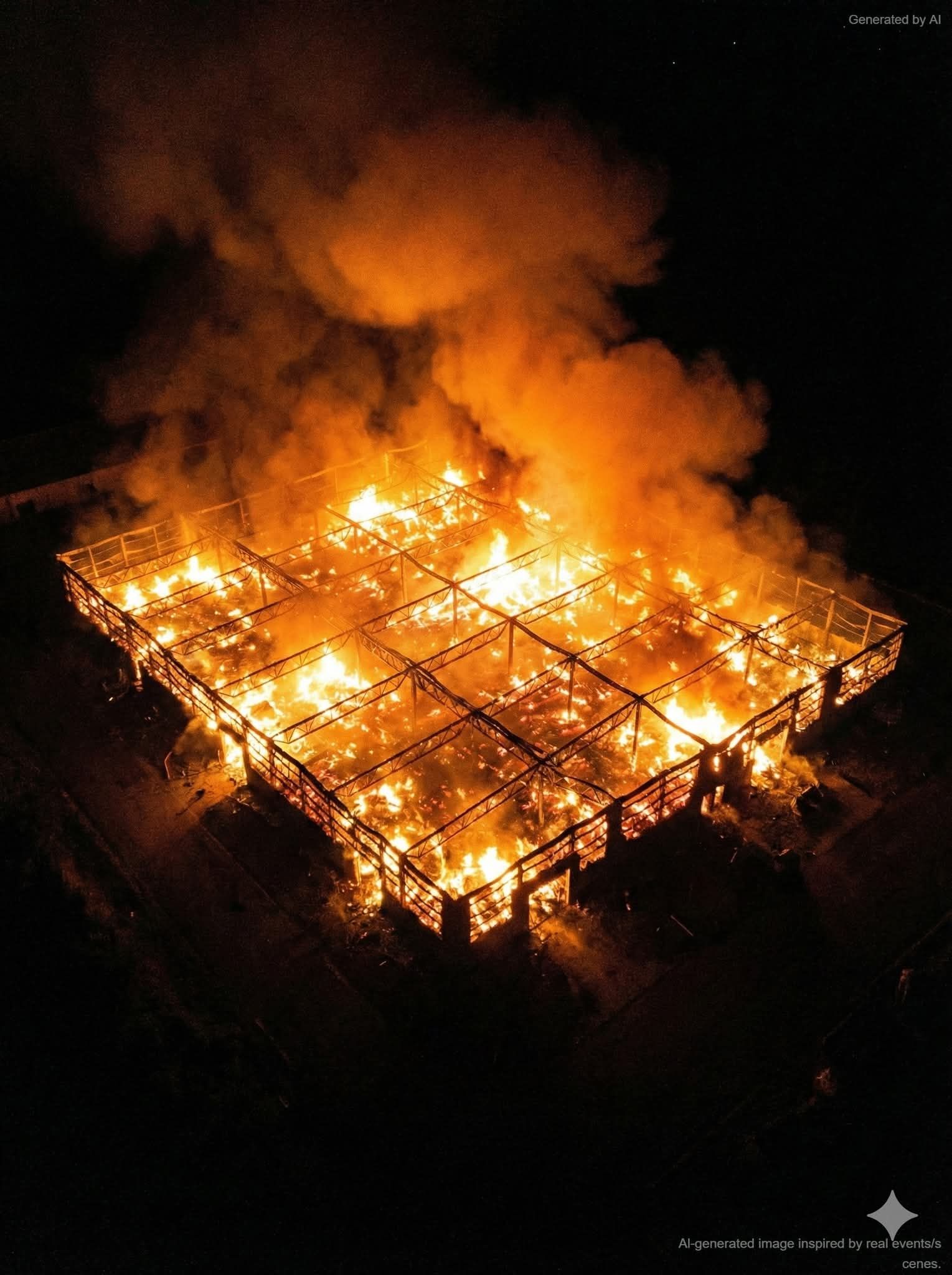
At least 300 homes are believed to have been damaged or completely destroyed after a massive wildfire tore through the region, reducing entire neighborhoods to ash and twisted debris. What began as a rapidly spreading blaze quickly escalated into a large-scale disaster, as powerful winds and extremely dry conditions fueled the flames and pushed them forward at frightening speed. Within hours, communities that had existed for generations were overwhelmed, forcing residents to flee with little more than the clothes on their backs.
Emergency crews battled the fire through the night, facing towering flames, intense heat, and thick smoke that severely limited visibility. Firefighters described the conditions as some of the most dangerous they had encountered in years. Wind-driven embers raced far ahead of the main fire, igniting new blazes faster than crews could contain them. In several locations, flames jumped across roads and open areas, making traditional firebreaks useless and trapping neighborhoods within minutes.
Residents recounted harrowing scenes as the fire advanced. Many watched helplessly as walls of flame moved from house to house, consuming roofs, vehicles, and trees in seconds. Sirens echoed constantly as police and fire units went door to door, urging people to evacuate immediately. Families had only moments to gather pets, important documents, or cherished belongings before abandoning their homes. For some, there was no time to take anything at all.
Shelters were quickly set up in nearby towns to house the growing number of displaced residents. Community centers, schools, and churches opened their doors as volunteers worked nonstop to provide food, clothing, and basic necessities. Donations poured in from surrounding areas, with neighbors stepping up to help neighbors in a powerful show of solidarity. Despite shock and exhaustion, evacuees waited patiently, sharing stories and checking on one another, united by the shared trauma of sudden loss.
Fire officials confirmed that dozens of ground crews were deployed alongside aerial resources, including helicopters and water-dropping aircraft. However, shifting winds and extreme fire behavior made containment exceptionally difficult. Some firefighters suffered minor injuries, mainly from heat exposure and smoke inhalation, though authorities confirmed that no fatalities had been reported at the time of the latest update. Officials emphasized that the situation remained unstable, with crews continuing to monitor hotspots and flare-ups that could reignite as conditions change.
Investigators have begun working to determine the cause of the fire, though officials cautioned that reaching definitive conclusions may take time. In the meantime, residents have been urged to remain cautious, follow evacuation orders, and avoid restricted areas. Power outages and road closures remain widespread, complicating emergency response efforts and the early stages of recovery. Utility crews are assessing damage to infrastructure, while law enforcement maintains checkpoints to protect public safety.
As daylight arrived, the true scale of the destruction became painfully clear. Entire streets were left unrecognizable, lined with charred foundations, melted metal, and the skeletal remains of once-familiar homes. The smell of smoke lingered heavily in the air as residents cautiously returned, many bracing themselves for what they feared they would find. For countless families, the loss extended far beyond property. Photographs, heirlooms, and irreplaceable memories were gone, lost in just a few devastating hours.
Local and state leaders toured the affected areas, calling the situation a major disaster that will require long-term recovery and significant resources. Emergency declarations were issued to unlock funding and assistance for those impacted, and officials pledged continued support for rebuilding efforts. Housing assistance, financial aid, and mental health services are expected to be critical parts of the recovery process, especially for residents who lost everything.
Fire experts warned that disasters like this are becoming increasingly common, as prolonged dry periods, rising temperatures, and extreme weather patterns create ideal conditions for fast-moving wildfires. They stressed the importance of preparedness, early evacuation, and community awareness in reducing risk and saving lives. While the structural losses are devastating, officials noted that the swift response and public compliance with evacuation orders likely prevented a far greater loss of life.
Amid the devastation, stories of resilience have begun to emerge. Neighbors who barely knew one another before the fire are now sharing meals, offering spare rooms, and helping sift through debris. Volunteers have organized cleanup efforts, while local businesses donate supplies and services to those in need. In the face of overwhelming loss, a strong sense of community has taken root, proving that while homes can be destroyed, human bonds endure.
Recovery will be long and difficult. Rebuilding neighborhoods, restoring infrastructure, and helping families heal will take months, if not years. Yet even as residents confront the reality of starting over, there is a shared determination to move forward together. The fire may have scarred the landscape, but it has also revealed a deep well of strength, compassion, and unity that will shape the community’s path ahead.