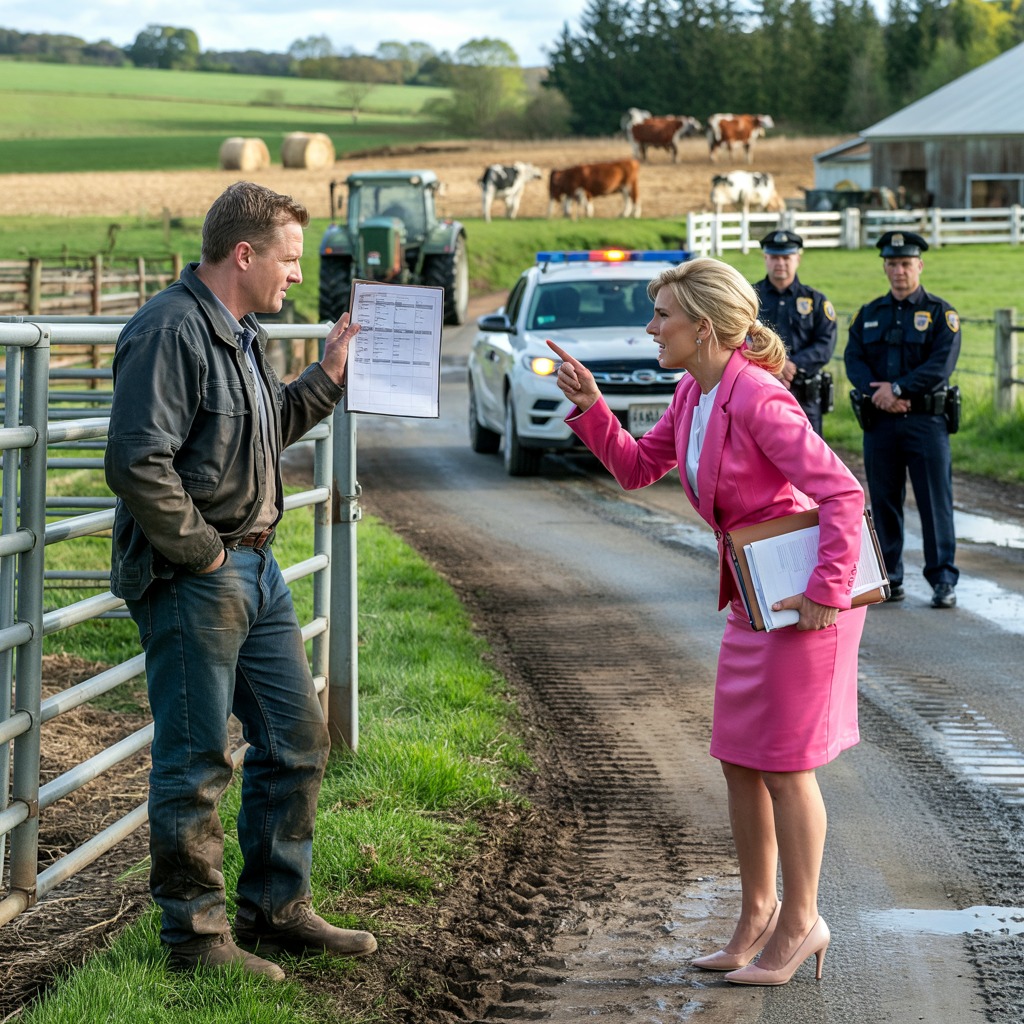
I bought two hundred acres of raw land for two thousand dollars, and for forty-eight hours I truly believed I’d beaten the system.
By the third day, a woman in designer heels informed me I owed fifteen thousand dollars to a homeowners association that didn’t exist.
That was the moment my quiet escape plan turned into a legal war.
Three weeks earlier, I’d been lying on my back beneath a Peterbilt, grease soaking through my shirt, when my phone buzzed. My grandfather had died. He left me fifty thousand dollars. Not life-changing money—but enough to choose a different future. I’d spent twelve years as a diesel mechanic, breathing exhaust, grinding cartilage out of my spine one torque wrench at a time. I didn’t want another truck or a bigger toolbox. I wanted land. Honest dirt. Organic farming. Quiet.
That’s how I found the auction listing.
Government sale. Agricultural parcel. Two hundred point three acres in Nebraska. Back taxes owed: two thousand dollars.
I drove out on a Saturday, windows down, gravel snapping under the tires. Rolling hills. Deep black soil. Meadowlarks cutting the air. Fence posts marking clean boundaries, like someone had once taken pride in them. I could already see rows of corn stretching forever.
Only one other bidder showed up at the auction. He dropped out after ten minutes. Two grand later, the land was mine. Too good to be true, maybe—but the paperwork checked out.
By Wednesday, I was walking the property, testing soil, when I noticed the mansion.
A quarter mile east. California-style. Circular driveway. Sculpted hedges. A lawn greener than anything had a right to be in Nebraska. Inside, a guy sat on a laptop with a polo shirt and an espresso mug.
Something felt wrong.
Then I heard heels.
Not boots. Heels.
Click. Click. Click.
A blonde woman strode across my land like she owned it. Hand extended. Nails flawless.
“I’m Brinley Fairmont,” she said. “President of the Meadowbrook Estates Homeowners Association.”
I looked around. One house. Twelve hundred acres of nothing.
“How many homes are in this HOA?” I asked.
“Twelve,” she replied smoothly. “We brought standards to this area.”
She shoved a binder into my chest. Fresh ink. Fresh lies.
“This property has always been part of our association.”
I laughed. “Ma’am, this land’s been agricultural since the sixties.”
She flipped pages. “The previous owner agreed to dues. You inherit the obligation.”
“How much?”
“Fifteen thousand in back fees. Seven-fifty a month going forward.”
There it was—the smirk. The confidence of someone who’d done this before.
I asked for recorded covenants. She dodged. Claimed they were filed. Told me to look them up. Then walked away in those heels like the deal was already done.
That night, it clicked.
This wasn’t confusion. It was a scam. And if she’d tried it on me, she’d done it to others.
The courthouse confirmed everything.
Dolores, the county clerk, didn’t even let me finish.
“You’re here about Brinley Fairmont,” she said.
I wasn’t the first. I wasn’t even the second. I was the fourth that month.
My deed was clean. Agricultural exemption dated 1967. Original survey showed no HOA boundaries anywhere near my land. Their HOA filing? Twelve parcels clustered around her house. Mine wasn’t included.
Then Dolores leaned in.
“She’s tried to amend your deed six times.”
She slid a document across the counter—a consent form with my name typed at the bottom and a signature that looked like a toddler practicing cursive mid-fall.
Forgery.
It got worse.
Three days before the auction, someone had attempted to file a deed amendment using the previous owner’s signature.
The previous owner had been dead for six months.
The filing came from an IP address traced directly to the Fairmont residence.
They’d tried to steal the land before I even owned it.
The harassment escalated quickly.
Certified letters. Fake property management calls. HOA “neighbors” photographing my supposed violations. A Tesla parked at my fence while her husband photographed my house for twenty minutes straight.
The sheriff confirmed it: three other families had already paid them thousands before realizing the truth.
That’s when I hired Sarah Hedrick.
Farmers’ rights attorney. Twenty years dismantling rural fraud.
She pulled financial records. Forty-seven thousand dollars collected in HOA “dues.” No services. No expenses. Straight into personal accounts.
Background checks revealed the pattern. California. Colorado. Arizona. Same scheme. Same exit strategy. They stayed one step ahead of investigators, targeting landowners who didn’t expect predators.
Total stolen: nearly two hundred thousand dollars.
Federal wire fraud.
Sarah smiled like someone who’d been waiting for this case.
“We just need them to commit one more crime,” she said.
So we let them.
I announced a fake state agricultural inspection tied to a federal organic grant—fifty thousand dollars. Word spread fast.
We installed professional surveillance. Certified timestamps. The FBI looped in. Undercover agents posed as road crews. A retired ag inspector volunteered to play the role.
Friday morning, Brinley arrived with Chadwick and two hired enforcers.
She walked straight up to the “inspector.”
“This property falls under HOA authority,” she declared. “You need our authorization.”
That sentence alone sealed it.
She presented forged documents. Claimed jurisdiction. Demanded compliance.
Every word was recorded.
Federal agents stepped out.
For the first time, Brinley’s heels sank into dirt.
Chadwick ran. He made it twelve steps.
The arrests took less than four minutes.
Multiple charges. Wire fraud. Forgery. Attempted property theft. Conspiracy. Interstate criminal enterprise.
They pled guilty within three weeks.
Restitution was ordered. Federal prison sentences followed. The HOA was dissolved. Their mansion sold at auction.
I planted corn that spring.
Rich black soil. Honest work.
Every time I look across that land under the sun, I think about how close I came to losing it—not to nature, not to bad luck, but to entitlement wrapped in perfume and paperwork.
Turns out diesel mechanics know a thing or two about taking engines apart.
And scams run on engines, too.