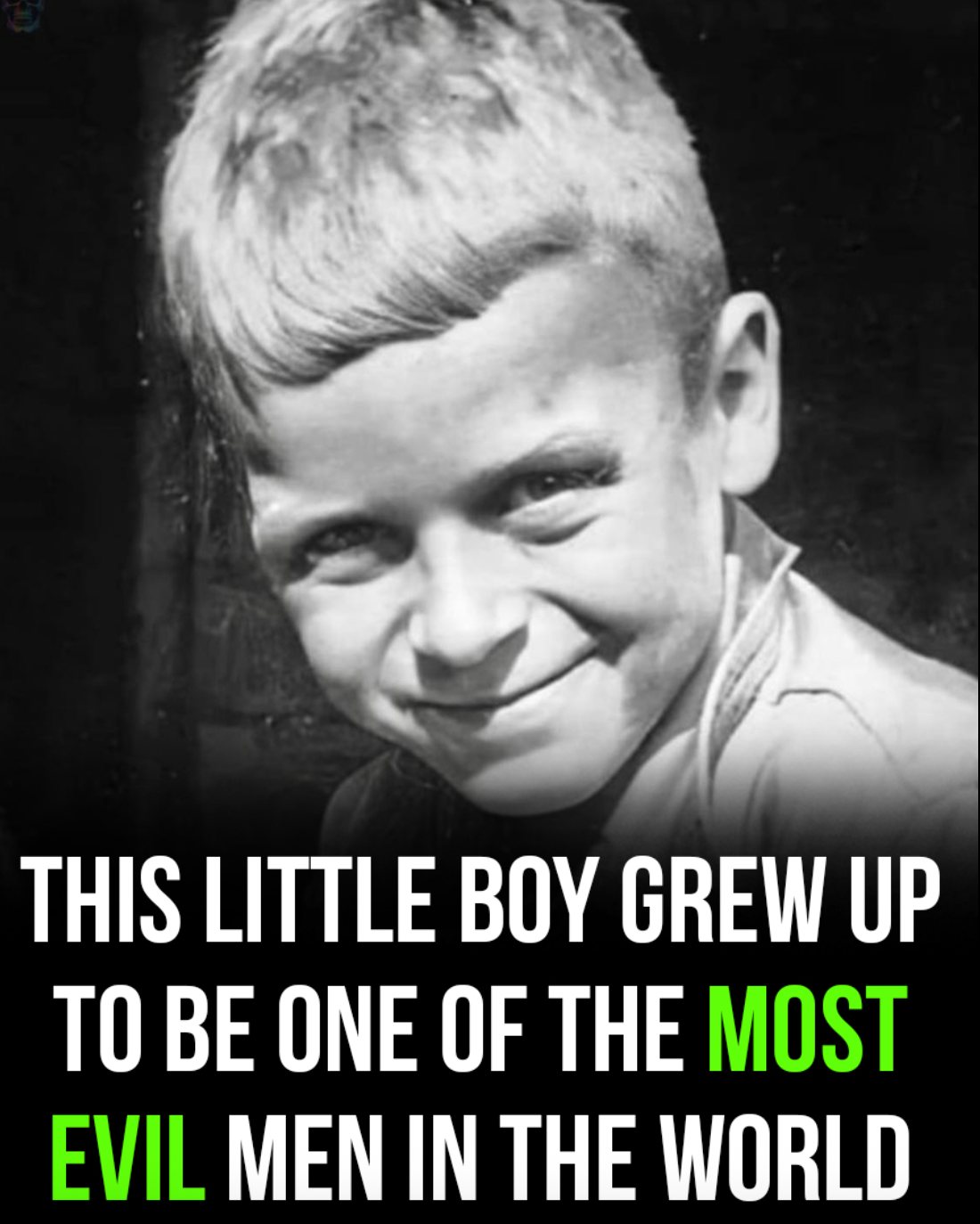
He could have been any boy growing up in the quiet neighborhoods of postwar America. Reserved, courteous, a little socially awkward, he faded easily into the background. He delivered newspapers, joined the Boy Scouts, and stood stiffly in family photographs with a hesitant smile. Nothing about him raised alarms. Nothing hinted that his name would one day become synonymous with terror.
That boy was Ted Bundy—one of the most notorious killers in American history.
What makes his story so disturbing is not how it ends, but how it begins. There is no early explosion of violence, no obvious warning sirens. Instead, there is secrecy, identity confusion, and a carefully maintained image of normal life.
Bundy was born in 1946 in Burlington, Vermont, under circumstances clouded by silence. His father was never publicly identified, and from the start, his origins were hidden. As an infant, he lived briefly in a home for unwed mothers before being sent to Philadelphia to live with his maternal grandparents. To neighbors and friends, they were presented as his parents. His biological mother, Louise, was introduced as his older sister. The truth was buried beneath polite explanations and collective agreement.
On the surface, Bundy’s childhood seemed unremarkable. Those who knew him later described a quiet, well-mannered boy who attended school, played outdoors, and participated in youth programs. There were no dramatic outbursts, no obvious cruelty. Yet his identity was built on a lie, and that fracture quietly followed him into adulthood.
Bundy later claimed he sensed something was wrong long before anyone confirmed it. Louise’s attention toward him felt different—more intense, more emotionally charged than that of a sibling. Accounts differ on when he learned the truth. Some say he discovered his birth certificate as a teenager; others believe a relative finally told him. Whenever it happened, the revelation unsettled him deeply, planting resentment and confusion at the core of his sense of self.
Looking back, certain childhood moments take on a darker tone. One relative later recalled waking up to find Bundy standing beside her bed, knives laid out nearby. He was still young. The incident was dismissed, never investigated, and quietly forgotten—another warning sign swallowed by silence.
Socially, Bundy struggled. A speech impediment made him self-conscious, and he found it difficult to connect with peers. He craved admiration but rarely received it. He was excluded from sports teams, overlooked by girls, and increasingly isolated. By adolescence, his feelings of inadequacy had hardened into something more corrosive.
When Louise married and attempted to create a traditional family, Bundy reportedly resented his stepfather. The man lacked the wealth, status, and authority Bundy believed he deserved by association. From an early age, Bundy became fixated on image and power. He wanted to be respected, desired, and in control.
Externally, his life appeared to stabilize. He attended college, spoke intelligently, and learned how to present himself as thoughtful and charismatic. He even volunteered at a suicide prevention hotline—a detail that later horrified the public. To many, he looked like a young man with promise.
Internally, however, his thoughts grew darker. Bundy later admitted to developing violent fantasies that became increasingly vivid and consuming. These were not passing ideas. They were rehearsed, protected, and allowed to grow.
By the mid-1970s, those fantasies turned into reality.
Bundy began targeting young women, often college students, across multiple states. He relied on manipulation rather than brute force—feigning injury, asking for assistance, or posing as an authority figure. He understood trust and used it as a weapon. Once his victims were isolated, the mask disappeared, replaced by swift and extreme violence.
His first confirmed murder occurred in 1974, though investigators believe his crimes began earlier. One of the earliest suspected victims was eight-year-old Ann Marie Burr, who vanished from her Tacoma home in 1961. Bundy never admitted responsibility, but suspicion followed him for decades.
As investigations progressed, clear patterns emerged. The same tactics. The same calculated charm. The same obsession with control. Bundy later confessed to killing at least thirty women, though experts widely believe the true number is higher. His crimes spanned at least seven states, leaving devastation and unanswered grief behind.
His downfall began in 1975, after a routine traffic stop revealed suspicious items in his car. From there, evidence mounted, and his carefully maintained image collapsed. Trials in multiple states exposed the brutality hidden behind his polished exterior.
In Florida, Bundy was convicted of three murders and sentenced to death. As appeals stretched on, his infamy grew. Media coverage often fixated on his courtroom composure and intelligence, obscuring a critical truth: his actions were not signs of brilliance, but of deliberate cruelty.
On January 24, 1989, Ted Bundy was executed in the electric chair at Florida State Prison. He declined a special last meal and offered only brief final words. Outside the prison, crowds gathered—some mourning the victims, others celebrating the end of a man who had haunted so many lives. Fireworks erupted as news of his death spread.
Even in his final days, Bundy remained emotionally distant. FBI profiler William Hagmaier later noted that Bundy spoke of his crimes in terms of power, not remorse. He understood what he had done, but without empathy.
The legacy he left behind is deeply unsettling because it defies easy stereotypes. Bundy did not look like a monster. He did not live on the margins of society. His story forces an uncomfortable realization: danger can hide behind charm, intelligence, and apparent normalcy.
There is a temptation to search for a single cause—one trauma, one defining moment—but Bundy’s life resists simple answers. His crimes were shaped by secrecy, resentment, fantasy, and choice. He was not born fully formed. He became what he was over time, in spaces where warning signs were ignored and silence prevailed.
That childhood photograph of the shy, unremarkable boy remains disturbing not because it explains what came later, but because it reminds us how easily evil can go unnoticed. Violence does not always announce itself. Sometimes it blends in, smiles politely, and waits.
Bundy’s story endures not as entertainment, but as a warning. Ordinary appearances can conceal extraordinary darkness—and when early signs are overlooked, the consequences can be devastating.