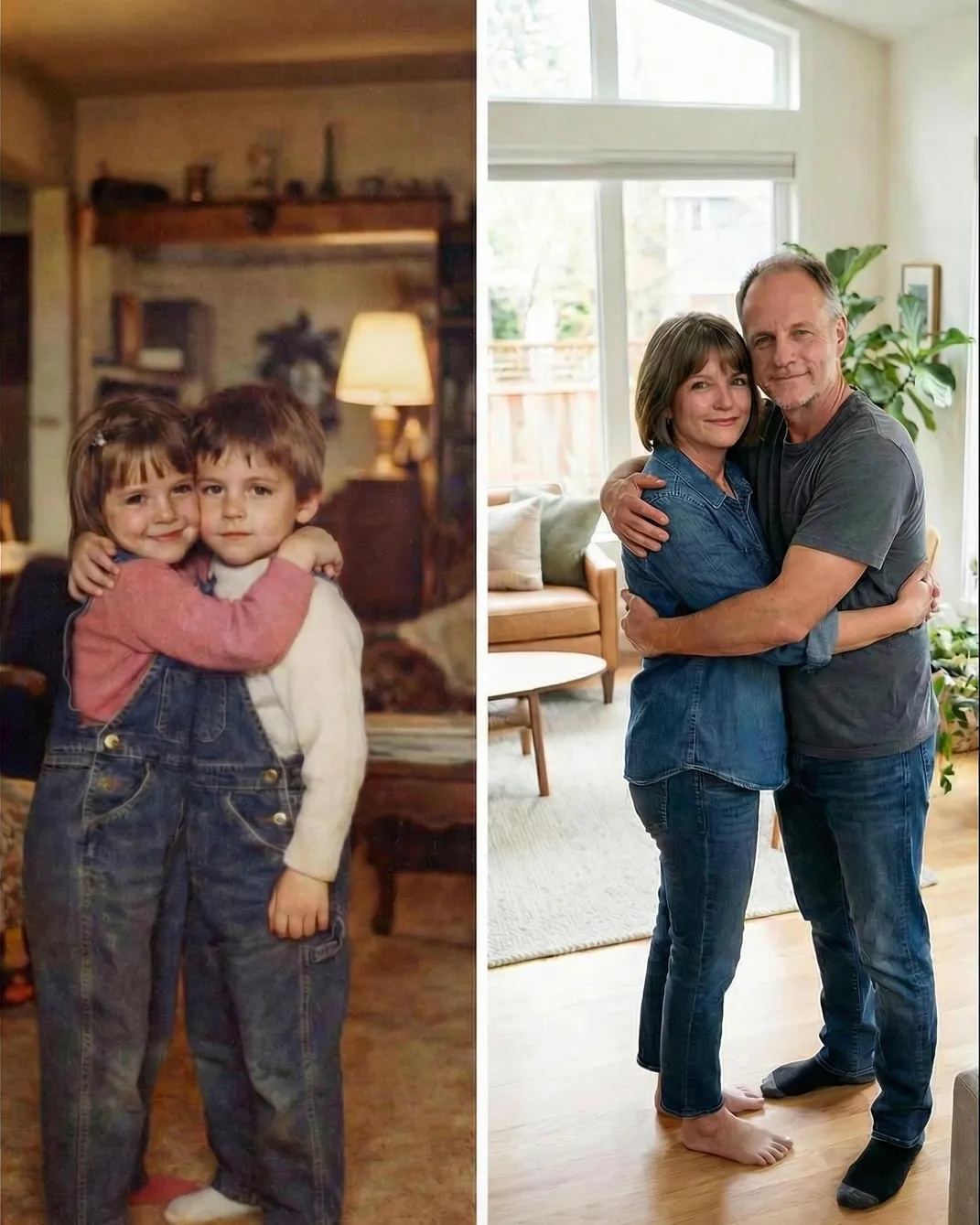
I ended a marriage that had spanned more than thirty years after discovering unexplained hotel stays and significant withdrawals from our joint account. My husband refused to clarify, and slowly, silence replaced the trust we had built over decades. I told myself I had accepted leaving him, even though it felt like unraveling a lifetime of shared memories. We had grown up side by side, created a home, raised our children, and savored ordinary joys that once seemed unshakable. When everything fell apart, I convinced myself that some questions were better left unanswered. Yet years later, standing at his funeral, I realized that the story I thought I understood was far more complex than I had imagined.
For most of our lives together, our relationship felt straightforward and steady. We married young, weathered hardships, and gradually built a comfortable life full of routines and quiet dreams. I had believed that honesty underpinned everything we had created, so when I noticed money vanishing from our account, fear and confusion quickly replaced certainty. When I confronted him, his explanations were vague, distant, and evasive. Soon after, I stumbled upon hotel receipts tucked away—always the same hotel, the same room. My mind raced toward conclusions I wasn’t ready to face. When he refused to explain, I felt caught between love and self-respect. Ultimately, I chose to leave, convinced I could not live with unspoken secrets.
After the separation, life continued in strange, incomplete ways. We ran into each other occasionally through our children, exchanging polite words while sidestepping the past. No dramatic revelation ever surfaced, no reason for his silence became clear. Then, two years later, he died suddenly. At the funeral, his father—shaken by grief—hinted that the truth was not what I had assumed: the hidden hotel rooms and missing money were not signs of betrayal, but part of something my husband had never had the courage to share. Those words lingered, unsettling everything I thought I knew.
Days later, a letter arrived, written in my husband’s familiar hand. It revealed that he had been undergoing medical treatment far from home and had been afraid to tell me, worried it would change how I saw him. His secrecy was not born of a hidden life, but of fear—fear of becoming someone I would have had to care for differently.
Reading his words brought a new kind of ache—not anger, but sorrow for what silence had taken from us. He had tried to protect us in the only way he knew, and I had made decisions based on partial truths. I realized that love can coexist with fear, and that sometimes hiding does not mean betrayal, but vulnerability. Holding that letter, I understood that I had lost him twice: first when I walked away, and again when I finally learned the truth. In that quiet moment, I learned that some stories are not about blame or deceit, but about how fragile honesty can be when hearts are too afraid to speak.