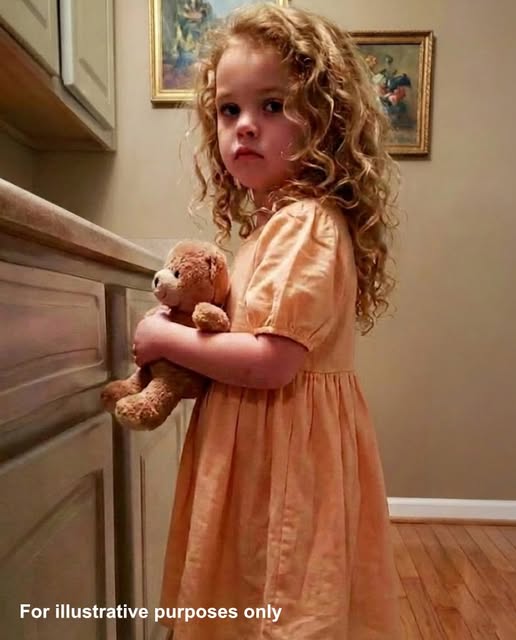
When Stacy’s mother-in-law insisted on spending private time with her granddaughter, Stacy finally relented — even though it went against her better judgment. But when Kitt came home unusually quiet, subtly changed, and secretive, Stacy’s instincts warned her something was wrong. As the small differences grew heavier and more troubling, she could no longer ignore the question: who was really being protected here?
I used to think grief was silent. Something you bore alone.
But the day my daughter Kitt was born, my mother-in-law Patrice announced to everyone that she had been given a second chance.
She said it with warmth — real warmth, I believe — tears glistening in her eyes at the hospital, one hand resting on her heart, the other softly stroking Kitt’s cheek.
I was still dazed from the epidural, but her expression stayed vivid: full of wonder, trembling slightly, almost as if she were praying quietly.
Patrice had a habit of turning requests into assumptions.
“You look exhausted, Stacy,” she said, already lifting Kitt’s little coat. “Let me take her for a while so you can rest.”
She smiled as she spoke. That’s Patrice — always smiling, as if every suggestion flowed naturally from care.
Finn, my husband, called it kind.
I saw it as carefully rehearsed.
The first time she asked for Kitt alone, I agreed. I wish I hadn’t. Not because I sensed danger, but because I never imagined how profoundly it would affect my child.
Refusing would have hurt Patrice’s feelings, and Finn would likely side with her, creating distance between us.
“Don’t you trust me, Stacy? I’m her grandmother! I just want to pamper her and make sure she knows I’ll always be here.”
I was irritated, I admit, but at the time, I thought it was innocent.
It started like any ordinary Sunday.
Patrice dropped Kitt off with a casual wave and left before I could ask about their day. My seven-year-old was usually bright and cheerful, but sometimes she had firm preferences.
Kitt didn’t rush into the usual hug. She entered slowly, shoes still laced, arms tucked inside her sleeves, as though shielding herself.
“Hey, sweet girl,” I said, arms open and smiling. “Did you have fun with Grandma?”
She barely responded, just tilting her head.
“Hungry, honey? Strawberries in the fridge. We can melt chocolate.”
“No,” she said sharply. “No, Mom.”
She moved to the kitchen counter, glancing toward the hallway.
“Kitt? Where are you going? Don’t you want to spend time together?”
Her voice was so soft I almost missed it. “Mom… Grandma said not to tell you what we did.”
“What do you mean?”
“She said to keep it a secret. I had to promise. It’s just for us.”
“Even so, baby, if anything felt strange or confusing, you can tell me. You know you can share anything with me, right? I won’t be upset.”
She stayed quiet, then stepped close and hugged me tightly, face buried against me. I held her, stroking her hair. I didn’t push.
But a sharp unease split open inside me.
That night, I mentioned it to Finn while he brushed his teeth.
“She told Kitt to hide what they did from me. That’s not normal, right?”
He met my eyes in the mirror, toothpaste foam at his lips. “Maybe it’s a surprise. Why do you always expect the worst?”
“It didn’t feel like a surprise… Something’s off.”
He rinsed and sighed.
“Was Kitt upset?”
“She seemed… hesitant. Like she was holding something back.”
“She’s seven. Maybe it was a game. Or maybe Mom just had her help with chores.”
“Or maybe not, Finn. Doesn’t it strike you as odd?”
He dried his face. “You’re tired, Stacy. Mom’s just trying to help. Let it go.”
That word — help — lodged in my throat again.
The next afternoon, I found an old photo tucked into Kitt’s backpack.
The corners were soft, the colors faded — clearly treasured. A young girl stood before a brick house, hair in neat twin braids, yellow dress, smiling warmly.
She looked so much like Kitt — but she wasn’t. I turned it over.
“To Mommy. You’re the best! Love, Becca.”
Below, in a different handwriting: “1992.”
I showed Finn while Kitt got ready for bed. He studied it, brow furrowed, as if recalling a distant memory.
“That’s Becca,” he said finally. “My sister.”
“I never knew you had a sister.”
“She passed before I turned ten. I barely remember her. Photos like this haven’t surfaced in years.”
“Then why was it in Kitt’s bag?”
“I don’t know. Probably meaningless. Kitt does resemble her a bit…”
But it meant everything. Especially when Kitt began humming unfamiliar lullabies, requesting tuna pasta instead of her usual chicken parmesan, returning from Patrice’s in old-fashioned sweaters, holding books published long before her birth.
“Where did this come from?” I asked, showing a worn novel.
“It’s Bee’s,” Kitt whispered. “Grandma let me borrow it.”
“Who’s Bee, sweetheart?”
“I never met the first Bee… but I’m the new one.”
Within days, Kitt wanted her hair in braids — two perfect, symmetrical ones — even though they pulled painfully. She begged to wear them to school.
“Grandma says it looks tidier,” she explained softly. “And tidy is good for school.”
I nearly shouted. I nearly drove to Patrice’s. Instead, I turned to Finn.
“She’s dressing Kitt in Becca’s clothes, giving her Becca’s books, calling her the ‘new Bee.’ Finn, admit it’s strange.”
“I think my mother is grieving.”
“No. She’s reshaping our daughter. Grief may be the cause, but this isn’t healthy.”
“She doesn’t mean harm,” he said. “Kitt reminds her of Becca. Let her keep that. Maybe it helps her heal… something we never could.”
“She’s turning our daughter into a replacement.”
I needed proof — not just intuition clawing at me.
So when Patrice texted about ice cream with Kitt, I agreed — then followed, two cars back, palms slick on the wheel.
They didn’t go to her house. They turned down a quiet, tree-shaded lane I’d never noticed — narrow, peaceful, unnaturally still.
At the end of a gravel drive stood a small cottage, paint peeling, green edges curling. They went inside.
Ten minutes later, Patrice emerged, clutching a framed photo. She sat on the porch swing, lit a citronella candle, and gazed into the trees.
Soon Kitt joined her — braids neat, yellow sweater loose.
They sat in silence. Then Patrice opened a small notebook and read aloud softly.
Kitt listened intently, then laughed — and the sound wasn’t entirely hers. She reached over, took Patrice’s hand, and pressed it to her cheek.
I couldn’t look away.
That night, while Kitt slept, I opened her nightstand drawer. A gold locket waited. I clicked it open, expecting our family photo.
Instead: Patrice holding an infant on one side, the girl from the photo — Becca — on the other. I showed Finn.
“Mom wore this every day after Becca died,” he said. “I thought she’d buried it.”
“Did you ever wonder why she stopped?”
He paused, eyes down.
“Because now Kitt has it… Still think nothing’s wrong?”
He stayed silent. When I knocked on Patrice’s door, she opened calmly, tired but unsurprised.
“Stacy,” she said softly, as if expecting me.
“We need to talk about Kitt.”
She let me in without a word and led me to the kitchen. The kettle was already on.
We waited quietly while she made tea — she remembered how I liked it.
“Patrice, my daughter is not… Becca.”
“I know, dear. I know.”
“Then why all this? She calls herself the ‘new Bee.’ Don’t you see how wrong that is?”
“Have you ever lost a child?” she asked, hands trembling as she set down the mugs.
“No. But I know what it means to raise one. And I won’t let mine live in someone else’s shadow.”
She sat slowly. “Kitt echoed Becca so much. Little things at first — how she held a crayon, her laugh, her handwriting. Then she asked questions, and I… answered.”
“You didn’t just answer. You pulled her into another life.”
“She loved the stories. She chose the sweaters, said I looked happier when she wore them.”
“She’s seven. She’s discovering herself. You gave her a role instead of room to grow.”
“I never meant to,” Patrice whispered. “I missed Becca terribly. I thought… maybe I could feel her again. Just for a moment.”
“You can miss her. But not through Kitt. She’s your granddaughter — not a substitute. I won’t let her erase herself to spare you pain.”
“What now?” she asked, finally meeting my eyes.
“I’m drawing a line. You need real help — therapy, counseling. You shouldn’t carry this alone.”
“And Kitt?”
“Unsupervised visits only after therapy. Otherwise, I’m present. No exceptions.”
“You’d really do that?”
My heart ached for her. I couldn’t imagine losing Kitt — yet she had carried that loss for decades.
“I don’t want to,” I admitted. “But I will. Because I’m a mother too, and I protect my child.”
“Okay, sweetheart. I’ll try.”
That night, brushing Kitt’s hair, she stayed quiet for a long time.
“I liked being Bee,” she said softly.
“I know, baby. But you don’t have to be anyone except yourself.”
“It made Grandma happy. She cried sometimes… even when we laughed.”
“Do you know why?”
“Because she missed Becca?”
“Yes. And maybe… she started missing the real you, too.”
“Did I do something wrong?”
“No, sweetheart. You were gentle and kind — exactly what she needed then. She’s hurting, and that’s okay.”
“I just want to be Kitt again.”
“You always have been, my love,” I whispered.
I remembered Patrice’s fragile voice.
“Mom… Grandma told me not to tell…”
But she did tell me.
And no one will ever hush her again.