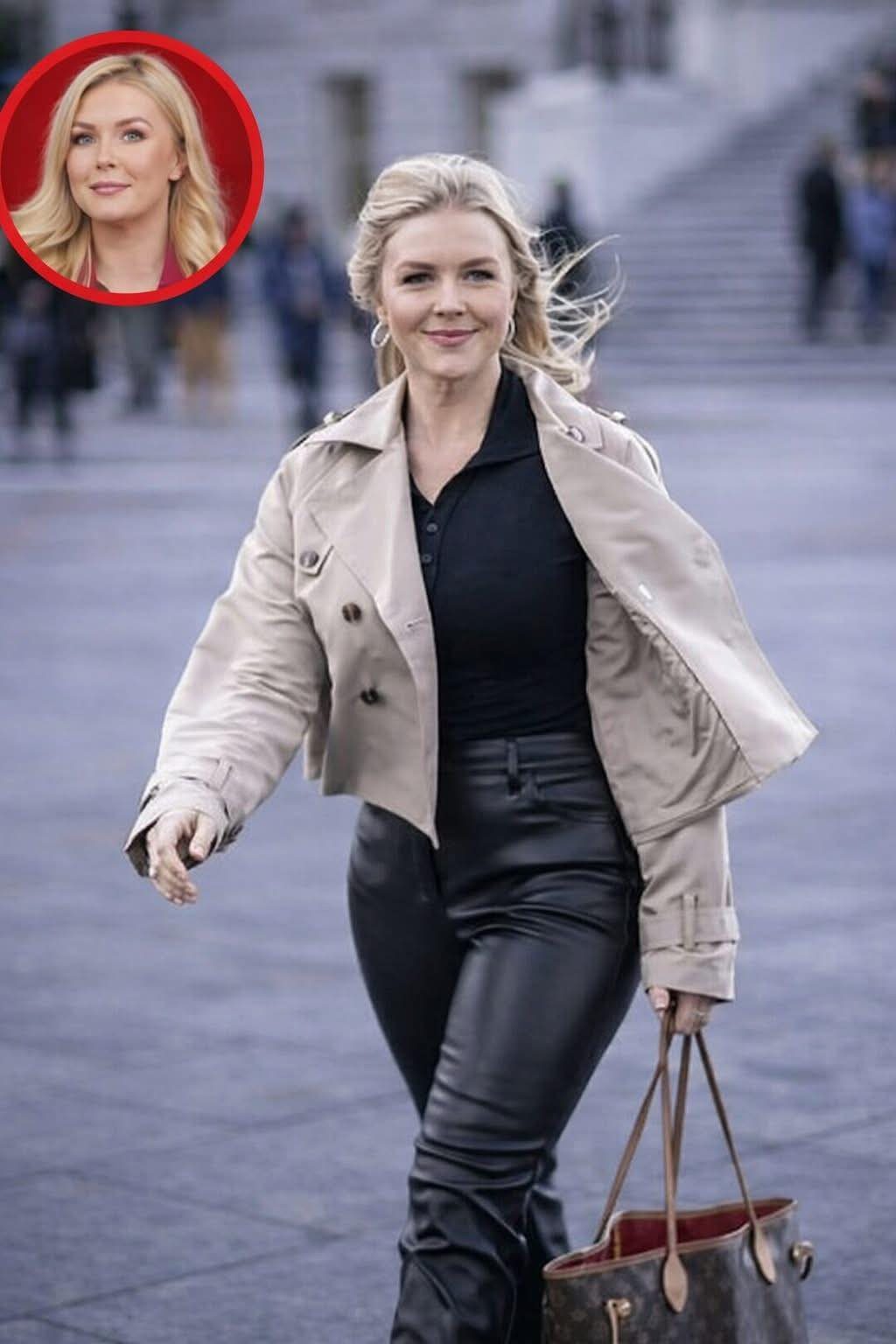
In today’s fast-paced political landscape, the boundary between professional conduct and personal style is increasingly blurred—sometimes down to something as seemingly trivial as a handbag. White House Press Secretary Karoline Leavitt recently found herself at the center of a social media storm, illustrating how even an innocuous post can be scrutinized for ideological consistency. At just 27, Leavitt is the youngest press secretary in U.S. history, a role that comes with relentless public attention. Yet, a weekend Instagram post shifted the conversation from her official statements to the designer accessory she carried, sparking debate about nationalism, luxury, and the peculiar intensity of online “call-out” culture.
The controversy had roots in a prior clash between Leavitt and French political figures. Tensions flared when a French politician provocatively suggested that the Statue of Liberty—a 19th-century gift from France—should be returned. Known for her incisive communication style, Leavitt fired back, reminding the official of U.S. support in the 20th century, and noting that without American intervention, the citizens of France might today be “speaking German.” While her supporters praised the statement as a firm defense of American history and values, it left a lingering tension regarding her interactions with French cultural symbols.
Social media quickly seized upon Leavitt’s weekend post, in which she carried a Louis Vuitton Neverfull tote—a flagship item from a French luxury brand. Critics highlighted an apparent contradiction: publicly admonishing France while sporting one of its most iconic products. Online discussions erupted, questioning whether a senior U.S. official could champion American nationalism while endorsing a quintessential French status symbol.
Supporters, however, pushed back just as strongly. Many dismissed the outrage as a classic “gotcha” tactic, arguing that a professional woman’s choice of fashion or accessories had no bearing on her competency in representing the administration. Leavitt’s defenders praised her composure, her professionalism, and her refusal to be drawn into trivial disputes. To them, the handbag was merely a practical, high-quality accessory suitable for someone managing the grueling demands of the White House.
This episode reflects a larger trend in modern politics: the personal has become inseparable from the professional. Every item an official wears, consumes, or displays is now evaluated for its political symbolism. For Leavitt, who belongs to a generation raised with social media, this scrutiny is magnified. A designer bag is never just a bag—it becomes fodder for discussions about patriotism, trade, and elite perception.
Perhaps most noteworthy was Leavitt’s response—or deliberate lack thereof. Rather than defending her handbag choice, she pivoted her social media presence to domestic life, posting images of family and quiet moments far removed from political theater. Scenes of baking with her young son and enjoying time with extended relatives subtly reinforced that her identity extends beyond her professional persona.
This tactic of “lifestyle insulation” is increasingly common among public figures. By highlighting the human side of her life, Leavitt diffused some of the tension surrounding the controversy. She reminded audiences that behind the poised press briefings is a young mother balancing career and family responsibilities. While online commentators debated the ethics of carrying a Louis Vuitton bag, she focused on everyday joys, allowing the controversy to fade naturally.
Yet the episode raises broader questions about expectations for modern public servants. Can one separate admiration for a culture’s fashion or artistry from disagreements with its government? In a global economy, creating a purely “patriotic” wardrobe is nearly impossible, as luxury goods often emerge from complex international supply chains, making accusations of hypocrisy almost inevitable for anyone in the public eye.
As Leavitt continues her historic tenure, she will face challenges far greater than the branding of a handbag. Still, this minor flare-up underscores the pressures of her position. Whether at the podium or strolling with a designer bag, every detail of her public life is under scrutiny. Her ability to navigate these pressures while preserving her private life will likely define her tenure. For now, she remains a captivating figure: the youngest woman to speak from one of the world’s most powerful microphones, learning firsthand that in politics, even the smallest details become part of the story.