Leaving behind the frantic pace and towering buildings of New York City for the open hills of rural Pennsylvania was meant to mark the start of our “real” life. My husband, Mason, painted the move as a return to something wholesome and grounded. He talked about peaceful streets, better schools, and the gift of raising children close to family. Looking at our five-year-old twins, Anna and Rose, I let myself believe him. We gave up our cramped Manhattan apartment—and the fire escape we loved—for a large house with a yard, convinced we were doing what was best for our daughters. What I didn’t anticipate was that in a town where everyone knows you, people also feel entitled to rewrite your story for you.
The issue wasn’t the town itself, but how tightly Mason’s family wrapped themselves around our lives. His mother, Cora, and his sister, Paige, didn’t simply stop by—they inserted themselves into everything. Cora appeared without warning several times a week, often with baked goods in hand, though her true purpose felt more like inspection than generosity. She analyzed every parenting decision I made, from what the girls ate to whether their socks matched. Her questions carried judgment disguised as concern. “Are the vegetables raw or cooked?” she’d ask, as if there were a wrong answer either way.
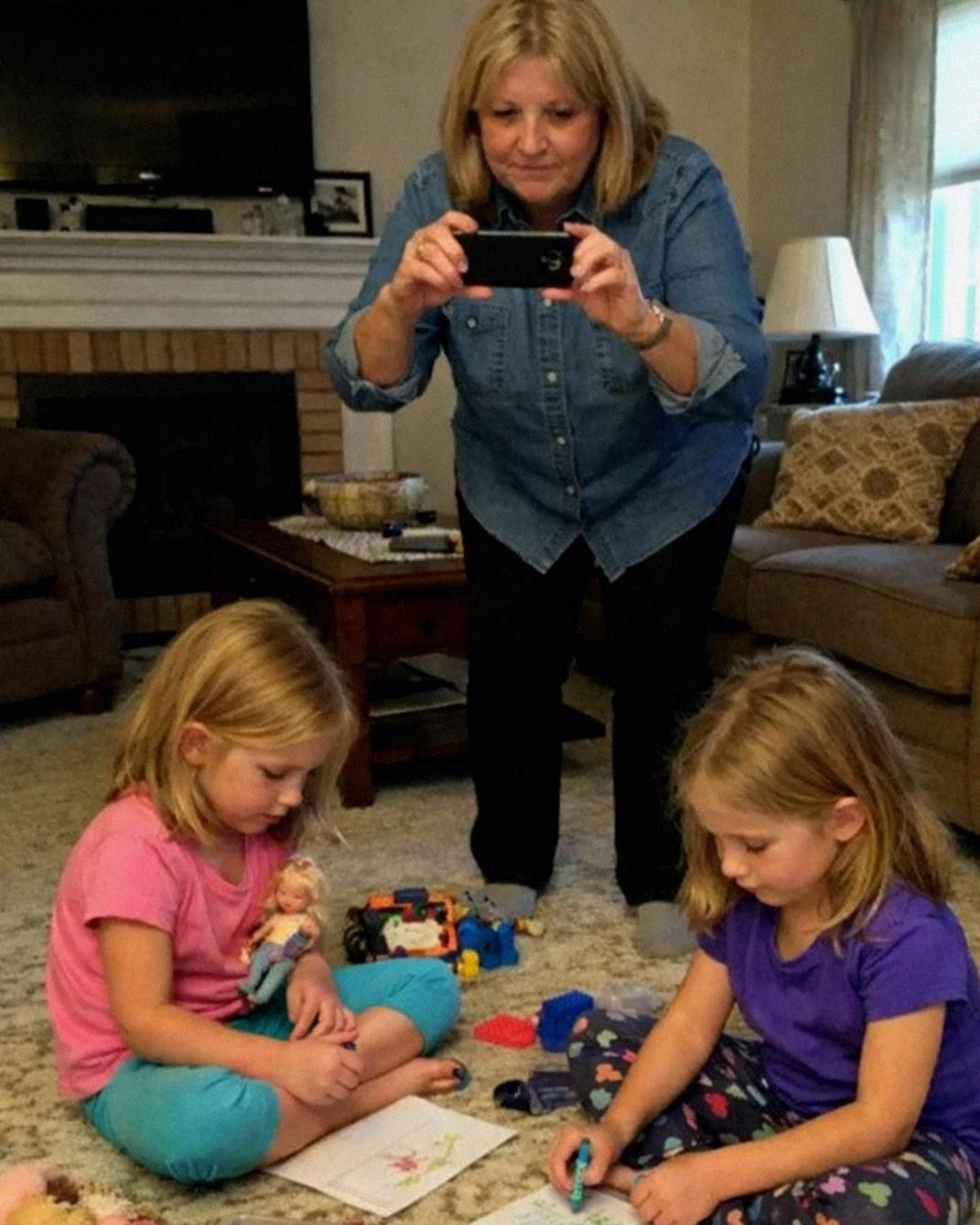
What unsettled me most was the constant filming and photographing. This wasn’t casual grandmother behavior. It was nonstop. Photos while the girls colored, videos of them playing in the yard, and—most disturbing—footage of tantrums, tears, and disheveled mornings. When Rose cried in the grocery store one afternoon, Mason’s aunt didn’t step in to help; she laughed and pulled out her phone, joking that she was saving it “for the wedding slideshow.” I felt exposed, like my motherhood was being cataloged and evaluated. When I raised my concerns with Mason, he brushed them aside. “They’re just excited,” he told me. “They love the girls.” But deep down, I felt certain this wasn’t about love. It felt strategic.
Everything unraveled on a sweltering Saturday night during a family dinner. The house buzzed with noise and laughter, while Mason’s father, Billy, sat silently in his usual corner. Paige was recording the twins again, capturing their sugar-fueled chaos. Midway through the meal, I realized we’d run out of sparkling water. I headed out to the car, only to notice halfway down the driveway that I’d forgotten my wallet. I slipped back inside through the side door, moving quietly.
That’s when I heard them.
“Did you get enough?” Cora asked, her voice stripped of warmth.
“I think so,” Paige answered. “I have the clip where she forgot Anna’s lunch last week. And Rose’s hair—completely tangled. It looks bad.”
“Perfect,” Cora replied coldly. “We need to show she can’t handle it. That she’s overwhelmed. If Mason ever wakes up, the lawyer said this is exactly what we’ll need for custody.”
The air left my lungs. They weren’t worried about the girls—they were building a case to take them from me. Every imperfect moment, every human slip, was being turned into ammunition.
I stepped into the kitchen before fear could stop me. “Proof of what?” I asked, my voice shaking but steady.
Cora went pale. Paige froze, phone still in her hand. The mask fell instantly. Cora crossed her arms and claimed they were acting out of concern, insisting I was “clearly struggling.” She cited my exhaustion and my “city mentality” as proof that I didn’t belong there.
I didn’t tell Mason right away. I knew it would become a matter of denial and excuses, my word against theirs. I needed certainty—something undeniable. The next night, while tucking the girls into bed, I asked them softly, “What would you do if Mommy had to go away for a while?” Their response shattered me. They clung to me, crying, begging me not to leave. I recorded it—not to exploit their pain, but to preserve the truth of our connection.
The following evening, I made my move. I invited family, neighbors, and a few friends over for what I called a casual get-together. Mason was pleased, thinking I was finally embracing the town. Once everyone settled, I stood up and said I wanted to share some memories. The projector flickered on, filling the room with images of our life—reading together, dancing in the kitchen, ordinary moments full of love.
Then I played the video of the girls, terrified at the idea of losing me.
I turned toward Cora and Paige. “You wanted evidence of my parenting,” I said evenly. “This is it. And I know about the lawyer. I know you’ve been documenting my so-called failures to try to take my children.”
The room went silent, followed by murmurs of shock. Mason stood abruptly, confusion giving way to rage. He demanded the truth. When Cora finally admitted they’d spoken to a lawyer “just in case” I tried to leave with the girls, Mason didn’t hesitate. “Get out,” he said. “And don’t come back.”
After they left, the house felt hollow. Mason broke down, apologizing for not seeing what was happening, for failing to protect us. “If you want to go back to New York, we will,” he said. “Nothing matters more than you being safe.”
Three weeks later, we were home. The girls adjusted instantly, thriving in the rhythm they’d known first. I still have the photos Cora took—the ones meant to be used against me—but I see them differently now. A forgotten lunch or messy hair isn’t neglect. It’s life. I learned that the most dangerous threats don’t always come from strangers. Sometimes they come smiling, holding a camera.
Now I have my own proof: laughter filling our apartment, peace replacing fear, and a home where no one is waiting for me to fail. In the end, the strongest defense against manipulation is the courage to live openly and tell your truth before someone else tries to tell it for you.