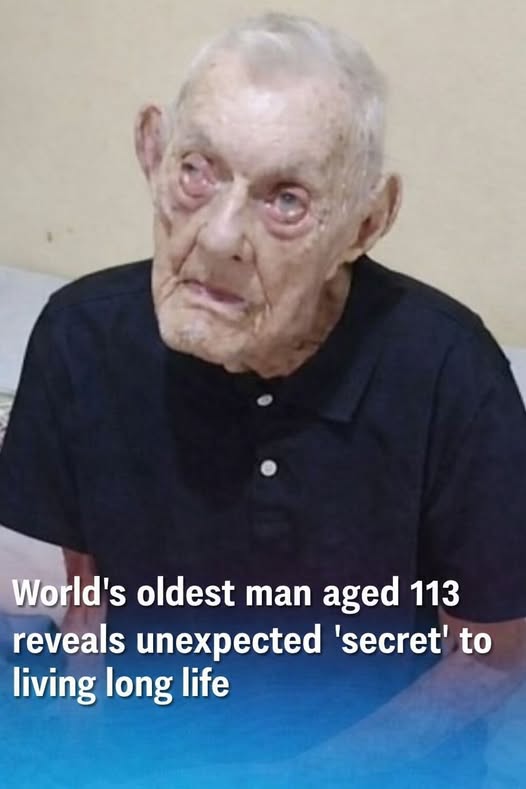
A Brazilian-born man has officially become the world’s oldest living man, and his explanation for reaching such an extraordinary age is surprisingly simple. João Marinho Neto claimed the prestigious title last November following the death of the previous record holder, John Tinniswood. Recently, he celebrated his 113th birthday on October 5, marking yet another milestone in a life that has now captured global attention. While many people today pursue extreme measures—ranging from biohacking experiments to costly medical treatments—in hopes of delaying the effects of aging, those who live past 100 often credit far more modest, everyday habits that nurture both body and spirit.
Neto’s story fits perfectly into this pattern. At the time he inherited the record, he was 112 years and 52 days old, which made him not only the oldest living man in the world at that time but also 26th among the oldest men in recorded history. He now sits just shy of entering the top ten all-time list of male longevity, though he still trails several years behind the longest-lived man on record, Jiroemon Kimura. His remarkable age, however, is not just a number—it is a testament to a life lived with simplicity, care, and connection.
Despite his extraordinary longevity, Neto remains younger than the world’s oldest living woman, England’s Ethel Caterham, who is more than three years his senior. Nevertheless, Neto’s story has resonated globally, sparking curiosity and admiration. Media outlets and social platforms worldwide have highlighted not only his impressive age but also the surprisingly uncomplicated philosophy he attributes to his long life.
According to Neto, the secret to his longevity isn’t a specialized diet, a regimented exercise routine, or any particular medical treatment. Nor does it lie in some elaborate daily ritual or supplement. Instead, he credits a lifetime spent surrounded by loved ones and “good people.” The simplicity of this answer may surprise some, especially in a world often obsessed with quantifiable methods to prolong life. Yet, his perspective reinforces an increasingly recognized idea in longevity research: happiness, meaningful connections, and a positive outlook may play just as significant a role as genetics or lifestyle choices when it comes to living a long, fulfilling life.
Neto’s story is a gentle reminder that extraordinary longevity doesn’t necessarily require extraordinary measures. Sometimes, it is the everyday choices—the kindness shared, the family nurtured, the friendships maintained—that quietly contribute to a life that endures over a century. His life serves as both inspiration and reflection: perhaps the true “secret” to a long life is less about what you do for yourself and more about the love and care you give to and receive from those around you.