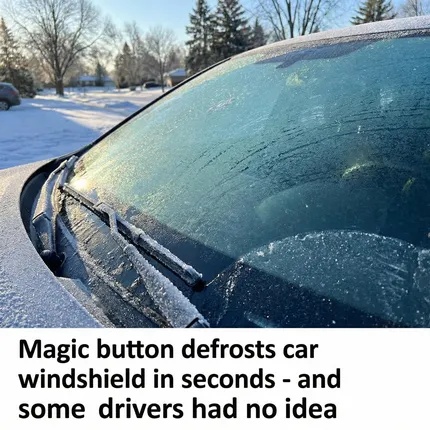
Winter mornings have a way of challenging even the most organized routines. The cold air bites as soon as you step outside, windshields are often glazed with frost, and the ticking clock reminds you that every minute counts. A drive that should be simple can quickly become stressful before the day has even properly begun. Many drivers reach instinctively for scrapers or resort to rushed methods to clear frost, unaware that their vehicle may already have a built-in feature designed to handle exactly these conditions. Learning to understand and properly use this function can transform hectic winter mornings into smoother, safer starts.
Most modern cars are equipped with a windshield defrost setting, a feature that is far more efficient than many people realize. When activated, it directs warm air toward the windshield while simultaneously engaging the air-conditioning system. This combination is deliberate and highly effective. The warm air loosens ice and frost on the glass, while the air-conditioning removes excess moisture from the cabin. The result is not just a clearer windshield, but also reduced fogging, ensuring better visibility immediately and for the first several minutes of driving. Rather than struggling against winter’s elements, the defrost system works in harmony with the vehicle’s engineering to make your commute safer and less stressful.
Using the defrost function is straightforward and requires minimal effort. Start the engine, set the temperature to a warm level, and press the windshield defrost button—often marked with a small icon depicting curved glass. Within minutes, the windshield begins to clear from the inside out, providing a safe view of the road without the need for scraping, tapping, or other risky shortcuts. On particularly cold mornings, when frost is stubborn and visibility is limited, this method can save significant time while protecting both you and your vehicle. It’s a simple step that prevents hurried, potentially dangerous actions in the driveway or parking lot.
Relying on the defrost system also benefits your vehicle’s long-term care. Pouring hot water on frozen glass can cause sudden temperature changes, leading to cracks or stress fractures in the windshield. Aggressive scraping with metal tools can leave scratches that weaken the glass over time. For drivers whose cars lack a dedicated defrost feature, preparation becomes even more important. Using windshield covers, applying de-icing sprays, and keeping interior humidity low can all reduce frost buildup. Developing simple habits—like regularly cleaning windows, wiping off condensation, and avoiding excess moisture inside the car—can make a noticeable difference in winter visibility.
By combining awareness, preparation, and proper use of built-in features, winter mornings can become far less stressful. Clearing frost and fog safely, protecting your windshield, and improving visibility are all steps toward a calmer, more controlled start to the day. With a little planning, you can leave the frustration behind and begin your morning commute calmly, confident that both you and your vehicle are ready to face whatever cold and ice the season may bring.