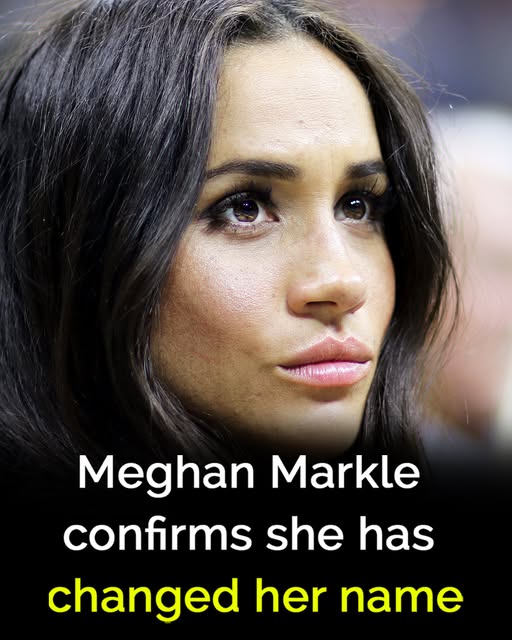
Meghan Markle has ignited a new round of media attention with a simple clarification: she no longer uses “Markle” as her surname. In casual settings and on camera, the Duchess of Sussex has been going by “Sussex,” aligning with Prince Harry and their children, Archie and Lilibet. This change has reignited the ongoing debate about royal titles, family names, and the line between tradition and personal branding.
The conversation began on Meghan’s new Netflix series, With Love, Meghan. During an interview with Mindy Kaling, Kaling referred to her as “Meghan Markle.” Meghan corrected her gently but firmly, explaining that she now uses “Sussex.” She said the choice was personal rather than political: motherhood gave her a new perspective on names. Sharing the same surname as her children, she explained, felt like a quiet milestone she hadn’t realized would matter so much until she had them.
For Meghan, “Sussex” is more than a title. It represents the household she and Harry have created—a family decision and a symbol of unity, linking her, Harry, Archie, and Lilibet under one name. She has echoed this sentiment in interviews, emphasizing the emotional meaning behind the choice and how it reflects their family story.
The timing of the announcement amplified attention. Her Netflix series, focused on lifestyle, home, and hosting, already invites scrutiny over what it “signals” about her next steps. Adding a name change to the mix fueled speculation: some see it as a natural evolution, while others view it as a calculated rebrand, and many fall somewhere in between.
The controversy also arises from the public’s expectations around royal names. In everyday life, surnames are generally fixed, tied to legal documents and personal identity. In royalty, however, names can be flexible—used situationally or strategically. Titles can serve as surnames, and family names may appear or be omitted depending on context. The same person can be known differently in formal, professional, ceremonial, or private settings.
Critics argue that “Sussex” is a courtesy title rather than a true last name. They say her legal surname should be “Mountbatten-Windsor,” noting that “Sussex” is a county, not a traditional surname, and question the optics of using it as a family name. Some emphasize that Meghan has no direct personal connection to Sussex as a place.
Public reaction has split into two camps. Some see the name change as normal within royal circles and unremarkable. Others see it as an overreach, performative, or selective—highlighting that she likely wouldn’t have “Sussex” on official documents like a California driver’s license.
Even pronunciation has become part of the story. Meghan has been introduced publicly as “Meghan Sussex,” which made the change feel more official to viewers, even if it was simply honoring her preference. Supporters see it as consistent; critics see it as a title being forced into an everyday context.
This debate ties into the broader tension over Meghan’s choices. Using “Markle” is sometimes labeled as clinging to celebrity, while “Sussex” is seen as clinging to royalty. Using her title invites accusations of hypocrisy; dropping it invites claims of disrespect. The criticism often reflects perceptions of her persona rather than the name itself.
Meghan’s father, Thomas Markle, has also commented publicly, framing the decision as a rejection of the Markle family and suggesting it would have hurt his late mother, who was proud of the name. His recurring media statements continue to stir controversy.
At its core, the situation reflects a longstanding royal practice: members of the royal family often use territorial titles as practical surnames. Prince Harry, for instance, has done so during his military service. Under this convention, “Sussex” functions as a practical family identifier linked to the dukedom.
Formal naming conventions, however, can differ from casual usage. Legal names, titles, and styles don’t always align, which is why debates over royal surnames persist. Meghan’s choice appears motivated by identity and family cohesion rather than legal requirements. She’s signaling how she wants to be addressed publicly and privately as a wife and mother.
Media outlets will likely continue using “Meghan Markle” because it’s instantly recognizable. Public habits change slowly, and celebrity-linked names change even slower.
For now, “Sussex” has become a symbol in a broader debate—over etiquette, loyalty, status, and what Meghan represents. Like many symbolic controversies, it’s louder than necessary, but it reflects how names carry meaning far beyond the words themselves.