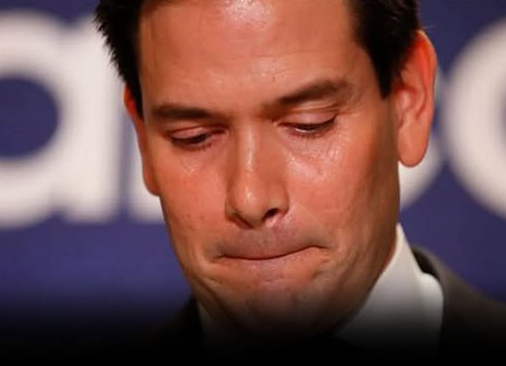
What recently occurred inside Washington’s institutional machinery was far more than a routine reshuffle or ceremonial promotion. It represented a subtle yet consequential transfer of authority, highlighting how real power often moves quietly. Marco Rubio’s rise to oversee a seldom-scrutinized office signals a shift in federal influence—away from public debate and toward mechanisms that operate largely out of sight.
The office now under Rubio’s direction does not pass laws, command agencies, or dominate headlines. Its power lies elsewhere: at the narrow gate through which regulations must pass before coming into effect. Authority here is not about authorship, but permission. It decides which proposals advance, which are quietly delayed, diluted, or buried—often before the public is even aware they existed.
This corner of government functions as a choke point. Environmental safeguards, labor protections, consumer rules, and public health standards all funnel through it. Agencies may spend years drafting regulations, yet this office can stall them indefinitely through extended review, requests for revisions, or cost-benefit analyses that never conclude. No vote is taken, no public hearing is required, and often no explanation is given.
For decades, this authority thrived in bureaucratic obscurity. Its language was technical, its processes opaque, its impact difficult to trace. That opacity served as a shield: decisions here rarely make news because they result in absence rather than action. A rule that never appears leaves little evidence of suppression.
That dynamic is now attracting attention. As frustration with government paralysis grows and trust in institutions erodes, the spotlight has turned to the hidden levers shaping policy without public participation. The question is no longer whether such power exists, but who wields it, how it is exercised, and whether it aligns with democratic principles.
Supporters defend this regulatory gatekeeping as essential. They frame it as a check on bureaucratic overreach, a safeguard against redundant rules, and a tool for maintaining economic efficiency. Centralized review ensures agencies do not act in silos, producing coherent, justified regulations.
Critics see something else entirely. Concentrating this power behind closed doors allows a few officials to override Congress’s intent and the expertise of regulatory agencies without accountability. When rules vanish in prolonged review, there is no formal rejection to contest, no record to appeal, no explanation to debate. Power is wielded through delay rather than decision.
The tension between efficiency and transparency is not new, but it has sharpened. In a polarized political climate, the legitimacy of quiet authority is increasingly questioned. Oversight once defended as neutral is now seen as a tool capable of reshaping national policy without public consent.
Rubio’s role matters not for the announcements he will make, but for how the office operates under his leadership. His record shows a politician skilled at navigating both populist optics and institutional discretion—a combination that makes his stewardship especially consequential.
In the months ahead, his influence will be judged by process rather than press releases. Will reviews be time-bound and documented, or stretch indefinitely? Will standards be applied consistently or selectively? Will agencies receive clear guidance or opaque feedback that leaves proposals in limbo? These choices will shape policy far more than any speech.
Transparency could redefine perceptions of this office. Publishing criteria, timelines, and rationales would signal that restraint need not mean secrecy, and that oversight can coexist with accountability. Such reforms would not erase controversy but could restore some trust in how regulatory power is wielded.
The alternative is familiar: internal review delays decisions, rules vanish, protections quietly weaken, priorities shift unannounced. Citizens feel the impact but cannot see the cause, breeding cynicism and reinforcing the sense that government operates beyond reach.
What makes this moment notable is awareness. Americans are recognizing that the most consequential decisions are not always made on the Senate floor or announced at podiums. They are often made in offices where silence dominates. Absence becomes policy; delay becomes veto.
Rubio now stands at that junction. His influence will be measured not by how loudly he speaks, but by how deliberately he allows the system to function. In Washington, where power often hides behind procedure, his choices will determine whether hidden authority remains a tool of governance or a symbol of democratic erosion.
Visible conflict is abundant in the capital, but the quieter machinery—the one deciding which ideas are allowed to exist at all—is just as powerful. As scrutiny grows, Americans may come to understand that the most decisive power in government is not always the kind that announces itself, but the kind whose effect is only noticed when something is missing.