Lena had always loved working at the front desk of the grand Meridian Hotel. From the moment she stepped into the lobby each day, she felt a sense of pride in being part of a place where elegance and precision mattered. The marble floors gleamed beneath towering crystal chandeliers, and every detail—from the polished brass railings to the soft music drifting through the air—signaled luxury. Guests who stayed at the Meridian expected perfection, and Lena understood that her role at the front desk often set the tone for their entire experience. She had learned to balance warmth with professionalism, calm with efficiency, no matter how stressful the situation became.
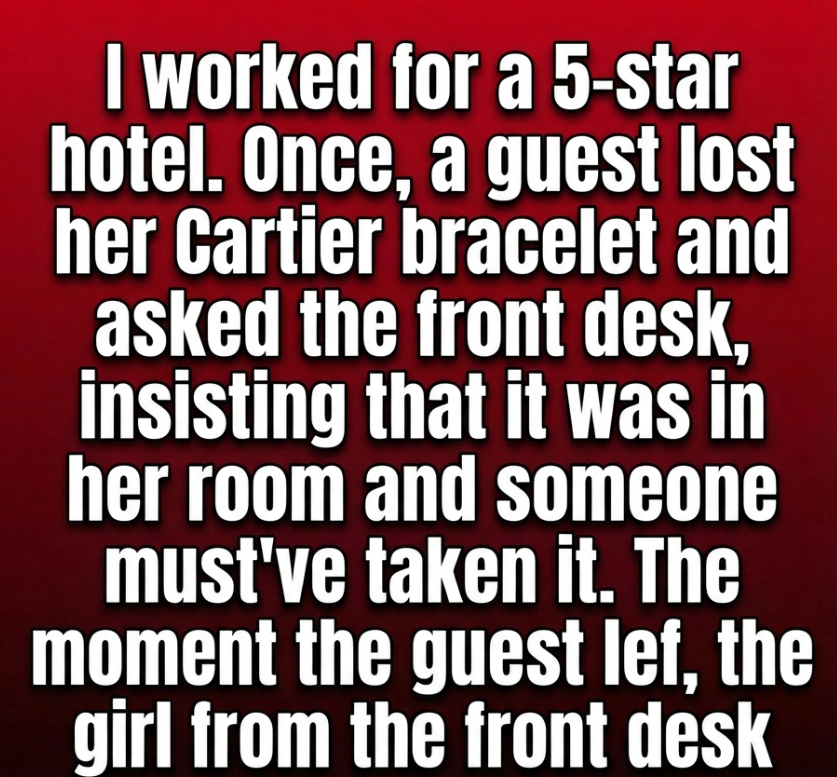
One evening, during a particularly busy shift, a woman rushed toward the desk, her face pale and her movements frantic. She explained breathlessly that she had lost her Cartier bracelet and was certain it had been left in her room. Her voice trembled with panic as she insisted that someone must have taken it. The bracelet, she said, was extremely valuable—both financially and sentimentally. Lena listened attentively, maintaining a composed and reassuring expression while carefully choosing her words. She assured the guest that the hotel took such matters very seriously and that an investigation would begin immediately.
Following protocol, Lena alerted hotel security, contacted housekeeping, and reviewed room access logs. Staff members were questioned, cleaning schedules were checked, and security footage was examined. Despite the thorough search, no trace of the bracelet was found. As time passed, the guest’s frustration grew. Her tone became sharper, and her trust in the hotel began to erode. Eventually, she left the lobby visibly upset, promising to contact hotel management the next day and hinting at formal complaints.
When the lobby doors finally closed behind her, Lena released a quiet breath she hadn’t realized she’d been holding. She walked to the back office, where her coworker Mia sat monitoring the security cameras. Without saying a word, Lena opened her desk drawer and gently placed a small velvet pouch on the table. Inside lay the missing Cartier bracelet, its polished gold surface catching the fluorescent light. Mia’s eyes widened in shock.
Lena calmly explained what had happened earlier. While assisting the guest at the counter, she had noticed something glinting inside the lining of the woman’s handbag as it rested open on the desk. Looking more closely, Lena realized the bracelet was tangled in the fabric, barely secure. Before she could mention it, the guest abruptly rushed off to search her room again, leaving the bag unattended for a brief moment. Fearing that the bracelet might slip out and be lost forever—or picked up by someone else—Lena had discreetly removed it for safekeeping, fully intending to report it properly.
Both women immediately recognized how easily the situation could be misunderstood. Handling a guest’s valuable property without documentation—even with good intentions—carried serious risk. Determined to do everything by the book, they contacted the hotel’s lost-and-found supervisor right away. Together, they documented every detail: the time, the location, how the item was discovered, and why it had been temporarily secured. The bracelet was sealed in a secure envelope, logged into the system, and placed in the hotel safe. Lena also sent a detailed email to management, explaining the situation step by step and emphasizing that her actions were taken solely to protect the guest’s belongings.
Following proper procedure brought a sense of relief. Transparency ensured that no one could question what had happened or why. The potential for misunderstanding had been replaced with a clear paper trail and accountability.
The next morning, the guest returned to the hotel, still visibly upset and convinced her bracelet had been stolen. When the lost-and-found supervisor presented the sealed envelope and explained exactly how the bracelet had been recovered and safeguarded, her expression changed instantly. Relief replaced suspicion, and embarrassment softened her tone. She apologized for her earlier accusations and sincerely thanked the staff for their honesty and professionalism.
Lena simply smiled, grateful that integrity had prevailed. Working in hospitality often meant navigating pressure, high expectations, and emotional situations where misunderstandings could escalate quickly. But moments like this reminded her why professionalism mattered so deeply. In an environment where trust can be fragile and reputations are easily damaged, doing the right thing—quietly, carefully, and with respect—can transform suspicion into gratitude and protect both guests and staff from unnecessary harm.