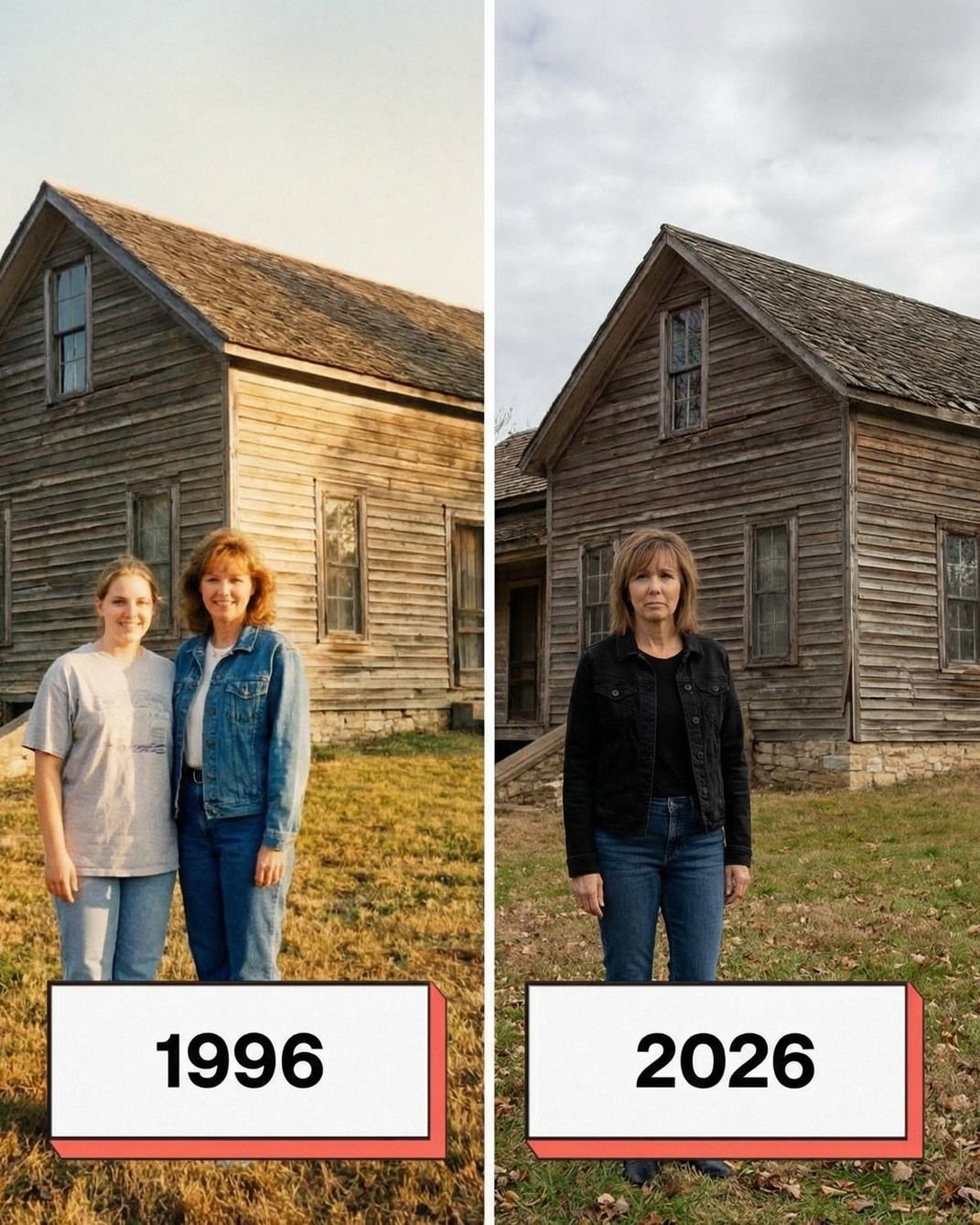
All my life, one door in our Pennsylvania home was forbidden to me. It was an ordinary door by all accounts — a cellar door, plain and unremarkable in the middle of a narrow hallway that led to a dark, forgotten part of the house. Yet, there was something about it, something unspoken and constant, that filled it with an air of mystery. The door’s old wooden frame was chipped and weathered, its paint peeling away in places, revealing the wood beneath. The handle was always cold, even in the heat of summer. My mother, Lorraine, was the quiet sentinel guarding this threshold. She never raised her voice, but there was an unmistakable firmness to her presence when I was near it. If I lingered too long, just touching the edge of curiosity, she would appear out of nowhere, gliding silently down the hallway, and in her gentle but insistent way, she would tell me to step away. There was no explanation, no justification for this rule, just a quiet certainty in her demeanor. My father, John, never questioned it, as though it was a sacred law, not to be spoken of or disturbed. It was as though we all knew there was a space in our home that was untouchable, and that was the end of it.
I stopped asking questions after a while. As I grew older, the mystery of the door, and of what lay behind it, stayed with me. I went off to college, then got married, and later divorced. With each passing year, the door became less of an obsession, but never entirely faded from my mind. And still, each Christmas, when I would return to the house, I would pass that narrow hallway. The door would be there, silent, ever present, just out of reach.
When I was forty-one, my mother’s health took a turn for the worse. She had always been strong, a pillar of unspoken resilience, but illness wore her down quickly. One winter morning, I was sitting by her bedside, holding her hand as she drifted in and out of consciousness. She seemed distant, but when she finally looked up at me, her gaze was sharp, clear, and urgent. She took my hand in hers and pressed something small, cold, and metallic into my palm. It was a key — a small, brass key, tarnished with age. She whispered, her voice weak but insistent: “It’s time, my dear. You’re the only one who can open it now. You must do this.”
Her words were unexpected, and for a moment, I was confused. The cellar? Now, after all these years? I had never thought much about the door, except as a strange, persistent fixture in our home. I didn’t even know what she meant by “it’s time,” but I nodded anyway, wanting to comfort her, to acknowledge the gravity of the moment. Her hand fell from mine as she fell into another long sleep. The next morning, after my father had left the house for his errands, I stood before the cellar door, key in hand, my heart pounding in my chest. The door, as I had always known it, was still the same — quiet, imposing, and waiting. Without hesitating, I turned the key in the lock.
The air inside felt like it had been preserved for decades, thick with dust and the faint smell of something old, something forgotten. It was not what I expected. Instead of piles of old boxes or clutter, there was something far more surreal waiting below. As I stepped down the stairs, I found myself in what could only be described as a nursery. It wasn’t a room of storage, as I had imagined, but a room frozen in time. A crib stood in one corner, freshly made with a soft, white blanket neatly folded. Beside it, a worn rocking chair creaked in the silence, untouched for years. Even a stuffed rabbit, its fur faded and frayed from time, sat in the corner of the crib as though it was waiting for a child’s return. I stood there, stunned, my mind trying to comprehend what I was seeing.
And then I saw the photographs. Pictures of my mother, young and glowing with happiness, holding a baby girl in her arms. The little girl looked so much like me, but there was something different about her — something familiar, yet entirely unfamiliar at the same time. The dates on the photographs revealed the truth that my mother had kept hidden for so long.
The baby was Abigail, my sister. She had been born two years before me, but she had died suddenly from an illness when I was just a child. I had no memory of her, and my mother never spoke of her. But as I stood there in the nursery, surrounded by the remnants of my sister’s life, I realized that my mother had kept this part of her heart locked away, preserving it like a precious memory she couldn’t bear to let go of.
Upstairs, I found the cassette tape that would explain everything. My mother had recorded it years ago, her voice shaky but clear. She spoke of Abigail, of the unbearable pain of losing her, and how my father had never been able to grieve. He had shut down completely after Abigail’s death, unable to face the loss of his daughter. But my mother had never stopped grieving. She had built this secret space, hidden away from the world, where she could remember Abigail, where she could keep her alive in the way only a mother could. She had kept the nursery untouched, and Abigail’s ashes carefully stored in a small urn, hidden from everyone, even from me.
My father, when he saw the urn and the photographs, stood in silence. The truth had finally come out, but it wasn’t easy for him to accept. That evening, after years of keeping his emotions bottled up, he finally spoke. For the first time in my life, I saw him break down. He had always been a quiet man, reserved and distant, but in that moment, he let the grief pour out. He had been carrying the weight of that loss for so many years, and it had consumed him.
The next day, my mother passed away. We buried her beside Abigail, in a small plot of land just outside the house. We laid her to rest beside the daughter she had never stopped loving, and for the first time, I understood the depth of her pain — and the depth of her love.
Some doors, it seems, are locked until hearts are ready to open them. But when they finally do, it can bring healing. It can bring peace. It can bring an understanding that no amount of time can erase. I never imagined that behind that locked door, behind the layers of silence and secrecy, there would be a part of my family’s story I didn’t even know I was missing. But opening that door, finally, gave me a peace I never expected.