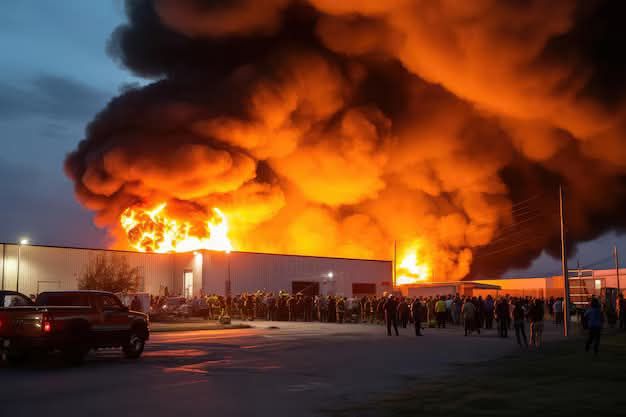
A fast-moving fire ravaged a densely populated hillside neighborhood in southern Lima on Saturday afternoon, causing widespread destruction and leaving hundreds of families suddenly homeless. The blaze erupted in the Pamplona Alta sector of San Juan de Miraflores, an area known for its tightly packed, often improvised housing. Despite residents’ initial efforts to contain the flames, the fire quickly grew beyond their control.
Thick black smoke billowed over the district as the flames raced from one structure to the next, driven by strong afternoon winds and fueled by highly flammable materials. By early evening, firefighters confirmed the blaze had been brought under control, though not before causing significant damage. Local authorities estimate that at least 300 homes were either damaged or destroyed, with the final tally expected to change as further assessments are made.
Emergency crews from across Lima were deployed, including multiple units from the Peruvian Fire Department, as well as police and civil defense teams. Sirens echoed through the streets as residents fled with whatever belongings they could carry, many watching helplessly as years of hard work and memories turned to ash.
Firefighters on the ground reported that the fire spread rapidly due to the nature of construction in Pamplona Alta. Many homes are made of wood, plywood, plastic sheeting, and other highly combustible materials, often without sufficient spacing or firebreaks. Narrow streets and steep terrain made access difficult for emergency vehicles, delaying efforts to contain the fire during critical moments.
Authorities also revealed that the blaze may have reached an illegal fireworks workshop hidden within the neighborhood. Officials suspect this pyrotechnics operation may have significantly intensified the fire. Witnesses reported hearing loud popping sounds and seeing sudden bursts of flames as the fire spread, which appeared consistent with the ignition of pyrotechnic materials. Several of these explosions were captured on video and shared widely on social media, intensifying the panic among residents.
Investigators are now considering the suspected workshop as the likely origin of the fire, although the official cause has not yet been determined. A full investigation is underway to determine whether negligence, faulty wiring, or illegal activity sparked the blaze. Authorities have cordoned off parts of the affected area to allow forensic teams to work safely amid the debris.
As night fell, the human toll became clearer. Hundreds of families were left without shelter, many forced to sleep outdoors or seek temporary refuge with relatives, neighbors, or emergency shelters set up by local authorities. Aid workers distributed water, blankets, and essential supplies, but the need for assistance remained overwhelming.
Local officials from the Municipality of San Juan de Miraflores stated that emergency housing solutions were being coordinated with regional and national agencies. Schools and community centers are being prepared to accommodate displaced residents, while social services teams are identifying the most vulnerable families, including those with children, elderly residents, and people with disabilities.
“This is a tragedy for our community,” one official said. “Many families have lost everything. Our priority is ensuring safety, providing shelter, and delivering immediate assistance.”
Residents described scenes of chaos as the fire spread. Some tried to douse the flames with buckets of water, only to realize their efforts were futile. Others rushed to disconnect gas tanks, fearing further explosions. In some cases, neighbors formed human chains to help elderly residents evacuate steep hillside paths as smoke thickened and visibility dropped.
Despite the severity of the fire, authorities confirmed that no fatalities have been reported. Several people were treated for smoke inhalation and minor injuries, while a few firefighters sustained exhaustion-related injuries after hours of battling the blaze under extreme conditions.
This incident has once again highlighted the precarious living conditions in many of Lima’s informal settlements. Rapid urbanization, limited access to regulated housing, and economic hardship have led thousands of families to build homes wherever land is available, often without basic safety infrastructure. Fires in such areas are tragically common, particularly during the dry season when strong winds and low humidity increase the risk.
Urban planners and safety experts have long warned that clandestine workshops, illegal electrical connections, and overcrowded construction heighten the danger of large-scale fires. Saturday’s disaster has reignited calls for stricter enforcement, community education, and investment in safer housing solutions.
As daylight returned on Sunday, residents began sifting through the ruins of their homes, searching for anything they could salvage. Twisted metal, charred wood, and melted plastic covered the hillside, while the smell of smoke lingered heavily in the air. For many, the reality of what had been lost only began to sink in once the flames had been extinguished.
Humanitarian organizations and local charities have mobilized to collect donations for food, clothing, and essential supplies. Authorities urged the public to contribute through official channels to ensure aid reaches those most in need and to avoid creating congestion in the affected area.
Meanwhile, firefighters continue to monitor hotspots to prevent flare-ups, and engineers are assessing the structural integrity of partially damaged homes to determine which areas remain unsafe. Power and water services have been disrupted in parts of the district, with crews working to restore utilities where possible.
The fire in Pamplona Alta stands as one of the most destructive incidents the district has faced in recent years. While the flames have been extinguished, the recovery will be long and difficult. For hundreds of families, rebuilding will require not only physical materials but ongoing support from both authorities and the broader community.
As investigations proceed and relief efforts continue, the residents of San Juan de Miraflores are left to cope with the aftermath of a disaster that unfolded in just a few hours but will have lasting impacts on their lives for years to come.