My granddaughter Olivia is fifteen. When she was eight, her life shattered. Her mother—my son Scott’s first wife—died of aggressive cancer. The kind that doesn’t give families time to adjust, or children time to grasp what’s happening. One moment you’re planning dinner together, and the next, you’re making funeral arrangements.
Olivia never truly recovered. She didn’t lash out or rebel. She simply… shrank. She became quieter, more observant. Grief settled on her shoulders like a weight she carried every day. Her childhood was cut short.
Three years later, Scott remarried. Her name was Lydia. She came in smiling, warm, and soft-spoken—the type of woman who hugs just a little longer than expected and calls it empathy. Everyone breathed easier, thinking Olivia had been given a second chance at stability.
But I wasn’t so sure.
I first noticed the subtle comments—those said just under Lydia’s breath. The ones that seemed harmless on their own but, when stacked together, painted a different picture.
“You’re old enough to move on.”
“You’re too sensitive.”
“Your mom wouldn’t want you stuck in the past.”
Scott didn’t hear them, or maybe he didn’t want to. I stayed quiet. I told myself it wasn’t my place anymore. Not my house. Not my marriage. Not my decision.
Then Lydia had twins.
Two loud, demanding toddlers who needed constant attention. And almost overnight, Olivia stopped being a child in that house. She became help. Invisible, free help.
I watched it happen slowly—babysitting turned into responsibility. Responsibility became expectation. Expectation morphed into entitlement.
Still, I stayed silent. Until three weeks ago.
Olivia’s school bus was involved in an accident. It wasn’t fatal, but it was serious. She fractured her collarbone and tore muscles in her shoulder. Doctors put her arm in a sling and gave clear instructions: no lifting, no strain, only rest.
That same week, Scott left for a four-day work trip. He assumed Lydia would take over.
She didn’t.
Instead, Lydia decided it was time for Olivia to “learn responsibility.”
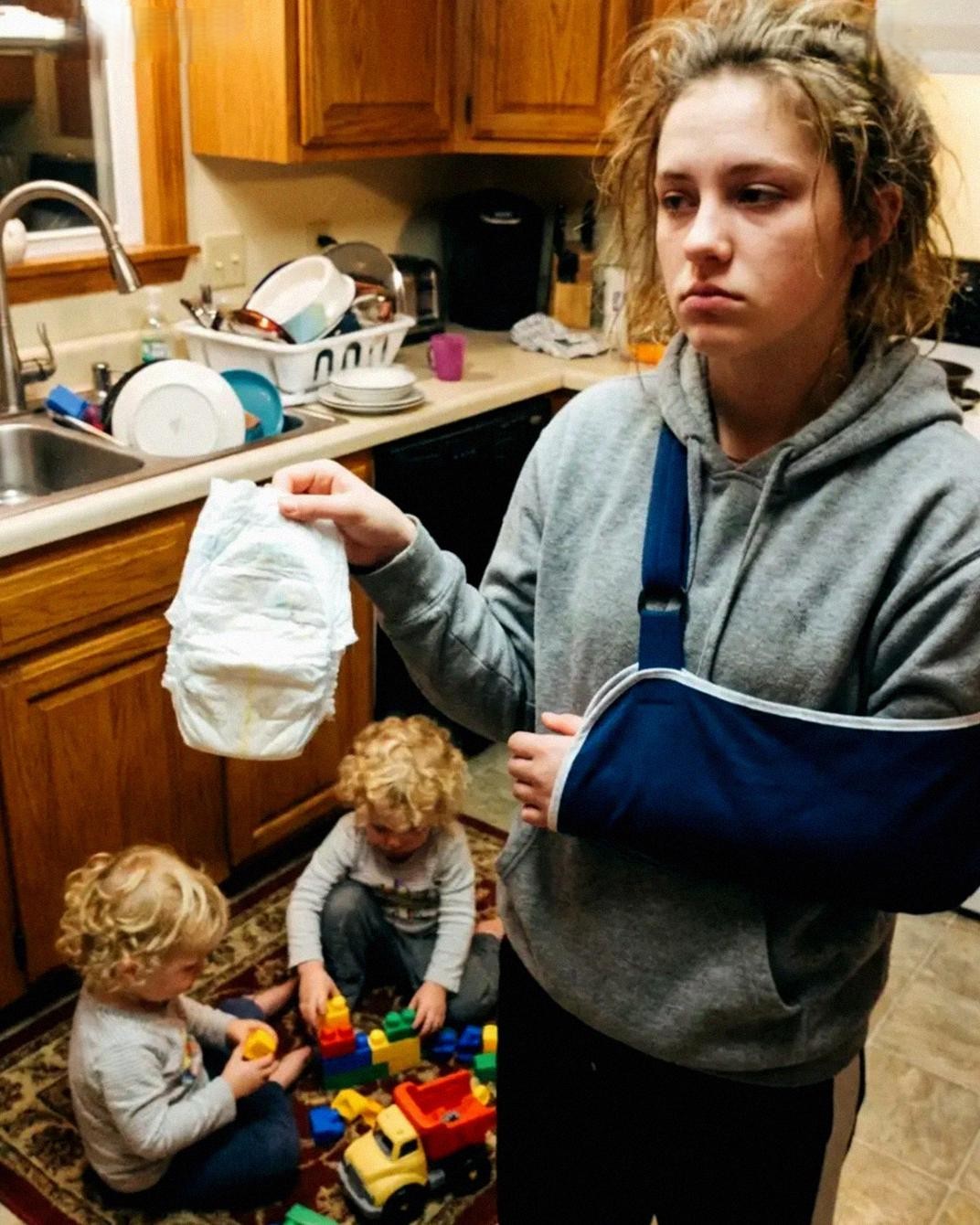
With one arm immobilized, in constant pain, Olivia was left alone with the twins. All day. Every day.
She cooked. Cleaned. Changed diapers. Chased toddlers. Lifted when she shouldn’t have. Took painkillers just to get through the hours.
Meanwhile, Lydia went shopping. Brunch. Wine bars. She posted smiling selfies online, captioned with “self-care” and “balance.”
I didn’t know any of this was happening until I called Olivia to check in.
She answered quietly. Too quietly.
She was sitting on the floor, pale and exhausted. One twin was tugging at her sling, the other throwing cereal at her face. The room looked like a small tornado had passed through.
I asked where Lydia was.
“She said she needed a break.”
That’s when something in me snapped.
I didn’t call Lydia. I didn’t warn Scott.
I grabbed my keys and headed to the house I once owned—the house I’d given Scott and his first wife to start their life. I still had a key. I knew every inch of it.
I went straight to the storage room.
In the back corner were four sturdy suitcases with combination locks. I had bought them decades ago for a trip that never happened. Life had other plans, but the suitcases were still solid.
Perfect.
I carried them upstairs to Lydia’s bedroom. Everything in there screamed comfort and priority. Designer clothes. Expensive skincare. Jewelry neatly arranged. Luxury without interruption.
I packed it all.
Handbags. Shoes. Jewelry. Perfumes. Silk pajamas. Even her ridiculous heated eyelash curler.
I folded everything neatly, locked each suitcase, and carried them downstairs. I lined them up in the living room like a warning.
Then, I wrote a note: “To reclaim your belongings, report to Karma.” I drew a small smiley face, sat down, poured myself some tea, and waited.
Lydia came home hours later, bags in hand, her voice cheerful as she called for Olivia. When she saw me, she froze. When she saw the suitcases, her face drained of color.
She ran upstairs, slamming doors and ripping through drawers.
Then she stormed back down.
“Where are my things?”
“Locked up,” I said calmly. “You can earn them back.”
She accused me of theft.
I accused her of endangering a child with a fractured shoulder.
Silence followed.
Finally, she asked what she had to do.
“Four days,” I said. “You take care of this house. The twins. Olivia. No delegating. No disappearing. No complaints. For the same length of time Scott is gone.”
She hated it, but she agreed.
Day one was a disaster. Breakfast chaos. Screaming toddlers. Vomit before noon. Burnt toast. Tears she tried to hide.
Day two brought diaper blowouts and yogurt in her hair. One twin bit her. The other screamed because his banana was broken.
By day three, her spirit broke. She sat on the floor, staring at the wall while chaos unfolded around her.
By day four, she was unrecognizable. Stained hoodie. Messy bun. Exhaustion etched on her face.
Scott came home to a clean house, calm twins, and Olivia reading quietly. Lydia stood over the stove, stirring soup like a woman who’d survived something real.
That night, after Scott went to bed, I left the combination codes on the kitchen table.
Lydia asked why.
I told her the truth.
Olivia wasn’t “help.” She was a child who had lost her mother. And what she needed was care, not responsibility forced on her when she was already broken.
Lydia cried. She apologized to Olivia.
Olivia didn’t forgive her. Not verbally. She just nodded. That was enough for now.
As I left, I warned Lydia that I lived close. And next time, I’d bring more suitcases.
Sometimes karma doesn’t arrive loudly.
Sometimes, it comes packed neatly, locked tight, and delivered by a grandmother who’s done staying quiet.