I had always believed that a person’s life is defined by the promises they honor. For me, that belief was sealed in the quiet, sterile stillness of a hospice room, where my closest friend, Rachel, spent her final days. We had been inseparable since third grade, growing up side by side through shared classrooms, first heartbreaks, and eventually the chaotic happiness of motherhood. When Rachel lost her husband in a sudden accident and was later diagnosed with a terminal illness, it felt as though the ground beneath us gave way. In her final days, she held my hand with a strength that contradicted her failing body and made me promise that her four children would never be separated. I agreed instantly. It wasn’t just a duty—it was an act of love for the sister I had chosen in life.
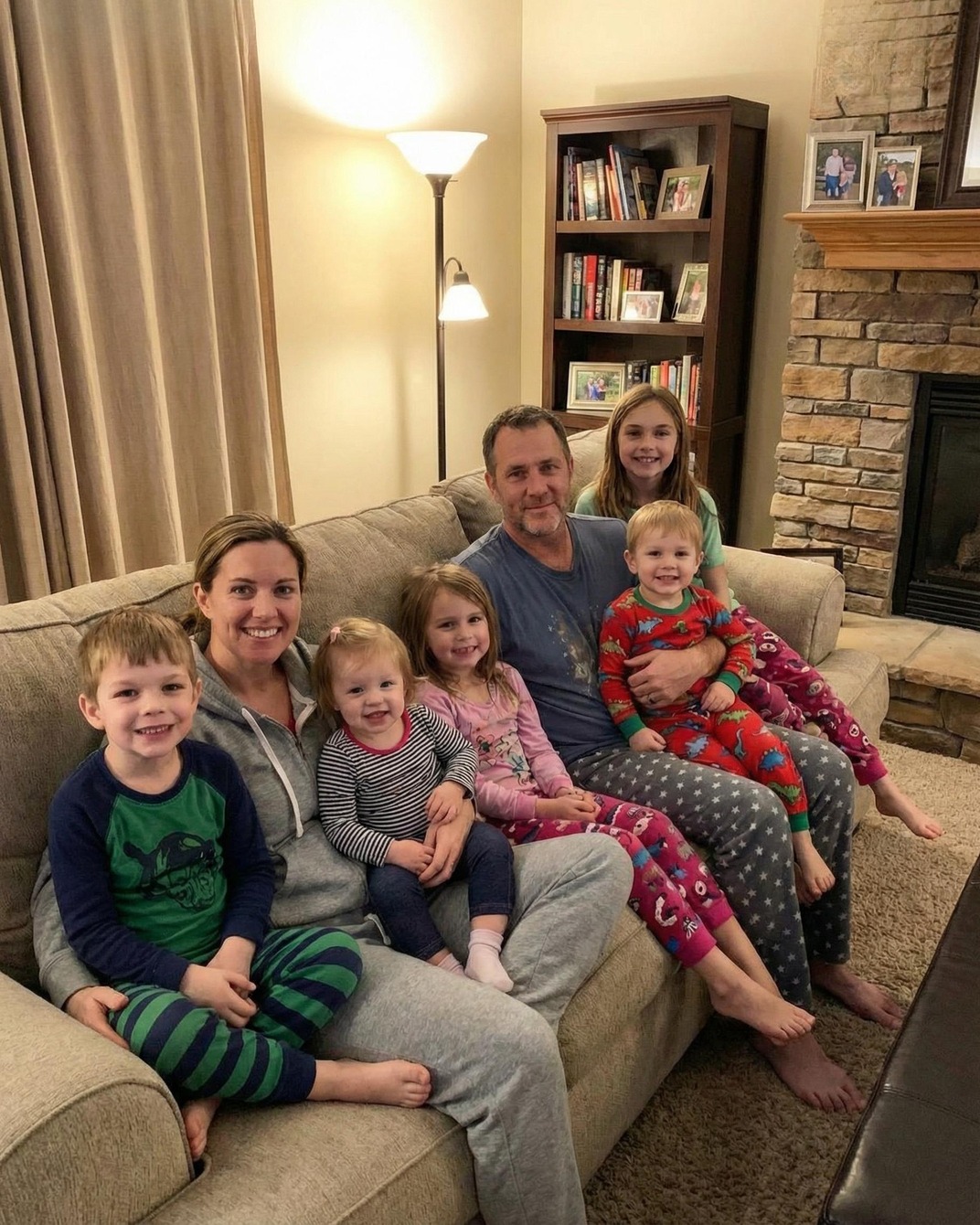
After the funeral ended and the steady stream of casseroles disappeared, my husband and I welcomed Rachel’s four children into our home, adding them to our own two. Our small house quickly filled with noise, clutter, and emotion, but over time, grief softened under the pressure of daily life. Bedtime tears slowly turned into laughter over ruined pancakes, and the chaos of school schedules and soccer practices became routine. I took pride in the stability we created. I believed I knew Rachel completely, and I trusted that our family was built on absolute honesty.
That certainty collapsed on an ordinary Tuesday afternoon, ten years after Rachel’s death.
A woman about my age stood on my porch, wearing a tailored coat that looked oddly out of place in our quiet neighborhood. She appeared exhausted, her eyes red as if she had spent years preparing for this moment. When she handed me a thick, cream-colored envelope, recognition hit me instantly. The handwriting was unmistakably Rachel’s—the same looping script that once filled birthday cards and shopping lists.
I stepped into the kitchen, my heart racing. As I opened the letter, the air seemed to turn cold. Rachel’s words spilled out, intimate and urgent. She revealed that Leo, the youngest of the four children I was raising, was not biologically hers. Years earlier, a coworker had found herself overwhelmed, trapped in a life unraveling from addiction and poverty, unable to care for her newborn. Rachel, guided by her endlessly compassionate heart, had taken the baby in and raised him as her own, bypassing formal adoption to shield the biological mother from family judgment.
The letter explained an agreement: if the mother ever rebuilt her life and could offer stability, they would revisit the arrangement. Rachel had written the letter shortly before her death, intending to give it to me, but had hidden it instead—perhaps afraid I would refuse to take Leo if I knew the truth, or that revealing it would shatter the siblings she was desperate to keep together.
The woman on my porch, Sarah, spoke with a trembling voice filled with determination. She told me about ten years of recovery, of slowly rebuilding her life from addiction and loss. She described the ache that had followed her every day since giving up her baby. Now, she said, she was ready. She wanted her son back.
I looked past her into the backyard, where Leo was laughing as he wrestled with his older brother. I saw his joy, heard his unmistakable laugh, and thought of the nights I had comforted him through nightmares, the homework we had struggled through together, the way he instinctively reached for my hand. To Sarah, Leo was hope—a second chance. To me, he was my son in every way that mattered.
“I understand your pain,” I told her, surprised by the calm in my own voice. “And I respect how hard you’ve worked to rebuild your life. But Rachel wasn’t the only one who made a promise. For ten years, I’ve been the one who cared for him, protected him, and loved him. I’m the only mother he remembers. Biology may be fact, but it isn’t family. Leo is legally my son through adoption, and more importantly, he belongs to a family where his siblings are his whole world.”
The discussion that followed was painful. Sarah spoke of legal rights and Leo’s right to know the truth. I spoke of emotional stability and the damage of tearing a child away from the only home he had known. When she finally left, she warned of lawyers and court battles, leaving fear hanging in the air.
That night, I sat alone with Rachel’s letter. Anger surged—anger that she had left me with such a devastating secret, with a decision she should have made herself. But as the anger faded, understanding took its place. Rachel had acted from the same instinct now driving me: the need to protect a child at all costs. She had faced an impossible situation armed only with love.
I realized that some truths arrive late not to destroy us, but to test our strength. Rachel’s secret didn’t erase the past decade. It didn’t change the bond between the siblings or the role my husband played as Leo’s father figure. Love is messy and imperfect, built from difficult choices, but its power is real.
The legal battle that followed was exhausting—filled with sterile rooms, evaluations, and fear. But we stood together. In the end, mediation allowed Leo to stay with us while slowly being introduced to Sarah—not as a replacement mother, but as part of his story, something he could understand when the time was right.
Now, as I watch the children leave for school, I feel the weight of responsibility, but also a deep certainty. Rachel entrusted me with her children, and in doing so, she gave me a life I never imagined. The truth didn’t destroy our family; it strengthened it. We are bound not by blood, but by the promises we keep and the unwavering determination to protect the home we built from the ruins of the past.