The morning in Huehuetoca began with the deceptively calm rhythm of a typical workday commute. The sun was just starting to burn through the early haze, illuminating the long stretches of asphalt connecting the northern and southern arteries of the region. For hundreds of drivers, it was a morning defined by the mundane: the hum of engines, the faint scent of stale coffee in cup holders, and quiet mental calculations of arrival times and work schedules. No one behind the wheel could have anticipated that the routine clatter of the highway was about to be replaced by a silence so heavy it felt physical.
The day’s equilibrium shattered the moment a massive commercial trailer, carrying both weight and momentum, lost the ability to slow. Reports later suggested a catastrophic brake failure, though the cause mattered little to the laws of physics that took over. The trailer became a steel-and-chrome projectile, plowing into smaller vehicles ahead with a sound like a thunderclap trapped in a canyon. Within seconds, the three north-south lanes—normally a river of fluid motion—were transformed into a barricade of twisted metal, shattered glass, and scorched rubber.
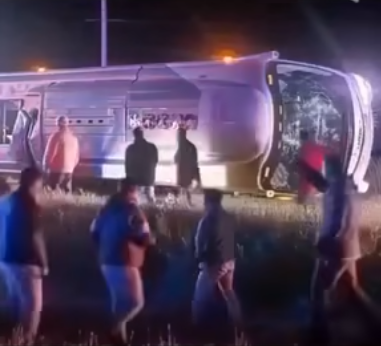
When the crashing stopped, a terrifying stillness fell. Those who had managed to halt just short of the carnage did not immediately grasp the reality. People stepped out of their cars, moving mechanically, dazed. Some were barefoot, having kicked off their shoes in panic, their feet meeting the grit-covered asphalt as they approached the wreckage. The air was thick with gasoline and the hiss of escaping steam from ruptured radiators.
The first moments of the aftermath were defined by desperate, communal bravery. Before the sirens arrived, survivors became the first responders. Men and women ran toward the mangled cars, voices trembling as they called out for signs of life. Those with phones dialed emergency services with shaking hands, trying to describe a scene that defied simple explanation. People pulled at jammed door handles and peered through spiderwebbed windshields, searching for a hand to hold or a pulse to count.
The arrival of paramedics and authorities marked the shift from shock to grim, organized urgency. Sirens, initially distant, soon crested over the horizon, breaking the stunned silence. Paramedics navigated the debris to reach the trapped and injured. Every minute felt like an hour as hydraulic tools groaned against reinforced steel, teams of rescuers moving across a scene that resembled a battlefield more than a public road.
Beyond the epicenter, the highway became a ghost town of unmoving vehicles. Traffic stretched for kilometers, a serpentine line frozen for hours. Drivers turned off engines, stepped onto the asphalt, and watched the horizon, where smoke and flashing lights marked the end of someone’s journey. In that long wait, irritation over delays gave way to somber reflection. Everyone knew that but for a few seconds or a slightly different position in line, they too could have been under the trailer.
Authorities worked with methodical precision to document and clear the wreckage, but the scale of the accident made it arduous. Investigators measured skid marks and photographed the positions of crushed vehicles, piecing together the sequence of the failure. Recovery crews eventually arrived to remove the remnants, reduced to unrecognizable scraps of paint and upholstery.
By the time the road reopened several hours later, physical traces of the accident had been scrubbed away. Glass shards swept, oil spills treated, and traffic resumed its relentless pace. To a passerby in the late afternoon, little would suggest that tragedy had struck there that morning.
But for those who had witnessed it—the drivers who saw the trailer in their rearview mirrors, the survivors who crawled from windows, and the families of those whose journeys ended in Huehuetoca—the highway would never feel routine again. Roads, often mere utilities to connect points, had revealed their fragility. A single mechanical failure or moment of lost control could erase the boundaries between safety and disaster.
As the sun set, news of the fatalities spread, casting a shadow over the community. Nineteen lives were lost, each a story cut short, a family altered forever, a seat at a dinner table left empty. The tragedy left a mark on the region, sparking debates over trucking safety regulations and commercial vehicle maintenance. For those who had been there, the impact was deeply personal—they carried home a silence no radio noise or conversation could drown, a chilling reminder of how thin the veil is between an ordinary day and an unforgettable nightmare.