The morning I turned thirty began under a sky the color of bruised fruit, heavy with the promise of rain. It was a Tuesday, already weary before it began. In the kitchen, the scent of scorched butter mixed with something warmer, steadier. My wife, Emily, stood at the stove flipping uneven pancakes with stubborn optimism, while our six-year-old son, Noah, sat at the table attacking a sheet of construction paper with a crayon.
He slid the card across to me, edges jagged from safety scissors. A stick figure with oversized teeth held a balloon. “Happy Birthday Dad,” it read, letters wobbly but proud.
I hugged him longer than usual and told myself this was enough. Emily’s chaotic pancakes. Noah’s crooked card. A quiet house that felt like home. I reminded myself that a grown man didn’t need anything else.
Still, my phone lay heavy in my pocket.
I checked it at eight. Nothing. At ten, a weather alert. At noon, still nothing. No call. No text. Not from my parents. Not from my younger sister, Olivia. The people I’d supported for years—financially, emotionally, silently. It wasn’t forgetfulness. Forgetfulness is accidental. This was deliberate absence, the kind that only breaks when they need something.
After lunch, Emily took Noah to the park before the rain hit. I stayed behind, alone with the quiet, and made the mistake of opening Facebook.
The first post stole my breath.
A flawless photo filled the screen: turquoise water like liquid glass, white sand, palm trees leaning lazily over a resort bar. My family at the center. My mother holding a cocktail with a tiny umbrella. My father relaxed in a floral shirt worth more than my first car. Olivia smiling as if the world owed her joy. Even my uncle, who once claimed he couldn’t afford my wedding, raised a glass.
The caption was short and sharp: “A beautiful day for a beautiful family. #Blessed #FamilyFirst.”
They were in Tahiti.
Three days earlier, I’d paid Olivia’s rent because she was “between jobs.” A week before that, I’d wired money to my parents for a transmission that supposedly failed. I stared at the photo, thumb hovering, and typed a single word:
Why?
The reply came fast. My father answered publicly.
“We didn’t want to waste our time on a clown. Enjoy your Tuesday, Thomas.”
A clown.
I read it over and over, feeling a cold weight settle in my chest. This wasn’t careless cruelty. It was entertainment.
Emily returned home, rain on her coat, and knew something was wrong before I spoke. She read the comment, her hand tightening on my shoulder.
“This is horrible,” she whispered.
“No,” I said quietly. “It’s clarity.”
Something inside me broke cleanly. Not rage. Relief. For years, I’d believed that giving enough, fixing enough, paying enough would earn respect. I looked at the photo once more and typed back: “Surprise waiting for you.”
I opened my laptop.
For a decade, I’d been the invisible engine behind their lives—health insurance premiums, utilities, tuition, rent, maxed-out credit cards mysteriously rescued. I wasn’t a son or brother. I was a financial appliance.
I shut it all down.
Recurring transfers canceled. Guarantees withdrawn. Bills reverted. Calls to landlords, offices, companies—each one severed another thread holding their comfort together.
Emily watched silently.
“Are you sure?” she asked when I finished.
I looked at her—the woman who loved me without invoices attached. “I’ve never been more sure.”
Two weeks passed. More vacation photos. No apology. No acknowledgment. And strangely, I felt lighter than I had in years.
Then they came back.
It was raining again when the pounding began. Not a knock—an attack. Emily opened the door before I reached it. My parents stood soaked and furious, Olivia lurking behind them.
“We need to talk,” my mother snapped, trying to push past.
“No,” Emily said, blocking the doorway. “You need to listen.”
My father snarled. “Get your wife under control.”
I stepped beside Emily. “You don’t give orders here.”
Their outrage spilled out—utilities shut off, eviction threats, betrayal. I let them speak until my father shouted it was all a joke, that family deserved forgiveness.
“Family?” Emily said coldly. “You abandoned him on his birthday and mocked him publicly.”
My mother turned on me, summoning tears. “After everything we’ve done for you.”
“What have you done?” I asked.
The question stunned them. I told the truth I’d swallowed my whole life: they hadn’t raised me; I’d raised myself. I’d raised Olivia. And now the bank was closed.
When my father called me childish, I pointed to the driveway. “Out.”
They left furious, promising regret.
Messages came days later—guilt, rage, demands. I blocked them all.
A week after that, they returned with a lawyer. My father claimed I owed them, that I’d made promises. I handed him an envelope.
Receipts. Ten years of transfers. Messages clearly labeled gifts, not loans.
The lawyer paled. They left empty-handed.
Then came the real betrayal.
A letter from a bank I didn’t use. An $80,000 loan approved in my name. A forged signature—mine, but wrong.
They’d stolen my identity.
Emily didn’t panic. She smiled, sharp and calm. “Good,” she said. “Now it’s criminal.”
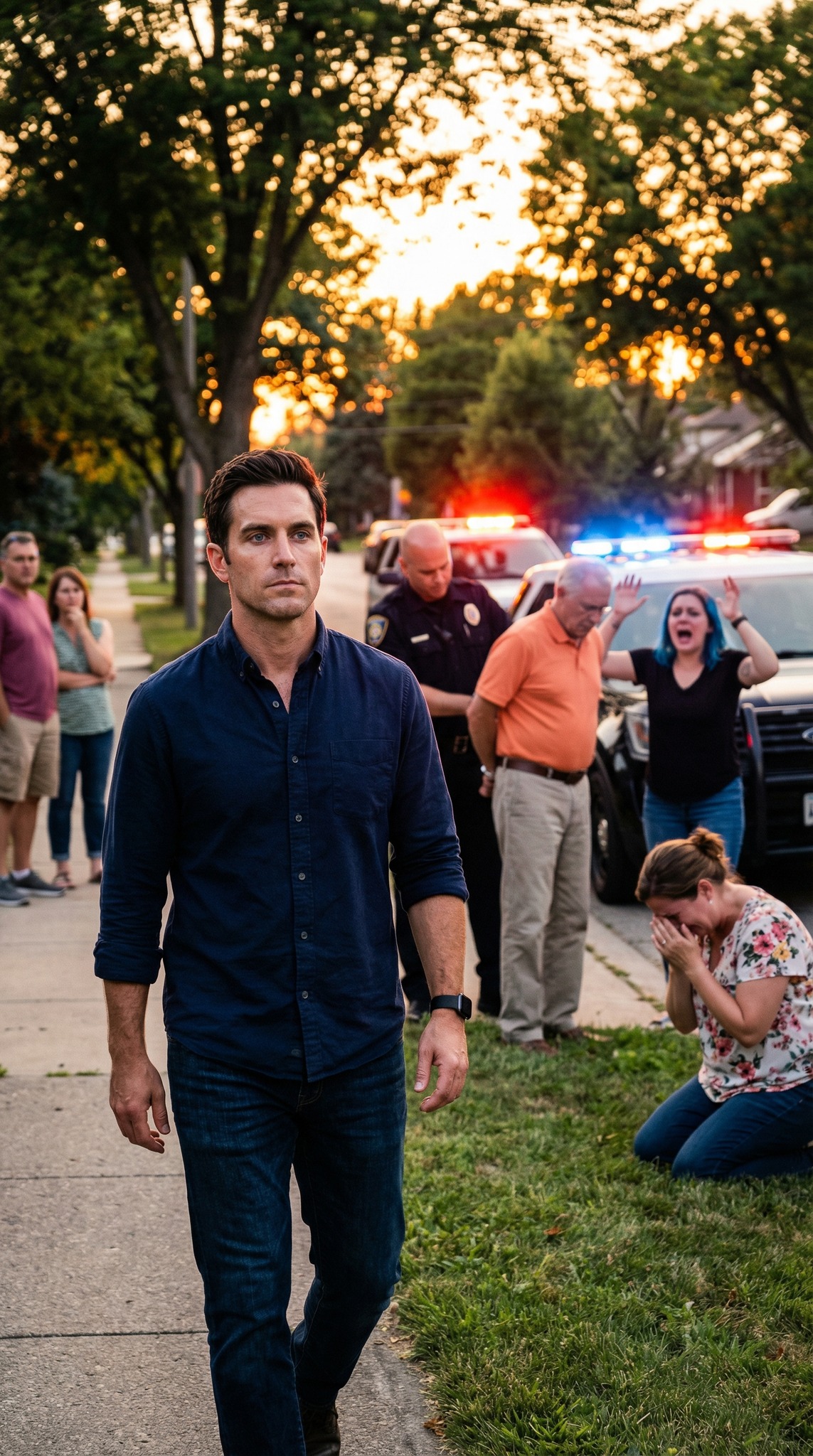
We moved fast. Lawyers. Police. Investigators. Within days, arrests were made—fraud, identity theft. News stories followed. Assets frozen. The house seized. Olivia expelled from school.
They lost everything because they tried to steal me.
A month later, a handwritten note appeared in our mailbox. An apology. A plea.
Emily burned it over the stove, washing the ashes down the sink.
Life grew peaceful. Noah finished his treehouse. We planned trips we’d never taken because there was always someone else’s emergency.
Six months later, a letter arrived from jail. Olivia tried to bargain, offering evidence against our parents for bail money. Emily forwarded it to the prosecutor and said nothing more.
Sometimes I still think of that photo in Tahiti. The smiles. The laughter.
They mocked a clown.
But when the tent collapsed, I was already outside, free, watching it fall.