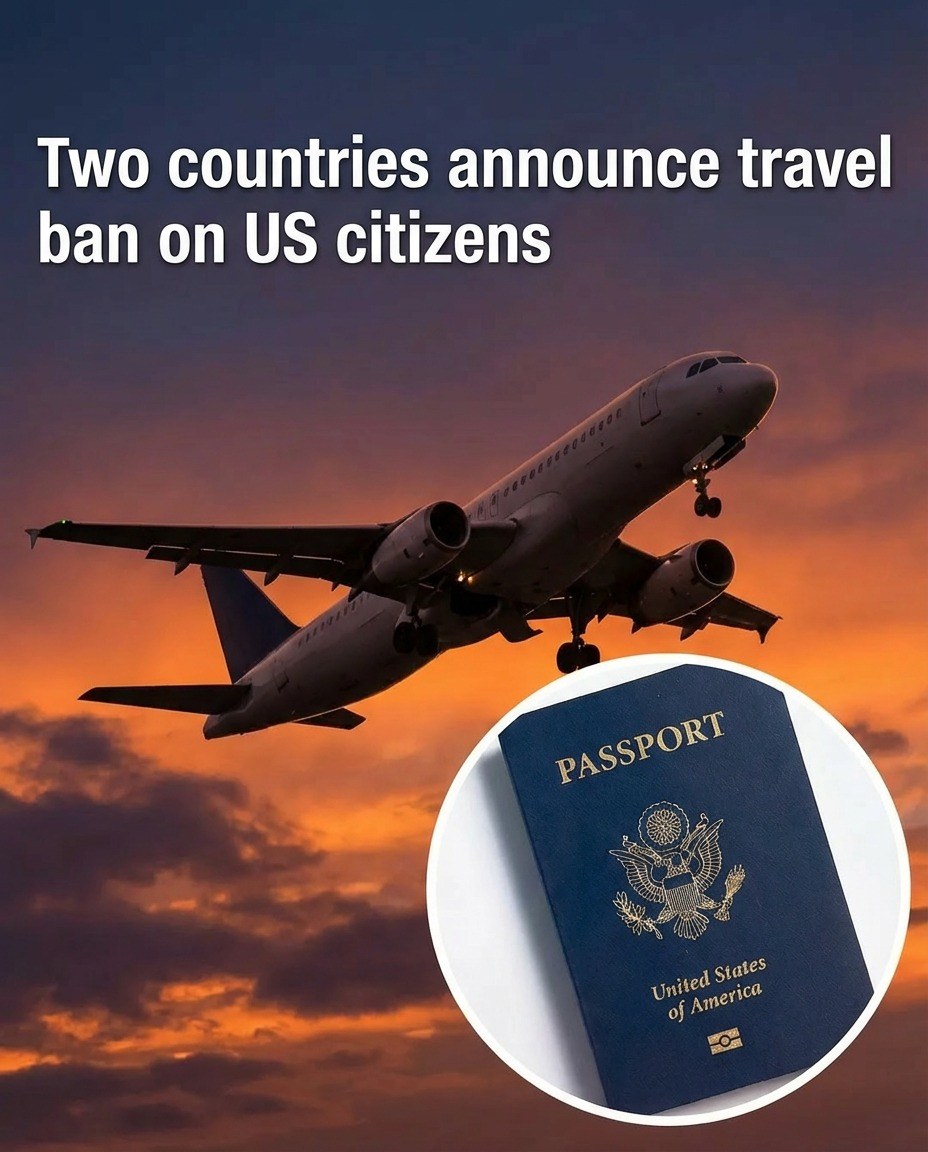
Changes to international travel regulations seldom attract public attention. Most adjustments are quietly published through embassy notices or consular updates, noticed mainly by seasoned travelers. Occasionally, however, a shift in visa policy carries significance far beyond administrative procedure. Recent measures affecting U.S. passport holders traveling to parts of West Africa fall into this category, highlighting how border access has become an increasingly visible and symbolic instrument of diplomacy.
What may seem like a routine bureaucratic update is, in fact, part of a wider discussion about influence, reciprocity, and national sovereignty. Today, visa policies are not merely tools for managing tourism or migration. They communicate how governments perceive balance and respect within international relationships. For travelers, aid workers, researchers, and families, these policies have tangible consequences, determining not only where people can go, but how freely they are able to move.
The most notable development has come from Niger, where authorities recently suspended visa issuance for U.S. citizens. The announcement gained attention less because of its scope and more because of the justification behind it. Nigerien officials described the move as reciprocal, responding to restrictions placed by the United States on Nigerien officials following internal political developments.
Rather than framing the decision as retaliation, Niger presented it as a matter of equality between sovereign nations. The implication was clear: when one state restricts access for another, a proportional response is a legitimate diplomatic measure. In this context, the visa suspension was portrayed not as escalation, but as an assertion of equal standing, reinforcing the idea that travel privileges should reflect mutual respect rather than unilateral authority.
Although visa reciprocity is not new to international diplomacy, Niger’s decision is particularly notable given the broader regional environment. The Sahel is experiencing political and strategic shifts, with several governments reevaluating long-standing relationships with Western partners. In this climate, mobility has become a pressure point—a means for states to signal that they are no longer passive actors in global policy decisions.
Elsewhere in the region, the picture is more complex. Mali and Burkina Faso have not formally barred U.S. travelers, but Americans visiting these countries report lengthier visa processing, additional documentation requirements, and increased scrutiny at borders. While official regulations remain unchanged, the practical experience of entry has become more demanding and less predictable.
Authorities in both countries cite security concerns, administrative reassessments, and ongoing instability as reasons for tighter oversight. These explanations exist within a real and challenging context, as the Sahel continues to face serious security threats. At the same time, strained diplomatic relations with Western governments have shaped how access is managed in practice.
For travelers, this environment creates uncertainty rather than outright prohibition. Entry is still possible, but no longer straightforward. Trips that once required limited preparation now demand greater flexibility, extensive paperwork, and longer lead times. For many Americans accustomed to relatively seamless international travel, this represents a significant change.
From the U.S. perspective, visa restrictions and travel advisories are generally presented as administrative measures linked to security standards, governance issues, and compliance with international norms. Officials often emphasize that such policies are not intended to target ordinary citizens, but to safeguard national interests.
However, these explanations do not always resonate abroad. In West Africa, policymakers and commentators frequently highlight the unequal nature of global mobility. Citizens of wealthier nations often enjoy broad travel access, while those from developing regions face persistent obstacles. When powerful countries impose new restrictions, they are commonly perceived not as neutral technical decisions, but as expressions of imbalance and unequal treatment.
It is within this tension that visa policy takes on symbolic weight. The issue extends beyond border control to questions of whose movement is facilitated and whose is constrained. By invoking reciprocity, countries like Niger challenge long-standing assumptions about who holds authority over global mobility.
The effects of these changes reach well beyond diplomatic signaling. Individuals experience real disruption: families separated by borders encounter delays, humanitarian workers face prolonged approval processes, and researchers, journalists, and educators confront barriers that hinder cooperation. Business travel also suffers, as fragile economic ties are strained by unpredictable entry requirements.
In regions such as the Sahel, where international aid and academic exchange are vital, restricted mobility has meaningful consequences. It influences how quickly assistance is delivered, how knowledge is shared, and how local perspectives remain connected to global discourse. Even short delays can cascade into higher costs and stalled initiatives.
Historically, visa policies have been among the most adaptable diplomatic tools. They can be adjusted quickly, without extensive legislative processes, making them effective signals during periods of political transition. West Africa has witnessed this before. In previous years, countries such as Chad modified visa rules for U.S. travelers amid diplomatic tensions, only to ease them later as relations improved.
These precedents suggest that the current restrictions may not be permanent. As dialogue progresses and trust is rebuilt, access often expands once again. While uncertainty remains in the short term, this offers some reassurance to those affected.
At the heart of these developments lies a broader question of fairness in global mobility. Who is allowed to travel freely, and under what conditions? For decades, the imbalance has been evident. Increasingly, West African governments are challenging this reality, using the tools available to them to assert autonomy and dignity.
For U.S. travelers planning visits to the region, careful preparation is now essential. Closely monitoring embassy guidance, allowing additional time for applications, providing comprehensive documentation, and remaining flexible are no longer optional. Travel remains possible, but it now requires heightened awareness of political dynamics as well as logistical considerations.
Looking forward, the developments in Niger, Mali, and Burkina Faso reflect a broader reassessment of relations between West Africa and Western governments. These changes are not isolated, but part of an ongoing dialogue about partnership, respect, and shared responsibility in an evolving global order.
As diplomatic relationships continue to shift, so too will the rules governing cross-border movement. Transparency, communication, and efforts to address perceptions of inequality will determine how quickly confidence can be restored. For now, one thing is evident: international travel is no longer solely about visas and entry stamps. It has become a reflection of political relationships and a measure of how nations choose to engage with one another in a changing world.