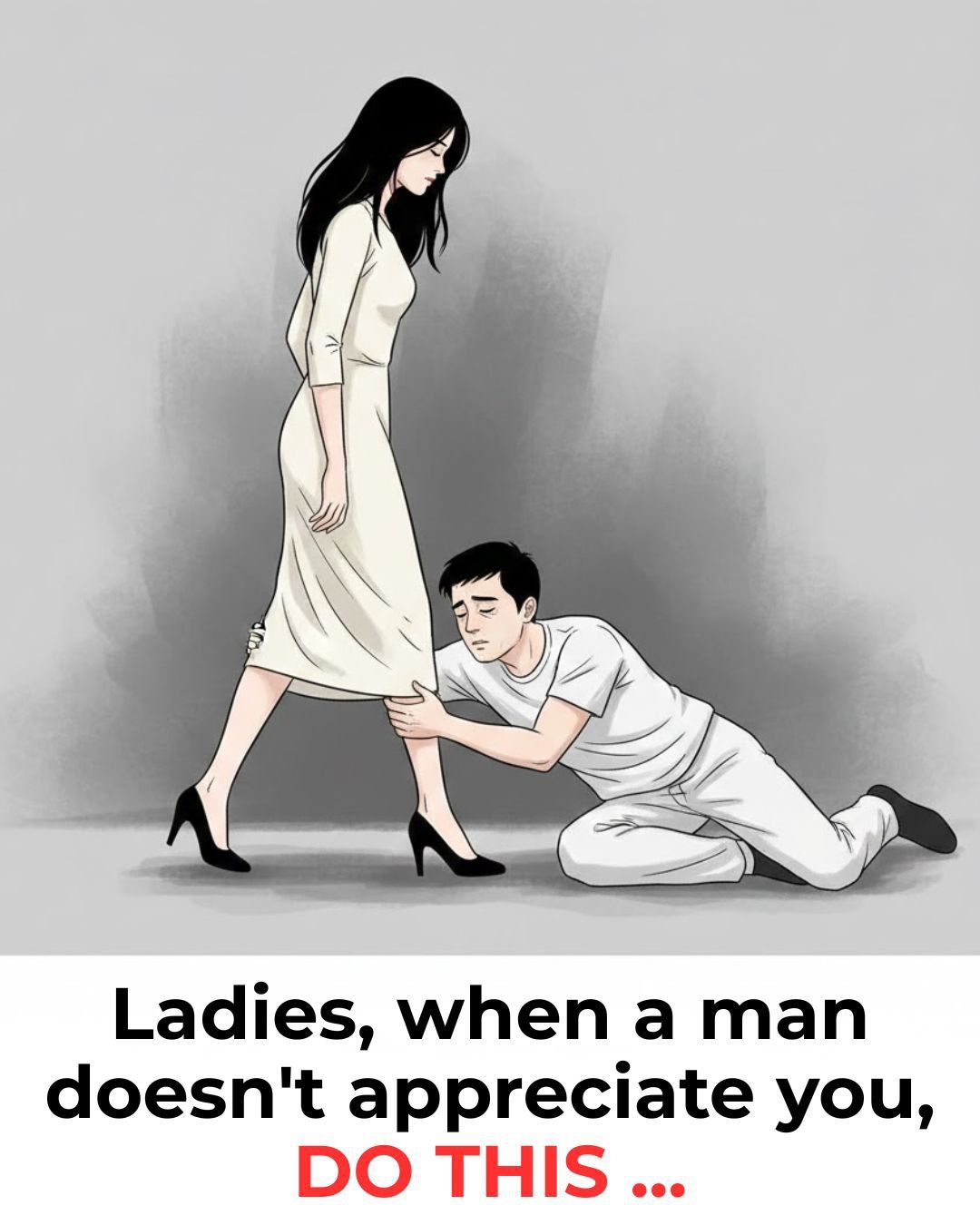
When a man fails to appreciate you, the harm isn’t always dramatic or immediate. More often, it unfolds slowly—through emotional neglect, indifference, and needs that go unanswered. Over time, you begin doubting yourself. You replay moments, second-guess your feelings, and wonder if you’re being unreasonable. That quiet confusion can drain you. But one truth needs to be clear: appreciation is not a bonus in a healthy relationship. It is the foundation.
A lack of appreciation is not a reflection of your worth. It reflects a dynamic where your effort, presence, and emotional labor are treated as a given. Recognizing that reality is the first step toward regaining your strength.
It starts with seeing the signs clearly, without excusing them. A man who doesn’t value you often assumes you’ll always be there. He expects care, support, and understanding while offering little in return. The effort fades because he believes your loyalty is guaranteed. Gradually, everything else takes priority—his job, his interests, his distractions—while time with you becomes optional.
Another warning sign is the absence of gratitude. You give emotionally, practically, sometimes financially, and it’s met with silence. No acknowledgment. No appreciation. Just expectation. When gratitude disappears, resentment quietly takes its place.
Dismissiveness is another indicator. Your emotions are minimized. Your concerns are brushed aside or labeled as exaggerations. Encouragement is replaced with criticism, slowly wearing down your confidence. This isn’t “being honest” or “being tough.” It’s emotional neglect.
Once you recognize these patterns, the goal is no longer to change him—it’s to protect yourself. That begins with boundaries.
Boundaries are not ultimatums or punishments. They are expressions of self-respect. They define what you will and will not accept. If you don’t set them, someone else will—and rarely in a way that benefits you.
Clarify your non-negotiables. These aren’t preferences; they’re necessities. Respect. Effort. Emotional availability. Consistency. Appreciation. When these are missing, the relationship is already unstable, even if it continues on the surface.
After that, communicate clearly. No hints. No hoping he figures it out. No minimizing your needs to keep the peace. State what you require and what behavior you won’t tolerate. Being direct is not being aggressive.
The most difficult part is enforcing those boundaries. Without consequences, boundaries mean nothing. If the behavior continues after you’ve clearly spoken, pay attention. Consistent disregard is a choice, not confusion.
Many people respond by trying harder—giving more, being more patient, explaining again in a new way. This usually makes things worse. When you overextend yourself for someone who doesn’t value you, you teach them that change isn’t necessary to keep you.
Instead, turn your attention back to yourself. Stop investing energy where it isn’t valued. Redirect it toward your life—your friendships, ambitions, health, and sense of self. When you stop over-giving, clarity often follows.
Notice how you feel when you pull back. Do you feel more at ease? More centered? Or does he suddenly panic, noticing your distance but not actually changing his behavior? That response tells you everything.
Understand this as well: love without appreciation eventually becomes obligation. You don’t want to be tolerated. You don’t want to be “good enough.” You want to be chosen, respected, and valued consistently—not only when it’s convenient.
If you’ve communicated clearly, set boundaries, and allowed room for change, and nothing improves, then leaving may be the most self-respecting decision. Walking away is not failure. Staying where you are undervalued is.
Leaving doesn’t mean you didn’t care. It means you cared enough about yourself to stop accepting emotional neglect. You chose self-respect over endurance.
A healthy partner doesn’t need constant reminders to value you. Guidance is one thing; repeatedly proving your worth is another. Appreciation shows through effort, reliability, and how someone treats you when there’s nothing to gain.
If a man doesn’t appreciate you, don’t beg, shrink, or over-explain. Hold your ground. Speak plainly. Watch actions instead of promises. And remember—being alone is far healthier than feeling invisible beside someone.
You are not asking for too much.
You are asking the wrong person.