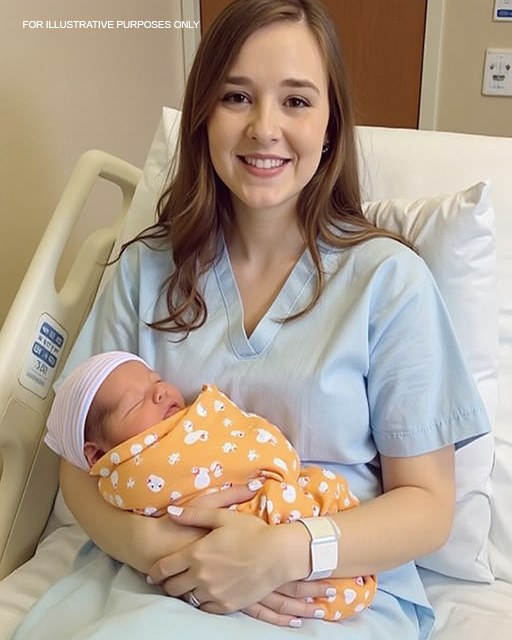
Grace had always imagined her life would follow a quiet, predictable path—like the ones in the small-town romance novels with pastel covers and flowery fonts she used to read.
She met Oliver in her first year of high school, fell in love with him by junior year, and by graduation, they were inseparable.
Their families already treated them like a married couple, and people would often say, “Those two will be together forever.”
Grace let herself believe it.
After all, Oliver had a way of looking at her as though she were the only person in any room. When he spoke of the future, she was always by his side, sitting together on the porch of their imagined house, laughing with their imaginary children, living a simple, real life filled with happiness.
When they married at twenty-one, she was certain the world had given her exactly where she was meant to be.
She never could have imagined that two years later, she would find herself standing alone on a quiet street, holding a suitcase, her heart broken, and a child growing inside her.
The first sign that something was wrong came on a chilly autumn afternoon. Grace stood in the bathroom of their small home, holding a pregnancy test in trembling fingers.
The two lines were unmistakable. Her heart raced—not with fear, but with joy.
She envisioned Oliver lifting her into his arms, spinning her around, laughing like he did when life surprised him in wonderful ways.
She rushed to the living room where he was half-watching a football game, his feet up on the coffee table.
“Ollie,” she said, breathless. “I need to show you something.”
He turned lazily and raised an eyebrow. “What’s up?”
She handed him the test.
For a long moment, he stared at it, his expression unreadable. Then, he laughed sharply—bitterly, unlike the warm sound she had always adored.
“No. No, absolutely not. You’ve got to be kidding.”
Her smile faded. “What do you mean?”
“I’m not ready for this,” he said, tossing the test onto the couch as if it were an inconvenience. “We talked about waiting, remember?”
Grace fumbled for words. “I know, but… things happen. And I’m happy. Aren’t you even a little—”
“Happy?” He jumped to his feet. “Grace, there’s no way we’re doing this. I’m working two jobs, we’re barely scraping by, and you want to have a baby? Are you out of your mind?”
She stepped back, stunned. “It’s not about wanting or not wanting. It’s here. It’s real.”
He paced, running his hands through his hair. “We need to fix this.”
Grace froze. “Fix… what?”
“The pregnancy,” he said, voice icy. “It’s simple. You take care of it, and we pretend this never happened.”
Her heart stopped.
“No,” she whispered. “I can’t. I won’t.”
He stopped pacing, and looked at her with a coldness she had never seen before, not once in all their years together.
“Then you can’t stay here.”
Grace barely understood his words. “What… what do you mean?”
“I mean, you have to go,” he said. “If you’re choosing this baby over us, then we’re done.”
The blow hit her like a physical punch. She felt all the air leave her chest.
“Oliver, please—”
But he was already walking toward the bedroom, grabbing her suitcase, and tossing it onto the floor.
“You have your father’s house,” he muttered. “Go back there. Don’t expect me to support you.”
Grace sank to the carpet, tears spilling down her cheeks—not from the fear of raising a child alone, but because the man she had loved had turned into someone she could no longer recognize.
An hour later, she was standing outside in the cold, her suitcase in hand, waiting for her father to pick her up, the pregnancy test still tucked into her coat pocket, as if proof of her hope had now become proof of her heartbreak.
Life after that moment was hard. Unbelievably hard.
Her father, a quiet widower who rarely showed emotion, embraced her with a gentleness that nearly made her collapse. He didn’t pry, didn’t criticize, didn’t lecture.
He simply said, “We’ll figure this out,” and for the first time that day, she felt anchored enough to breathe.
Pregnancy was lonely. Grace worked as a receptionist during the day and took online classes at night.
She clipped coupons, avoided eating out, and saved every spare dollar. Her father, though not wealthy, supported her emotionally and practically—building a crib, attending doctor appointments, even learning to cook healthier meals to help her stay strong.
When her son was born, she named him Roman—after strength, resilience, and endurance. All the qualities she hoped he would carry through life.
And she dedicated herself to him completely.
Roman grew up warm-hearted, thoughtful, and unusually mature for his age. He loved listening to his grandfather’s stories, taking things apart to understand how they worked, and leaning his head on Grace’s shoulder when he was tired.
He never asked about his father—not until he was twelve.
One evening, after completing a school assignment about family trees, Roman set down his pencil and asked softly, “Mom… do I have a dad somewhere?”
Grace’s breath caught. She had rehearsed this moment for years, but no amount of rehearsal could soften the sting of truth.
“Yes,” she said gently. “You do.”
“Did he leave?”
She hesitated. “He chose not to be in our lives.”
Roman nodded slowly, processing that with surprising maturity. “Okay,” he murmured. “Then we don’t need him.”
Those words lodged deep in Grace’s heart—not because she believed them, but because she wished she did.
Two years later, Grace’s father passed away.
It was sudden and heart-wrenching, leaving a hole in their lives that nothing could truly fill. But Grace and Roman leaned on each other, and in that shared grief, their bond grew even stronger.
Grace climbed the career ladder steadily, eventually becoming the office manager at a large community center.
She supervised a team, helped plan programs for children, and found joy in the small victories of daily life.
Roman excelled academically, earned a scholarship to a top university, and eventually studied biomedical engineering.
Life wasn’t glamorous, but it was good. Truly, deeply good.
Still, there were moments—tiny flickers—when Grace wondered what her life would have been like if Oliver had chosen differently. If he had been the man she thought he was. If he had stayed.
But she suppressed those thoughts each time. The past was closed. Buried. Irrelevant.
Until twenty-six years after that cold night, when the past returned in the form of a phone call.
It was a quiet Saturday morning. Grace was sipping tea and reading emails when her phone buzzed.
A number she didn’t recognize.
“Hello?” she answered.
A strained male voice spoke on the other end. “Is this Grace? Grace Holloway?”
“Yes. Who’s calling?”
“It’s… It’s Oliver.”
Grace’s breath stilled. She hadn’t heard his voice in more than two decades, but she recognized the echo of the boy she once knew.
“I—” He cleared his throat. “I need to talk to you. It’s… important.”
Her grip tightened on the phone. She nearly hung up, but curiosity held her still.
“What is it?” she asked, her voice cold.
“I’m… not well,” he said. “Medically. They say I might not… survive the year.”
Grace blinked. “I’m sorry to hear that, but what does this have to do with me?”
“Everything,” he said, his voice trembling. “I want to meet my son.”
The words stabbed her like ice.
“No,” she said immediately. “You don’t get to want anything. You abandoned us. You didn’t even try.”
His breathing hitched. “Grace, please. I’m begging you. I’ve been alone for years. No family. No friends left. I’ve made mistakes—terrible ones. But I want to see him just once before I die.”
Tears stung her eyes, despite her anger, but she forced her voice to remain firm.
“I can’t make that decision,” she said. “He’s an adult. I’ll tell him you called. Nothing more.”
She hung up.
Her hand shook for several minutes afterward.
Later that afternoon, when Roman visited, she told him everything: the pregnancy, the rejection, the expulsion, and the years of silence. She expected anger. Hurt. Confusion.
Instead, Roman reached across the table and took her hand.
“Mom,” he said. “You don’t have to protect me. I know who raised me. And I know who didn’t.”
She looked at him, her eyes blurry.
“But,” he continued softly, “if I choose to meet him… It’s not for him. It’s for me.”
Grace nodded slowly. “I understand.”
She didn’t fully. But she trusted him.
Two weeks later, Roman knocked on a door in a run-down apartment complex on the outskirts of the city. The hallway smelled of dust and stale air. He clenched his jaw, heart pounding.
The door opened.
Oliver stood there.
He looked nothing like the photos Grace had shown him. Thin, hollow-cheeked, gray at the temples. A man worn down by illness, regret, and years of loneliness. His eyes filled with tears instantly.
“Roman?” he whispered.
“Yes,” Roman said evenly.
Oliver stepped back. “Come in.”
The apartment was dim and sparsely.