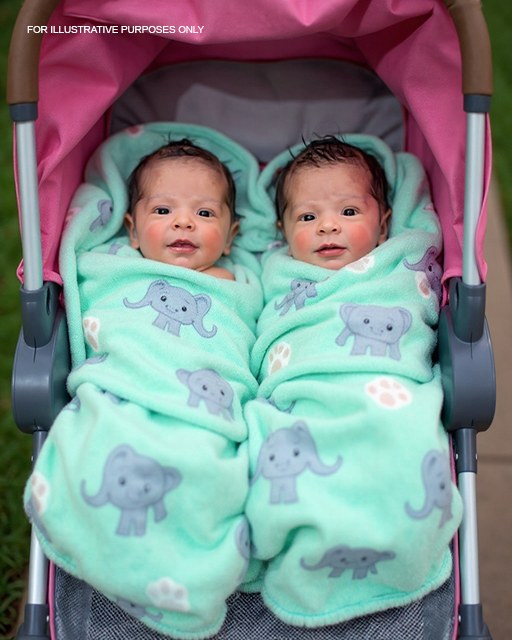
“Sorry, Mom, I couldn’t leave them,” my sixteen-year-old son said when he brought home newborn twins.
That evening, when he walked through the door, his hair damp from the rain, his sneakers tracking mud across the floor, I thought I was losing my mind. His arms were full, with one tiny bundle on each side of his chest, both wrapped in hospital blankets. Their soft, fragile cries filled the room, a chorus of confusion and need.
For a moment, my brain couldn’t catch up with what my eyes were seeing. My son, my sweet, quiet boy, was standing in our living room, trembling, clutching two newborn infants to his chest.
“What… what on earth…?” I started, my voice breaking.
He looked up at me, his eyes red from crying, his lips trembling. “I couldn’t leave them, Mom. Please, just listen before you say anything.”
He stepped closer, and I saw how small the babies were—so new, their cheeks still flushed from birth, their eyelids barely open. I rushed to take one before he dropped them. “Oh my God, they’re freezing!” I said, wrapping a blanket tighter around the smaller one.
He sank to the floor, his back against the wall, still clutching the other baby as though letting go might make them vanish. “They’re not mine,” he blurted, his voice breaking. “They’re not mine, I swear.”
My heart skipped. “Then whose are they?”
He looked up at me, tears spilling freely now. “They’re Mia’s.”
I froze. Mia. The girl from school. The one who used to come over sometimes after class to study or hang out in the backyard. She had always been polite, shy, with that anxious way of brushing her hair behind her ear when she spoke. I hadn’t seen her in months—not since she moved to live with her aunt in the next town.
I sank to my knees beside him. “What do you mean, they’re hers? What are you doing with them, honey?”
He wiped his eyes with the back of his hand, struggling to steady his voice. “She called me this afternoon. She sounded… scared. She said she had the babies early. She was crying, telling me she didn’t know what to do, that she couldn’t take care of them, and didn’t want them to go into foster care. I thought she just needed someone to talk to, but when I got there—”
He stopped, swallowing hard. “She was sitting outside the hospital, Mom. With them. Wrapped in those blankets. She looked like she hadn’t slept in days. She just handed them to me and said, ‘You’re the only person I trust.’”
I could barely process the words. The babies stirred in our arms, their tiny fists waving as their soft whimpers filled the air.
“Oh, sweetheart…” I whispered, trying to calm my own pounding heart. “You can’t just bring home someone’s newborn babies. We have to call someone—her family, or the police, or—”
“I know,” he said quickly, shaking his head. “But she’s gone. She left, Mom. I tried to stop her. I yelled after her, but she just kept walking. She said she couldn’t do it, that she was sorry, and disappeared down the street.”
For a moment, silence filled the room, broken only by the rustling of blankets and the tiny hiccuping cries.
I stood, pacing, my mind racing. “Okay, okay, we’ll figure this out. You did the right thing by bringing them here instead of leaving them somewhere. But we can’t keep them, honey. You understand that, right?”
He nodded, his eyes still fixed on the baby in his arms. “I just couldn’t leave them. They were so small, Mom. So helpless. I thought—” His voice cracked. “What if nobody found them? What if they ended up in some shelter where nobody held them?”
I crouched beside him again and pulled him close, my hand trembling as I brushed his hair back. “You’ve got too big a heart, you know that?” I whispered.
That night was a blur. I called the local police station first, explaining what had happened. The officer on the line was kind but firm, saying they’d send someone to the house. My son refused to let go of the babies until they arrived.
By the time the officers came, the twins were asleep on the couch, swaddled tightly. Detective Harris, the taller of the two officers, crouched down to examine them gently.
“They look healthy,” she said softly. “And lucky. Most kids in situations like this… they’re not found so quickly.”
My son stood there, pale but composed. “Can you find her?” he asked. “Mia? She’s only seventeen. She didn’t mean to do anything wrong.”
“We’ll do everything we can,” she said. “You did the right thing, son. You might have saved their lives.”
They took our statements, photographed the babies, and said they’d try to locate Mia immediately. But after they left, the house felt hollow. The smell of baby powder and the echo of soft cries lingered in every corner.
That night, neither of us slept. We sat together in the living room with the twins between us, as if watching over them could somehow keep the world from falling apart.
“Do you think she’ll come back for them?” he asked quietly around 3 a.m.
I hesitated. “I don’t know. I hope so.”
He looked at the twins and smiled faintly. “They look like her, you know. Same nose. Same little chin.”
I studied him then, not just as my son but as someone on the edge of adulthood. His shoulders hunched forward protectively, his eyes tired but soft with something I hadn’t seen before. It wasn’t just sympathy. It was something deeper—love, maybe, or an understanding of what it meant to care for another human being.
The next morning, Child Protective Services arrived. A woman named Ms. Carter introduced herself gently, her voice warm but professional. “We’ll be taking the babies into temporary custody until we locate the mother or determine next steps,” she explained.
My son looked like someone had punched him. “Can I go with them?” he asked suddenly. “Just to make sure they’re okay?”
Ms. Carter smiled kindly. “That’s very thoughtful, but they’ll be in good hands. You can check on them later, I promise.”
After she left, he disappeared into his room and didn’t come out for hours. I let him be. There are moments when a mother knows her child has crossed some invisible line, when something changes inside them that you can’t undo.
Three days later, we heard something. The police had located Mia. She was staying at a shelter two towns over, physically fine but emotionally shattered. I was relieved, but my son wanted to see her. Against my instincts, I agreed to drive him.
When we arrived, Mia was sitting in a small, plain room with a social worker beside her. She looked thinner, paler. Her hands shook when she saw us.
“I didn’t mean for any of this to happen,” she said, her voice breaking. “I thought I could do it on my own. But when the babies came, it was so fast. I panicked. I didn’t want them to go into the system, but I didn’t have anyone else. He was the only person I trusted.”
My son reached out a hand across the table. “You should’ve called sooner. You scared me.”
“I know,” she whispered. “I’m sorry.”
The social worker explained that Mia’s parents had disowned her when they found out she was pregnant. She’d been bouncing between shelters, trying to stay in school, until she went into labor unexpectedly. The babies—both premature—were healthy.
When we left that day, my son was quiet. I thought he was angry, but when we got home, he surprised me. “Mom,” he said softly, “what’s going to happen to them now? The babies.”
“They’ll go into foster care until Mia’s stable enough to take them back,” I said.
He nodded slowly. “What if she can’t? What if nobody takes them?”
I sighed. “Then they’ll find someone who can. Some families want babies, you know that.”
But he didn’t answer.
Weeks passed. We got updates occasionally. Mia was in a program for young mothers, trying to regain custody. The twins were placed in a temporary foster home nearby. My son asked to visit them every chance he got, and after some convincing, the social worker allowed supervised visits.
He came home from those visits glowing and quiet at once, always full of small details. “The boy smiles a lot now,” he’d say. “And the girl has this little dimple when she yawns.”
I’d watch him, both proud and worried. He was only sixteen, yet he carried himself like someone much older. The innocence that used to define him had shifted into something deeper, a kind of compassion that scared me because I knew how easily compassion turns into heartbreak.
Then one day, Ms. Carter called.
“Mia has decided to sign over her parental rights,” she said gently. “She’s entering long-term care and doesn’t believe she can provide for them. We’re beginning to look for adoptive families.”
I thanked her and hung up, my chest tightening. I didn’t know how to tell my son. When I did, he sat perfectly still, staring at nothing.
“She’s giving them up?” he whispered.
“She’s doing what she thinks is best,” I said softly.
He looked up