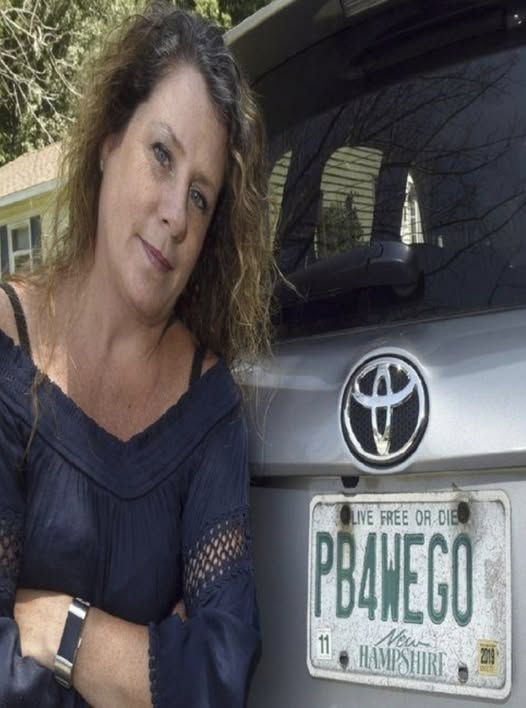
In the picturesque state of New Hampshire, known for its bold motto “Live Free or Die,” Wendy Auger thought she was doing just that. For 15 years, her white and green vanity plate, bearing the simple characters “PB4WEGO,” had been a source of light-hearted joy for both fellow travelers and neighbors. To anyone familiar with the chaos of family road trips, the message was instantly clear and universally relatable: “Pee before we go.” It was a harmless reminder of the realities of traveling with children, a shared joke among parents. For over a decade, the plate had become a symbol of Wendy’s personality, often bringing smiles at stoplights and laughter in parking lots. It epitomized the New England spirit—practical, witty, and unpretentious.
However, this light-hearted expression took an unexpected turn when the New Hampshire Department of Motor Vehicles (DMV) set its sights on Wendy’s plate. Without warning, she received a formal notification that her beloved vanity plate was being recalled. The reason cited by the DMV was shockingly mundane: the plate was deemed to violate state guidelines against “inappropriate” or “offensive” content. This unexpected change left Wendy both confused and disappointed, as the plate had been in use for 15 years without issue. To her, it was a playful, wholesome phrase, not offensive in any sense.
The issue raised a delicate question about the balance between public standards and personal creativity. The DMV’s interpretation stemmed from administrative rules that prohibit vanity plates referencing excretory functions or inappropriate content. Technically, Wendy’s plate could be considered to fall under the latter category. But Wendy argued that the phrase was a common parental instruction—a simple and humorous way to ensure kids took a bathroom break before embarking on a long journey. To her, the message was innocent, a far cry from the vulgar or malicious messages the rules were intended to prevent.
As news of the recall spread, Wendy’s case sparked a nationwide debate. Many felt the DMV’s sudden decision was a disproportionate response, especially given the plate’s acceptance for over a decade without a single complaint. People rallied behind Wendy, emphasizing the irony of a state that prides itself on freedom, yet polices a harmless, universally relatable joke about a basic human need.
The controversy raised important questions about the role of government in regulating personal expression. A vanity plate is a form of speech, albeit limited by the government’s guidelines. When people pay for a vanity plate, they are essentially paying for a small piece of personal expression—an extension of their identity. Critics of the DMV’s actions questioned whether the state’s interest in “decorum” outweighed an individual’s right to be cheeky and inject a bit of humor into their daily life. If the plate had been approved once, should it be subject to revocation years later without a clear change in the law or any actual complaints?
For Wendy, losing her vanity plate felt like losing a piece of her personal history. The plate had been with her through family vacations, school drop-offs, and countless commutes. It had connected her with strangers through shared laughter—a small, joyful moment amidst the daily grind. In a world that often feels divided and tense, the plate had been a way of bonding over the simple, relatable struggles of parenting. She saw it as something worth preserving, not something to be purged.
The situation eventually caught the attention of state officials, including Governor Chris Sununu, who intervened in the matter. He suggested that the DMV’s interpretation of the rules might have been a bit too strict, signaling a shift in the public’s favor. The Governor’s involvement signaled that common sense should play a role in such decisions, particularly when it came to something as harmless as a light-hearted joke about family road trips.
The “PB4WEGO” controversy became a prime example of the power of personal expression and the importance of relatability. It wasn’t just about a vanity plate—it was about the right to share a laugh in public life, to express something human, and to navigate the world with a bit of humor. Wendy’s fight wasn’t just about getting her license plate back; it was about ensuring that people had the freedom to express themselves in small, everyday ways.
In the end, Wendy’s persistence ensured that her simple piece of personal expression remained on her car, continuing to bring smiles to those behind her. It was a reminder that in a world that can often feel overly regulated, humor and personal expression still have a place. After all, “Living Free” sometimes means having the freedom to make a joke about bathroom breaks.