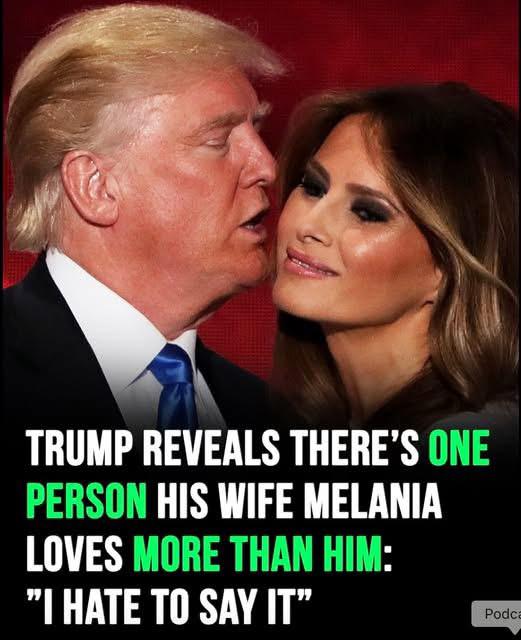
In the high-stakes world of global diplomacy, where every word and gesture is under intense scrutiny, a rare moment of personal candor recently captured the spotlight. During a press conference meant to address complex international issues, Donald Trump offered an unscripted reflection that revealed a unique glimpse into the personal dynamics of his household. The occasion, a joint appearance with Ukrainian President Volodymyr Zelenskyy, quickly shifted from geopolitical concerns to the family matters of the Trumps, with Melania Trump at the center of the discussion.
The meeting with Zelenskyy was historically significant, following a period of diplomatic tension. Zelenskyy, wearing a French-style military canvas jacket instead of a traditional suit, projected stoic resilience, underscoring the ongoing conflict in Ukraine. While the official agenda focused on peace efforts and humanitarian aid, Trump’s comments took a personal turn when he revealed that Melania had reached out directly to leaders involved in the conflict. He spoke of a letter she had written, urging the protection of children caught in the war’s crossfire.
Trump described his wife as deeply moved by the human cost of the violence, particularly the imagery of funerals and suffering shown on television. “She loves her son. She loves children. And she hates to see something like this happening,” he said, portraying Melania as someone who looks beyond political conflicts to focus on the grieving families affected. In a moment of self-deprecating humor, he added, “She loves her son more than anybody, including me, I hate to say it.” This candid remark highlighted Barron Trump’s central role in Melania’s life, reinforcing the deep maternal love that defines her priorities.
Melania’s influence extends beyond private advocacy, evidenced by her steadying presence in public moments as well. One significant instance occurred during Pope Francis’ funeral in Rome in 2025, which coincided with her 55th birthday. Despite the personal occasion, Melania viewed the solemn duty as a profound honor. Dressed in traditional black with a lace veil, she exuded grace and reverence. In contrast, Donald Trump’s behavior during the ceremony was occasionally noted for lapses in protocol, including a moment when he seemed to be chewing gum.
Observers pointed out a subtle but telling moment during the “sign of peace” ritual, when Donald Trump hesitated. Melania, leaning in to provide quiet guidance, whispered instructions on how to engage with the world leaders around them, including the President of Estonia and the King and Queen of Spain. This moment symbolized their partnership—while Donald Trump often commands the public-facing elements of their lives, Melania provides the quiet, strategic direction behind the scenes, navigating them through delicate traditions and protocols.
Those close to Melania describe her as a woman of private faith, rarely seeking the spotlight for her charitable or spiritual convictions. As the first Catholic First Lady since Jacqueline Kennedy, she occupies a unique position, balancing the demands of public life with a strong commitment to her personal beliefs. Her decision to spend her birthday morning in St. Peter’s Square, alongside royalty and heads of state, was seen as a testament to her sense of duty.
Through both her private advocacy for children affected by war and her ability to manage the optics of high-profile public events, Melania Trump consistently demonstrates a focus on protecting her family and preserving her values. Donald Trump’s candid comments merely confirmed what many had long suspected: the Trump family’s internal dynamic is driven by a deep maternal loyalty. In a world where the lines between public and private life are often blurred, these glimpses of humanity provide essential context to the people behind the headlines. Melania remains a quiet force of influence, prioritizing her role as a mother above the global stage, her heart firmly anchored in the well-being of her son.