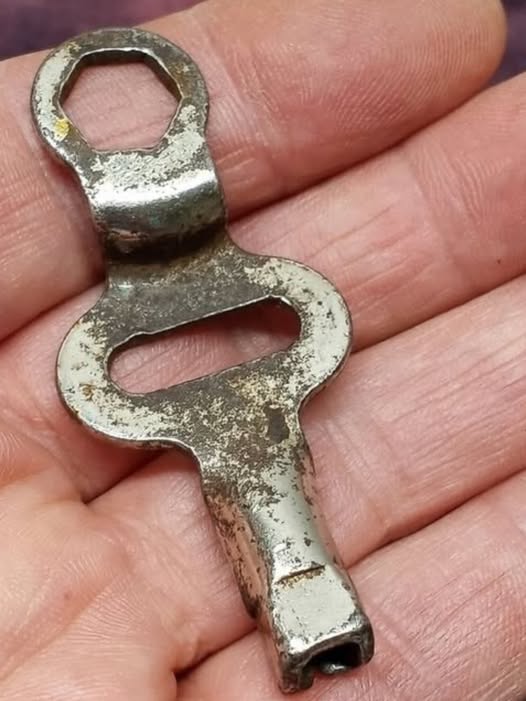
Some objects may appear ordinary at first glance—just small, worn bits of metal or plastic tucked away in drawers, attic boxes, or the forgotten corners of childhood bedrooms. They might seem like strange, inconsequential tools, perhaps discarded hardware or forgotten pieces of something larger.
Yet for those who once held them, they are instantly recognizable, carrying the weight of memory, play, and growth. One such object is the roller skate key, a tiny metal tool that, despite its size, unlocked entire chapters of childhood for generations. Before the era of lightweight plastic skates, Velcro straps, and instant adjustment mechanisms, the world of roller skating was governed by metal and leather.
Each pair of skates—whether high-topped leather boots with steel wheels for the street, or shiny, polished rink skates with chrome hardware—required careful adjustment. Feet grow, feet wobble, and without the proper fit, even the most eager skater would struggle to stay upright.
That’s where the roller skate key came in. It was a simple piece of steel, often unmarked or stamped, smooth from years of handling, with a precisely machined end designed to engage the clamps and bolts that held the wheels and straps in place. Its mechanical function was unassuming, yet it was essential: without it, skates couldn’t be worn safely.
For children, the key became much more than a tool. It was a talisman of freedom and adventure. Many wore it on strings around their necks, loops of yarn, or thin chains, letting it swing and jingle with every step.
The sound of it was both promise and reassurance—a tiny metallic heartbeat that suggested possibility. That faint jingle was a signal that the world was ready for exploration.
With the key in hand, the front yard became a racetrack, cracked sidewalks a course for daring maneuvers, and the driveway a stage for a child’s first solo spins.
It was a small object that symbolized autonomy—a ticket to mobility and excitement that didn’t depend on adults, batteries, or instructions, but on one’s own skill and courage.
Adjusting skates was a ritual in itself. Each child would kneel on the kitchen floor or spread out a towel on the porch, inserting the key into the tight metal clamps. They would twist it carefully, testing the straps’ tension, ensuring the skates fit snugly without pinching, then testing the wheels’ rotation to make sure nothing was loose or misaligned.
It required patience. The key demanded attention, precision, and a bit of persistence—qualities that children carried into the first moments of skating. There was no instant “ready” button. Instead, the physical act of preparation was part of the adventure, a small lesson in responsibility and problem-solving.
Children learned to listen to the click and resistance of metal, to feel how tight was too tight, to anticipate the growing pain of unsteady ankles.
Every adjustment, every minor correction, was a small victory—a rehearsal for the larger challenge of balance and coordination that awaited them on concrete, asphalt, or polished rink floors.
Once the skates were ready, the world opened up. The first tentative steps across uneven pavement were accompanied by a mix of fear and exhilaration, the key safely stowed at the wrist or around the neck.
Wobbly rides down streets dotted with cracks and pebbles taught children how to recover from falls and maintain momentum. Spins in roller rinks, lined with shiny wooden floors and walls adorned with neon lights, provided dizzying joy and the intoxicating rhythm of speed and music combined.
Each adventure taught lessons beyond physical balance: patience, perseverance, resilience, and confidence.
The key, though inanimate, became a symbol for this learning. Losing it meant more than misplacing a tool—it meant postponing adventure. A misplaced key could halt a child’s journey entirely, grounding the imagination and confining energy until it was found.
Conversely, keeping it close ensured that exploration could continue. It was an emblem of capability, a miniature badge of independence.
In some cases, the key was passed between siblings, loaned to friends, or used as a bargaining chip in neighborhood competitions over skating time or turns on the driveway racetrack. Its value was both tangible and symbolic.
Roller skate keys also marked rites of passage. For some children, the first time they used the key without assistance from a parent or older sibling represented a leap toward autonomy.
They learned to manipulate a small piece of metal with care, to understand its function, and to trust their own judgment. The tiny rotations and twists of the key were exercises in dexterity, hand-eye coordination, and focus.
In this sense, the key was not merely a tool—it was a mechanism that shaped both physical and cognitive development. The act of adjusting skates became a teaching moment, a subtle intersection of play and skill acquisition that many adult collectors and enthusiasts remember fondly.
The sensory elements associated with the roller skate key are also deeply evocative. Imagine retrieving one from a long-forgotten drawer: the cool, slightly rusted metal in the palm, the faint scent of aged leather or waxed wood that clings to it, the subtle sound of metal jingling against metal when moved.
These sensations trigger memories almost instantly. Children recall sun-warmed leather boots, the smell of asphalt or polished rink floors, the taste of cold drinks after a vigorous afternoon of skating, and the feel of scraped knees or hands as part of learning. The key, though small, becomes a portal to a vivid recollection of freedom, energy, and discovery.
Neighborhoods were transformed by its presence. Sidewalks, driveways, and cul-de-sacs were filled with the clatter of metal wheels and the rhythmic tapping of skaters learning to turn, stop, and spin.
Children often formed informal clubs, sharing tips on skating techniques, helping each other adjust skates, and trading keys when necessary.
The simple act of tightening or loosening a strap could catalyze communal problem-solving, encouragement, and mentorship. For many, the key wasn’t just personal—it was social. It connected peers in shared adventures, encouraging collaboration, patience, and collective achievement.
The roller skate key also represented an era before convenience dominated play. Unlike modern roller skates with plastic mechanisms and snap-fit adjustments, vintage metal-and-leather skates demanded engagement.
Children had to actively maintain their equipment, troubleshoot issues, and adapt to minor mechanical problems. This fostered a mindset of resourcefulness and care. When a wheel wobbled or a clamp loosened, the child learned to identify the cause and use the key to restore function.
This engagement created a tangible link between effort and reward: the more attentive the child was to the key’s manipulation, the smoother the ride would be, and the longer the skating adventures could continue.
As children gained experience, the key became almost ceremonial. It was a symbol of readiness, a personal emblem of competence and autonomy.
In many households, keys were carefully stored, often wrapped in soft cloth or tucked into small containers, awaiting the next session of skating.
Parents and caregivers came to recognize the key’s importance, respecting its role in a child’s development. They understood that by ensuring the key was available and functional, they were enabling exploration, creativity, and confidence-building.
Even today, discovering a roller skate key can feel like finding a miniature time capsule. The mere act of holding one evokes the sensory world of a previous era: the echo of rolling wheels on concrete, the faint tang of leather heated by the sun, the distant calls of friends challenging each other to races, and the heart-pounding thrill of gliding faster than ever imagined.
The key unlocks more than mechanical function—it unlocks memory. For adults who once wore keys on strings around their necks, the object may prompt reflection on simpler times, when fun required patience, practice, and imagination rather than instant gratification or technology.
Collectors and nostalgic enthusiasts often seek roller skate keys for this reason. They are more than pieces of metal; they are tangible reminders of a time when childhood adventures were structured around skill, engagement, and effort.
Unlike mass-produced plastic toys, these keys represent accomplishment earned through action. They are evidence that joy, mastery, and independence were intertwined with responsibility and learning.
Losing a key temporarily halted play, teaching accountability and careful stewardship. Finding one years later rekindles those lessons in vivid, emotional detail.
In addition, roller skate keys symbolize the intersection of play and identity. For many children, carrying the key was a declaration: I am capable. I am ready. I am independent.
The key validated competence, giving young skaters the confidence to explore, take risks, and test limits within a controlled framework. It also encouraged repeated experimentation: adjusting a strap slightly differently, testing new balance techniques, and discovering the effects of subtle variations on performance.