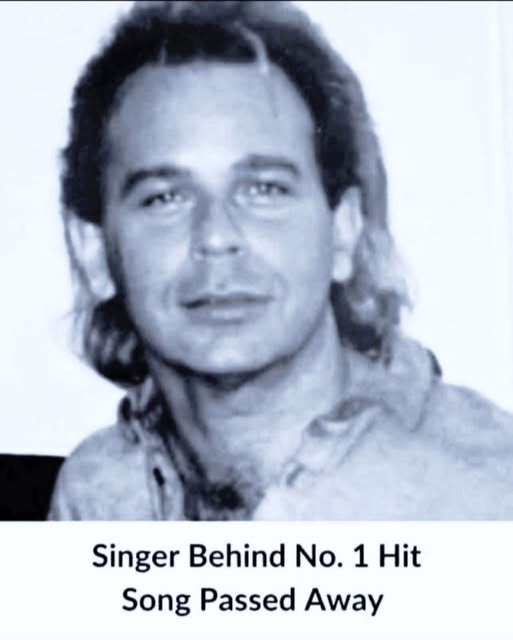
The news of his passing came with a quiet, devastating finality, a stark contrast to the soaring, operatic heights of the voice that once defined an entire generation’s teenage longing. When a voice that helped shape the emotional landscape of millions falls silent, the absence feels unexpectedly heavy, as if a delicate thread has been pulled from the fabric of our collective memory. In place of the applause, the sparkling harmonies, and the thrill of live performances, a family and a worldwide community of fans are left holding the fragile remnants of memory. This is the story of a life interrupted by a brief illness, which moved with alarming speed, leaving little time for the world to fully grasp the loss of Lou Christie.
Born Lugee Alfredo Giovanni Sacco, Lou Christie carried a name as grand and operatic as the voice he would become famous for. Hailing from Pennsylvania, he possessed a talent that could not be contained by ordinary expectations. During the restless 1960s—a decade defined by a quest for new sounds and authentic expression—Christie emerged as a singular force in pop music. Together with his longtime collaborator and co-writer, the eccentric and brilliant Twyla Herbert—a woman decades older, reputed to possess an uncanny intuition for hits—Christie transformed raw adolescent emotion into something theatrical, precise, and hauntingly beautiful.
Their most enduring creation, “Lightning Strikes,” did more than climb the Billboard charts in 1966. It became a sonic lightning rod, capturing the volatility, danger, and intensity of young love. At the heart of the track was Christie’s signature falsetto—a voice that cut through the noise of the decade with surgical clarity. It challenged expectations of male pop vocalists, combining a gritty, driving rhythm with an ethereal vocal performance that soared beyond conventional limits.
Christie’s voice became a permanent marker of time for millions of listeners. It echoed through basement dances, crackled on car radios, and served as the soundtrack to first heartbreaks and secret infatuations. For a teenager in 1966, Lou Christie did more than perform music; he gave form to their emotions—the terror of attraction, the sting of betrayal, and the longing for reconciliation. He elevated youthful experience to something epic, proving that the intensity of adolescence deserved grandeur and theatricality.
Yet behind the dramatic recordings, Christie was often described as gentle and grounded. In an industry dominated by ego and artifice, he remained accessible, warm, and generous. Known for personally answering fan letters long after his fame peaked, he carried his success without ostentation, preferring the quiet dignity of private life to the superficiality of celebrity. As the music industry shifted toward the digital era, his life grew quieter, but his influence only deepened, inspiring new generations of artists seeking to capture a similar unrestrained vocal expression.
Now, as his recordings resurface following his passing, they feel less like relics of a bygone era and more like living bridges. Each note and falsetto run offers reassurance that vulnerability, intensity, and wholehearted expression were once celebrated as the highest forms of art. In a modern age often defined by cynicism and emotional restraint, Christie’s work stands as a monument to embracing life fully and without apology. His music reminds us that the human heart is capable of immense volume, and that expressing it is a courageous act.
The tragedy of his sudden passing, brought on by a brief illness, underscores life’s fragility. There is a unique sorrow when death comes too quickly for farewells—a sense that a story has been cut short mid-sentence. Yet, even as the shock recedes, the permanence of his contribution becomes clear. Some voices belong to a moment; others become woven into the human experience. Lou Christie’s voice is timeless, a reminder of our capacity for passion and the depth of feeling that music can convey.
Christie’s legacy is not found in awards or chart positions, but in the way his music continues to enrich lives. It lives in the aspiring singer reaching for the impossible high note in “Two Faces Have I,” and in the listener who finds their grief mirrored in the drama of his arrangements. He understood music as emotional transport, lifting audiences to heights louder, purer, and more honest than daily life permits.
As his life’s echoes continue, we are reminded that true talent does not vanish; it transforms. The “lightning” may have faded, but its resonance remains, offering warmth and inspiration to all who cherish the grand adventure of music. Lou Christie departed this world as he lived—gracefully, with dignity, and with a voice that will forever echo in hearts and memories. His life was well-lived, and his song well-sung—a crystalline note held indefinitely in the world’s memory.