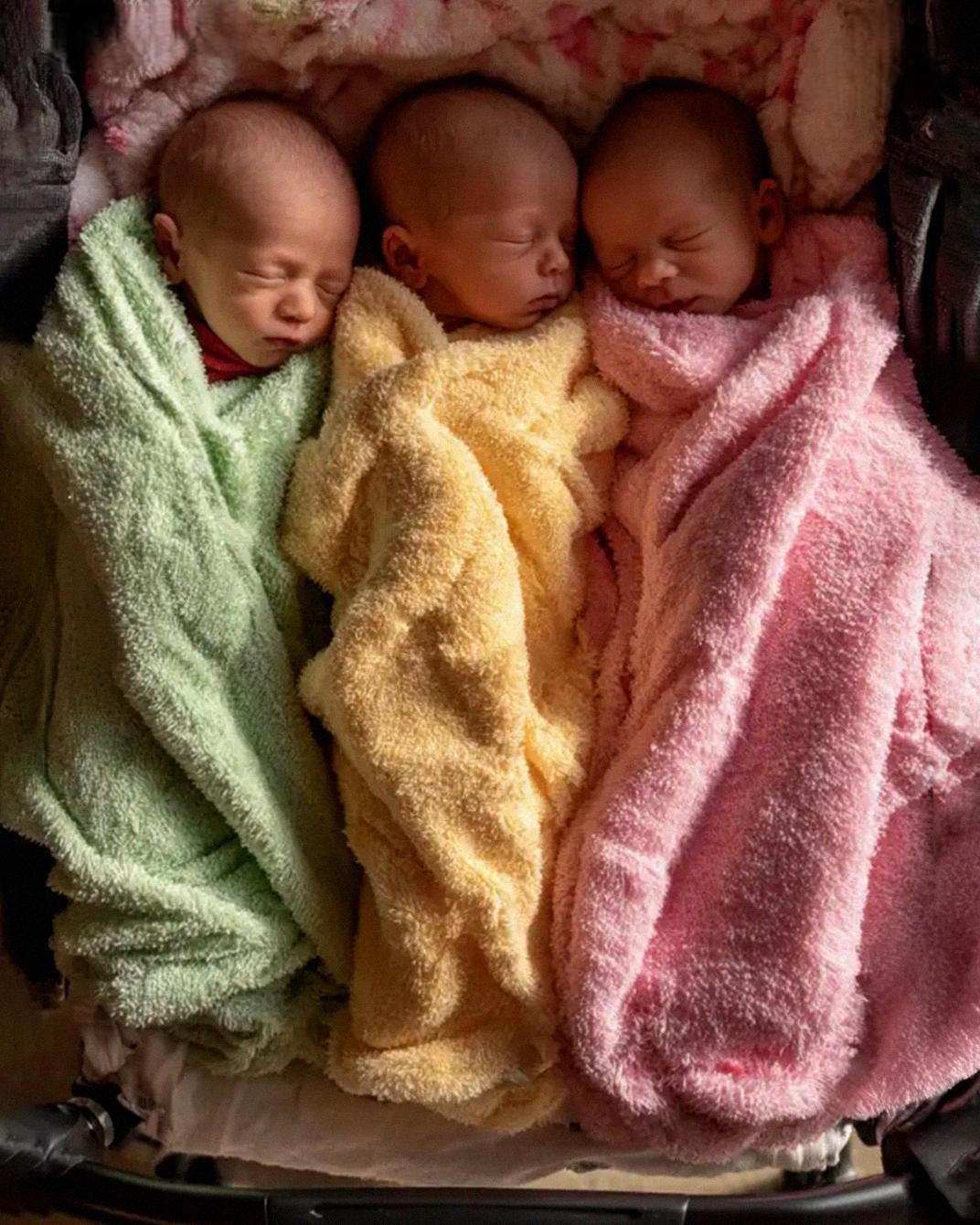
They say parenthood transforms you, but no one warns you that this transformation can begin with a cold cup of coffee and a single note that shatters your world. I was twenty-six, still navigating the hopeful fog of early adulthood, convinced I had built a life that could withstand anything. I had a stable job, a nursery painted in soft pastels, and a fiancée, Nancy, who was my North Star. Together since college, we had constructed a life out of shared grocery runs and late-night dreams about the people we hoped our children would become. When we learned Nancy was expecting triplets, the sheer magnitude of the challenge terrified me—but I was ready to face it as long as she was by my side.
That “forever” we promised lasted only six weeks after the girls arrived. One ordinary morning, Nancy kissed my forehead, told me she was heading to the office, and simply vanished. At first, my mind raced to the darkest possibilities—car accidents, hospitals, unimaginable tragedies. I called her phone until the battery died. I called her office, only to find she had never arrived. The shift from worry to horror came when I moved the coffee maker and discovered a small, folded slip of paper. No apology, no explanation, no mention of our daughters—just the words: “Please don’t look for me.”
The following weeks were a blur of police interviews, missing person reports, and the hollow, ringing silence of a home suddenly emptied of hope. There was no sign of foul play, no theft—she had simply stepped out of the dimensions of our lives. While the investigators eventually moved on, I could not. I had three newborn daughters—Lizzie, Emmy, and May—who relied on me to keep breathing when I felt like I was drowning. My parents, Malcolm and Julie, moved in without a word. They took night shifts, folding tiny onesies at 2 a.m. while I rocked all three infants in my arms, whispering assurances I did not believe myself.
Over the next decade, I became a man I barely recognized. I wasn’t merely tired, as some of my dates would later remark—I was forged in the relentless fire of solo parenting. Lizzie grew fierce and outspoken, always first to voice her mind. Emmy became the observer, filling spiral notebooks with sketches while quietly cataloging the world. May was the anchor, gripping my hand at bedtime as if to ensure I wouldn’t disappear like a ghost in the night. They became my entire universe. I stopped searching for a partner who might understand my life; being their father was a mission complete in itself.
Then came New Year’s Eve, nine years after that note. The house smelled of cinnamon rolls, and the girls bickered excitedly over fireworks. A knock at the door changed everything. Standing there, snow melting from her wool coat, was Nancy. She looked older, weary, but unmistakably the woman who had abandoned us. I stepped outside, closing the door to protect the fragile peace I had built.
The conversation that followed was a litany of excuses and desperation. Nancy spoke of “drowning” under the weight of three infants, of a hospital worker named Mark offering her an escape, and of years spent in Dubai and India, where she claimed she was “controlled.” She recounted a self-imposed seven-year exile before finally returning to the States. I listened, my heart long since hardened toward her. When she said she wanted to see “her” daughters, I corrected her: she was a stranger. She had missed fevers, nightmares, scraped knees. Her reply was a blunt legal threat: “Then I guess we’ll let the court decide.”
A week later, the legal papers arrived. Nancy was suing for shared custody, citing a “renewed commitment to reunification.” The document was cold, clinical, and utterly dismissive of nine years of abandonment. I couldn’t shield the girls from this, so I told them the truth: the woman who gave birth to them wanted to meet. To my surprise, they were cautious but curious. We met at a small coffee shop, a neutral ground charged with a decade of unspoken questions.
Nancy attempted small talk—school, hobbies, superficial pleasantries—like an aunt who had been away a month. But my daughters were sharper than she expected. Emmy asked the question that had haunted our house for nearly ten years: “Why did you leave us?” Nancy’s answer, that she panicked and wasn’t ready, fell flat. Lizzie, bold as ever, reminded her that they had thrived without her. May simply clung to my arm. They agreed to occasional visits—but only if I was always present.
The court, however, saw through the facade of her sudden maternal desire. Two weeks later, her custody claim was denied. I retained full guardianship, and the judge ordered her to pay backdated child support. Seeing the weight of her decisions reflected in ink and statute, Nancy paled. Her “commitment” dissolved as quickly as it had nine years earlier. She sent me one final text: “Coming back was a mistake. Tell the girls I love them, but they’re better off without me.”
I deleted it. When I told the girls that Nancy wouldn’t attend their planned nail salon outing, they did not cry. Lizzie simply said, “It’s okay, Dad. We still have you, and that’s more than okay.” Her words were a quiet validation of every sleepless night, every sacrifice since I was twenty-six.
That weekend, I decided we needed a change of scenery. We didn’t need Nancy to have a “family” experience. We went to the nail salon, and the girls walked out like royalty—lavender for Emmy, red for Lizzie, and sparkles for May. Then, I surprised them with a trip to Disneyland. We drove through the night, snack wrappers piling up, music playing low, and the girls dozing in the back.
Under the glow of fireworks at the Magic Kingdom, I realized Nancy’s departure, cruel as it was, had gifted me a miraculous life. It gave me the chance to raise three extraordinary, resilient, wise young women who understood that love isn’t about biology or promises on paper—it’s about who shows up, day after day. I watched their faces light up as the sky exploded in color and knew that, though our foundation began with a note under a coffee maker, we had built a fortress nothing could destroy. We were whole—not because of who left, but because of who stayed.