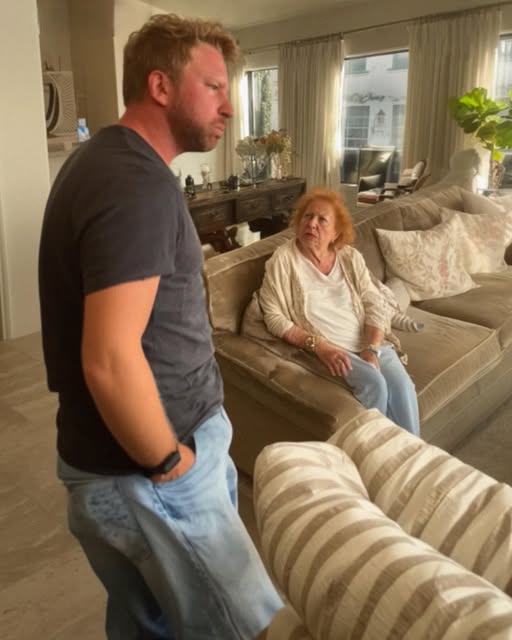
I wasn’t meant to be home that day. That single, haunting thought kept looping in my mind, like a broken record stuck on the same painful note. Up until that moment, my day had been governed by the exhausting, yet comforting rhythm of everyday life. I had picked the kids up from school; Emma, my eleven-year-old, was mid-rant about the injustices of her math teacher, while seven-year-old Leo sat quietly in the back, his small chest rattling as the beginnings of a seasonal cough took hold. We were on our way to my sister Rachel’s house when Mark casually mentioned that his mother, Helen, would be stopping by for tea. In our marriage, “tea with Helen” was a euphemism for a white-glove inspection of our household, and I simply didn’t have the emotional energy to participate.
The realization hit me just as we left the neighborhood. I looked at Leo in the rearview mirror and asked the usual motherly check, “Do you have your inhaler?” Panic flickered across his face. He’d left it on his desk. My stomach sank. The weather was turning cold, and his asthma was never something to gamble with. I turned the car around, promising the kids a quick five-minute detour. I parked in the driveway and hurried up the steps, sliding the key into the lock with a quiet efficiency born from habit.
The house was not empty—but it was eerily silent. No TV hum, no clattering cups. Instead, there were voices from the kitchen, low and conspiratorial—the kind only used when people are certain no one is listening. My steps slowed, instinct urging me to remain unnoticed.
Helen’s voice cut through first, sharp and commanding. “We can’t keep waiting, Mark. The bank won’t give me another extension on the loan.” Mark’s response was immediate, disturbingly calm. “I know, Mom. That’s why selling the house makes the most sense right now.”
The ground seemed to shift beneath me. I froze, hand on the wall. They were talking about our home—the place I had worked two jobs to afford, the sanctuary of our children. Helen purred with satisfaction. “Thank you, son. And where will you live?” Mark shrugged casually. “We’ll rent at first. Just until things settle. Linda and the kids can adjust; it’s temporary. They’re young—they don’t need permanent stability yet.”
“And Linda?” Helen’s tone dripped with feigned concern. “She won’t like it.” Mark’s laugh was soft, disturbingly comfortable. “She doesn’t need the details yet. It’ll just stress her out. She doesn’t really have a choice, anyway.”
Something inside me shattered. I moved before processing it, stepping into the doorway. “Why,” I asked, voice trembling yet precise, “do you think I don’t get a choice?”
Silence followed, heavy and suffocating. Mark blinked, as though seeing a ghost. Helen snapped first, accusing me as if I were intruding. Mark attempted his usual tactic—softening his voice, painting me as “emotional” and unable to grasp the situation. But the mask had slipped. He confessed: he had already listed the house. He had forged my signature. He looked me in the eye, cold and certain, claiming I had no choice unless I wanted to “break up the family.” It wasn’t a plea—it was a ransom note.
I didn’t argue. I didn’t scream. I turned, walked to my car, and drove to my sister’s. Pure adrenaline and a newfound, icy resolve carried me. Rachel didn’t ask questions. She led the kids upstairs and handed me a glass of water. Within an hour, her friend Jenna, a high-stakes family and property lawyer, was on the phone.
The next morning, the reality hit the dining table. Jenna explained that Mark’s actions weren’t just a betrayal—they were a felony. Forging a spouse’s signature on property documents is fraud. “We can freeze the listing, void the contracts, and stop the sale immediately,” Jenna assured me. For the first time in years, Mark’s crushing control began to unravel.
When I returned that afternoon, a storm awaited. Mark was red-faced, Helen hysterical. The realtor had called; the sale was blocked. Their accusations of humiliation and disloyalty swirled around me. I stood in the center of the living room, my space, my rights. I pulled divorce papers from my bag.
Mark’s reaction was arrogance and desperation mixed. “You need me,” he sneered. “You have nowhere to go.” I looked at him—truly looked—and saw a man willing to risk his children’s stability to buy his mother’s approval. “I needed a partner,” I said. “Not a criminal who erases my existence to suit his needs.”
The aftermath was quieter than expected. Mark moved out. The house—our house—became peaceful. The kids adapted with resilience that both broke and healed my heart. Emma stopped asking about moving, realizing the “For Sale” sign was gone for good. Leo’s breathing steadied; he slept through the night.
A week later, Jenna confirmed the listing was void, the forgery documented. Mark’s “temporary measure” was meaningless to the law. The divorce was messy, court dates stacking up, but a change had taken root within me.
One evening, Emma leaned against me on the couch. “Mom, you don’t say sorry all the time anymore.” She was right. I had spent years apologizing for my needs, my space, my very existence. In that fire of betrayal, I’d learned the difference between patience and silence.
Stability, I realized, isn’t in walls or deeds. It’s in standing up for yourself and your children, even when the one you trust most is the one holding the match. I chose to stay. I chose to fight. And in the end, I chose us.