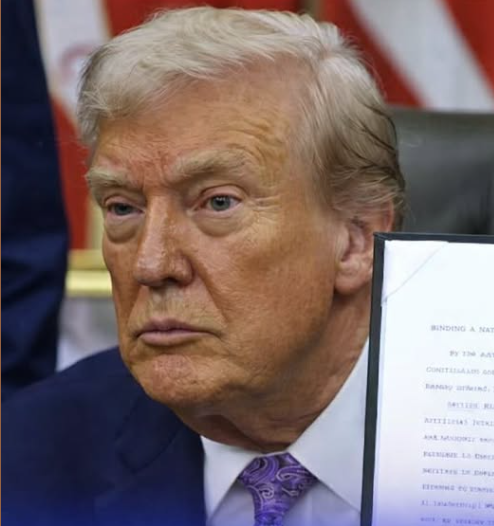
The United States is undergoing one of the most consequential transformations in its foreign policy approach in modern history. Under President Donald Trump’s leadership, the federal government has launched a broad-scale withdrawal from a wide array of international organizations, signaling a decisive break from the multilateral framework that has guided U.S. diplomacy since the aftermath of World War II. Outlined in a detailed White House memorandum, this initiative involves ending participation in 31 United Nations–affiliated agencies and 35 additional international organizations outside the UN system. The scope of this disengagement is unparalleled, reflecting a deliberate shift toward an “America First” doctrine that elevates national sovereignty, domestic fiscal priorities, and direct bilateral engagement over collective global governance.
According to the administration, the motivation behind this extensive pullback is rooted in the conviction that many contemporary international institutions have strayed far from their founding missions. Senior officials argue that these bodies increasingly function as vehicles for globalist or ideological agendas that conflict with U.S. interests. In particular, the White House contends that climate initiatives and social policy mandates promoted by these organizations constrain American economic development and undermine national autonomy. By withdrawing, the administration aims to recover billions of dollars in taxpayer contributions, funds that it plans to redirect toward pressing domestic needs such as infrastructure upgrades, healthcare stabilization, and economic programs designed to directly support American workers.
Several prominent United Nations agencies are among those affected. The United States is set to terminate its involvement with UN Women, an organization focused on advancing gender equality worldwide, despite having long served as one of its principal financial backers. Likewise, the administration is cutting ties with the United Nations Population Fund (UNFPA), an entity that has long been a source of political controversy in the U.S. due to debates surrounding reproductive health and family planning. Officials cite fundamental ideological disagreements, asserting that American resources should not be allocated to programs that clash with the administration’s policy and moral priorities.
The scope of this withdrawal extends well beyond humanitarian institutions. The 35 non-UN organizations targeted span critical sectors including international trade, energy coordination, arms oversight, peacekeeping initiatives, and development financing. By stepping away from these bodies, the United States is effectively relinquishing its role in forums where global rules and standards are shaped. The administration maintains that many of these organizations impose informal regulatory frameworks—often referred to as “soft law”—that disadvantage U.S. businesses and restrict economic competitiveness. In their place, the administration favors a bilateral model of diplomacy, allowing the U.S. to negotiate directly with individual nations under terms it views as more advantageous.
Despite its ambition, the policy faces notable legal and procedural challenges. The White House memorandum concedes that withdrawals will proceed only “to the extent permitted by law,” acknowledging that many international commitments are rooted in Senate-ratified treaties or congressional funding mandates. While the President holds broad authority in foreign affairs, legal experts and lawmakers are expected to closely examine whether these actions remain within constitutional limits. Even so, the administration has made clear its intention to utilize executive power as fully as possible in defense of what it defines as the national interest.
This sweeping disengagement represents a dramatic expansion of the sovereignty-centered philosophy that characterized Trump’s earlier term in office. It builds upon prior withdrawals from the Paris Climate Agreement and the initial efforts to exit the World Health Organization. In those cases, the administration argued that participation costs outweighed the benefits and that the institutions themselves were structurally biased. Applying this rationale to more than 60 additional organizations signals an effort to fundamentally dismantle the globalist architecture that has dominated international cooperation for nearly a century.
The economic consequences of this strategy remain hotly contested. Supporters claim that exiting multilateral trade and regulatory bodies enhances U.S. leverage, enabling the country to capitalize on its economic strength when negotiating bilateral agreements. Critics, however, caution that disengagement could prove counterproductive. They warn that by vacating these platforms, the United States forfeits its ability to influence global norms, creating opportunities for rival powers—particularly China—to shape international standards in ways that disadvantage American industries.
Environmental and humanitarian implications are equally significant. By withdrawing from climate-focused institutions, the U.S. will no longer formally participate in global emissions monitoring or coordinated reduction strategies. While the administration views these efforts as costly and restrictive to domestic energy production, environmental advocates argue that U.S. disengagement weakens the global response to climate change. On the humanitarian front, agencies such as the UN High Commissioner for Refugees (UNHCR) and the UN Development Programme (UNDP) face the loss of a key partner. Critics warn that reduced U.S. involvement could disrupt disaster relief efforts and refugee coordination, potentially fostering instability that may later demand American intervention.
International reactions have largely reflected concern and unease. Allies across Europe and Asia fear that a retreating United States introduces uncertainty into an already fragile global order. Diplomats warn that the erosion of America’s role as an “indispensable nation” could make collective responses to global challenges—ranging from pandemics to financial crises—far more difficult.
Within the United States, public opinion remains sharply divided. Supporters hail the move as a long-overdue defense of taxpayer interests and a corrective to decades of excessive global entanglement. Opponents, by contrast, see it as a strategic misstep that risks eroding American influence and credibility on the world stage. They argue that true leadership lies not only in power, but in the capacity to unite nations around shared objectives.
As the U.S. begins the complex process of disentangling itself from these 66 organizations, the long-term consequences are still uncertain. While the administration has left room for limited re-engagement where strategic interests demand it, the overall direction is unmistakable. This policy represents a historic gamble: the belief that the United States can prosper and remain secure in a deeply interconnected world by prioritizing unilateral action. Whether this recalibration strengthens American sovereignty or ushers in a period of reduced influence and global instability will shape international relations for years to come. For now, the world watches as the United States steps away from the multilateral system it once helped to build.