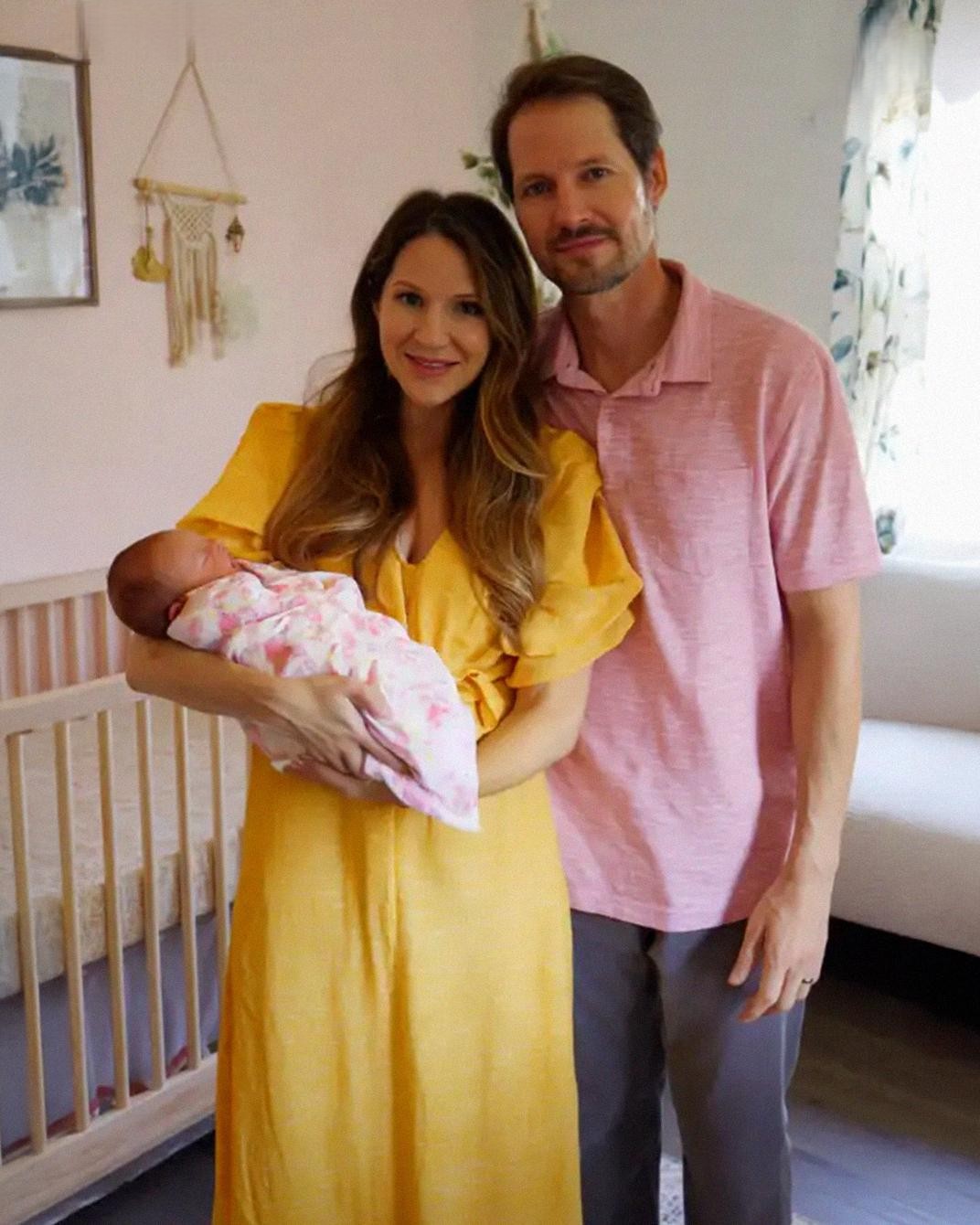
My wife and I thought the hardest part of becoming parents was already behind us. Years of waiting, paperwork stacked like bricks, hope stretched thin by disappointment—we thought once our daughter came home, the fear would finally end. We were wrong. Four weeks after she entered our lives, everything we loved was threatened by a single message that almost destroyed us.
My name is Eric, I’m thirty-six years old, and this is the story of how close we came to losing the one thing my wife had ever wanted more than anything else.
Megan had wanted to be a mother long before adulthood complicated things. I met her in college, where she kept a baby-name book next to her laptop, the way other students kept textbooks. She spoke about children as some people speak about destiny—quietly, seriously, as if it were already written. Over the years, she saved nursery ideas, folded tiny clothes bought on sale, and smiled bravely whenever another friend announced a pregnancy. When the house went quiet afterward, I understood why.
After we got married, we tried—hard. For eight years, our lives revolved around calendars, medications, appointments, and the fragile optimism that tomorrow might be different. Megan tracked everything with surgical precision. We spent money we didn’t have on treatments that promised hope but delivered nothing. Twice, we lost pregnancies early. Each loss carved something in her that never fully healed. Eventually, the doctors stopped offering encouragement. Infertility became a word that followed us everywhere.
Adoption came next, but even that wasn’t simple. Megan hesitated, not because she didn’t want to love a child, but because she feared missing the beginning. She wanted the sleepless nights, the hospital bracelet, the feeling that life had shifted forever in one moment. We decided to adopt a newborn. That decision led us to Melissa.
She was eighteen, nervous, heartbreakingly young. She sat rigidly in her chair during our first meeting, hands tightly folded, eyes darting as if expecting judgment. She told us she wasn’t ready to be a mother, that her life was unstable, and that she wanted her baby to have the safety she couldn’t provide. Megan reached for her hand without thinking. There were no tears that day, only exhaustion and quiet resolve.
The paperwork moved quickly after that. Classes, background checks, signatures. One week later, our daughter was born. We named her Rhea. Megan held her as if the world had finally exhaled. For the first month, our home dissolved into chaos and joy. Bottles everywhere. No sleep. Endless photos. Megan slept in the nursery chair, one hand always near the bassinet, as if letting go might make it all disappear.
We were happy in a way that felt unreal.
Then one night, I came home and found Megan on the couch, staring straight ahead. Her eyes were swollen, her face hollow. She didn’t look up when I spoke.
“We’re not parents anymore,” she said.
The words didn’t make sense. They felt wrong in my ears. She told me to check her email. The message was formal, detached. Under state law, the birth mother had thirty days to revoke consent. Melissa had contacted the agency. She wanted Rhea back.
My knees nearly gave out. Rhea was upstairs, sleeping, unaware that the ground beneath her had shifted. Megan clutched the baby monitor like it was oxygen. She kept saying Rhea knew her voice, that this couldn’t be undone. I promised we would fight, even though I had no idea how.
Then came the knock.
When I opened the door, Melissa was there. She looked different—straighter, composed, as if fear had been replaced with something harder. She asked to come in. Megan stood behind me, arms crossed tightly, bracing herself.
Melissa sat down and spoke calmly. She said she wasn’t there to take the baby that night. She needed to talk. Then she said the word that turned my blood cold:
Money.
She explained plainly. She wasn’t ready to be a mom, but she knew her rights. She could reclaim Rhea unless we paid her to walk away. Fifteen thousand dollars. Cash. No paper trail.
Megan made a sound I’ll never forget. It wasn’t crying. It was something breaking.
I didn’t yell. I didn’t beg. Something inside me went still. I asked questions calmly: how much, how she expected it to work. She answered without hesitation. She had rehearsed this. What she didn’t know was that our security system was recording everything. My phone was recording too.
When she left, I locked the door and told Megan we had proof.
The next morning, we called a lawyer. He listened, reviewed the recordings, and told us the truth would protect us—but it would be a fight. And it was. Months of hearings. Accusations. Melissa tried to change her story, but the recordings didn’t lie. Megan sat through every session with quiet strength, her eyes never leaving the judge.
When the ruling came, the courtroom was silent.
The judge said a child is not property. Attempting to sell parental rights was extortion. Melissa’s rights were terminated permanently.
Megan cried the way people cry after surviving something that almost kills them.
When we brought Rhea home that day, Megan didn’t let go. She kissed her head again and again, as if anchoring her to us with sheer will. The fear didn’t vanish overnight, but it loosened its grip.
Love didn’t end with that knock on the door. It revealed itself. In staying. In fighting. In refusing to let fear win.
Megan never missed the beginning. She lived it. And Rhea will grow up knowing she was chosen, protected, and loved with everything we had.