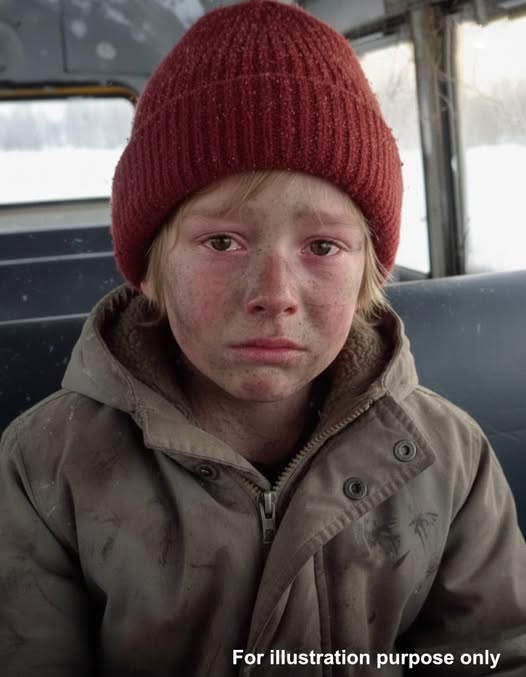
The cold that morning was brutal, biting through even the thickest coat and scarf. Yet it wasn’t the weather that stopped me—it was the quiet, almost muffled sob coming from the very back of my school bus. I froze in my tracks, and what I found there that day changed far more than just a single morning.
My name is Ronas. I’m 45, a school bus driver in a small town most people have never heard of. I’ve been behind that wheel for over fifteen years, rain or shine, snow or sleet, thick fog or scorching sun. Yet, in all that time, I never imagined that one small act of kindness could grow into something so much larger.
I get to the bus before dawn every day. Unlock the gate. Climb the steps. Start the old heater. By the time the kids arrive, the bus smells faintly of oil and warm metal, and there’s a steady hum from the engine that almost feels comforting. It’s not glamorous work—never has been—but it’s steady, and I show up because those kids matter.
I’d thought I’d seen it all when it came to children and families. But last week, I realized I’d barely scratched the surface.
Tuesday morning began like any other, except the cold was fierce—the kind that creeps in and settles in your bones, refusing to leave. My fingers stung as I turned the key in the ignition. I blew warm air over my hands, stomped the frost off my boots, and called out to the children gathering on the sidewalk.
“All right, hurry up, kids! Get in fast—the cold’s biting hard this morning!”
Laughter echoed as the little ones boarded: jackets zipped tight, scarves flying, boots clomping.
“You’re so funny, Ronas!” piped a small voice.
I looked down. Little Hark, five, her bright pink pigtails bouncing, stood at the bottom of the steps with mittened hands on her hips like she owned the bus.
“Tell your mommy to buy you a new scarf!” she teased, eyeing my threadbare blue one.
I crouched down and whispered, “Sweetie, if my mom were still around, she’d knit me one so nice it’d make yours look like a rag. I’m jealous!” I gave her a mock pout.
She giggled, skipped past me, and settled into her seat, humming a happy tune. That quick moment warmed me more than the bus heater ever could.
I waved to the waiting parents, nodded to the crossing guard, closed the doors, and started the route. I’ve grown to love the rhythm of this job—the chatter, the sibling squabbles, the whispered secrets shared like state secrets.
Not wealthy, mind you—my wife Vivy reminds me every month.
“You earn next to nothing, Ronas!” she scolded last week, arms crossed over a rising electric bill. “How are we supposed to cover everything?”
“Peanuts have protein,” I mumbled.
She didn’t laugh. But I love this job. There’s joy in helping kids, even if the paycheck is small.
After drop-off, I always stay a few minutes to check the seats. No forgotten homework, mittens, or half-eaten granola bars. That morning, halfway down the aisle, I heard it—a soft sniffle from the very back.
I froze.
“Hey?” I called gently, moving toward the sound. “Anyone still here?”
There he was: a quiet little boy, maybe seven or eight, curled against the window in a thin coat pulled tight around him. His backpack sat untouched on the floor.
“Buddy? You okay? Why aren’t you heading to class?”
He wouldn’t look at me, just shook his head.
“I’m… just cold,” he whispered.
I knelt down, suddenly alert. “Can I see your hands?”
He hesitated, then slowly extended them. Blue. Stiff. Swollen.
“Oh no,” I murmured. Without a second thought, I slipped my gloves off and placed them over his tiny hands. They swallowed his fingers completely, but at least they were warm.
“They’re too big, I know, but they’ll keep you warm for now.”
His eyes, red and watery, met mine.
“Did you lose yours?” I asked.
He shook his head. “Mommy and Daddy said they’ll buy new ones next month. The old pair tore. But it’s okay. Daddy’s trying.”
I swallowed hard. That quiet struggle, that feeling of falling short—I recognized it instantly.
“Well,” I said with a wink, “I know a lady who runs a shop nearby with the warmest gloves and scarves around. I’ll pick something up for you after school. Deal?”
A small smile broke through. “Really?”
“Really.” I squeezed his shoulder and ruffled his hair.
He stood, oversized gloves flopping like flippers, hugged me fiercely, grabbed his backpack, and dashed toward school.
That day, I skipped my usual coffee stop. I walked straight to the little shop down the block. Not fancy, but solid goods. I explained the situation to the owner, Josep, a kind woman, and picked a thick pair of gloves and a navy scarf striped in bright yellow—perfect for a kid. I spent my last cash without regret.
Back on the bus, I placed the gloves and scarf in a shoebox behind my seat. On top, I wrote:
“If you’re cold, take what you need. —Ronas, your bus driver”
I didn’t tell anyone. Just my quiet way of being there for kids who couldn’t ask.
That afternoon, no one mentioned the box. But I noticed a small hand reach in and take the scarf. The boy. He tucked it inside his coat, didn’t look up, but he wasn’t shivering anymore. He smiled.
That could have ended there. But it didn’t.
Later that week, the principal called.
“Ronas, can you come to the office?”
My stomach sank. Had I done something wrong?
Mr. White greeted me warmly, folder in hand.
“You did something wonderful,” he said. “That boy you helped—Bennett? His family has been struggling. His father, Cell, is a firefighter who got injured on duty. What you did for Bennett meant the world to them.”
I was speechless.
“You did more than warm his hands,” Mr. White continued. “You reminded everyone what community means. Word of your box spread. Now we’re launching something bigger—a school-wide fund for winter gear. Coats, gloves, scarves. No questions asked. It all started with you.”
I stared. “I didn’t mean to start anything big. I just couldn’t let a kid freeze.”
“That’s exactly why it matters.”
Word spread. A bakery donated hats and mittens. Parents brought gently used coats. A retired teacher knitted caps. Josep offered ten pairs of gloves weekly.
By mid-December, the shoebox became a large bin. Kids left notes: “Thank you, Mr. Ronas. Now no one teases me about no gloves.” Each note filled my heart.
Then came the day I’ll never forget.
Bennett ran toward the bus waving a drawing—me in front of the bus, surrounded by smiling kids holding gloves and scarves. At the bottom, in big shaky letters: “Thank you for keeping us warm. You’re my hero.”
I taped it by my steering wheel, where I still see it every day.
Weeks later, his aunt delivered a card and gift card, thanking me for noticing him.
By spring, the school held an assembly in my honor. Mr. White called my name, and I walked to the stage as kids cheered, parents cried, teachers clapped. The project I started—the Warm Ride Project—had spread to other schools and buses. No child faced cold hands anymore.
Then Bennett brought his father, Cell, onto the stage. “Mr. Ronas,” he said, “this is my dad.”
Cell shook my hand and whispered, “Your kindness saved me too.”
For the first time in years, I felt real pride—not in just driving safely or being on time, but in noticing, in showing up, in one small act of warmth that grew into something far bigger.
One pair of gloves. One scarf. One child no longer shivering. And a whole community reminded what it means to care.