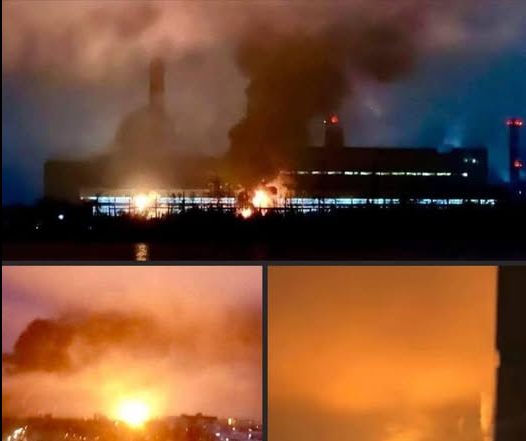
The warning was not a drill. It was not a simulation or a practice message meant to be ignored after a brief spike of concern. It hit screens, radios, and phones in a wave of cold, clinical urgency that somehow still felt intensely, almost cruelly personal. Across the globe, from sprawling cities to tiny villages, the alert pulsed like a heartbeat in the collective consciousness, impossible to turn off or dismiss. Governments labeled it “precautionary,” and yet the phrase sounded hollow against the pounding anxiety that spread faster than any official broadcast. People heard something else entirely. They heard history clearing its throat, the sound of decades of unresolved tensions pressing forward into the present. In border towns, families froze mid-conversation, parents halted mid-bite as children’s eyes widened; in capital cities, commuters paused on subways and sidewalks; in suburban neighborhoods, lawnmowers stopped mid-lawn, dinners cooled on tables, and televisions flickered with the faces of anchors attempting calm explanations that nobody fully absorbed. Across the spectrum, from the wealthiest enclaves to the most remote hamlets, the alert created the same pause, a moment of collective breathing that was neither peaceful nor calm, but charged, electric, and deeply human.
Across continents, the alert revealed a harsh, uncomfortable truth: the world had been drifting toward this moment for years, if not decades. Conflicts once distant, once safely confined to maps in history books or the back pages of newspapers, now seeped into daily life in ways both subtle and devastating. Price spikes at grocery stores, surging energy costs, political rants on social media feeds, rumors traveling faster than official statements—all were threads connecting ordinary people to the larger, often terrifying realities of international tension. What officials tried to frame in measured, almost antiseptic language—stay informed, stay calm—could not entirely mask the undercurrent of fear that no amount of instruction could contain. Beneath the surface of every statement, every press briefing, every carefully worded bulletin, there was a hidden plea aimed not at citizens, but at leaders themselves: step back before the brink becomes a point of no return. This was never about a single flashpoint, a single missile, or a single political miscalculation. It was about the immense, intricate system of alliances, rivalries, mistrust, and unfinished grievances that had quietly but inexorably been carrying the world toward a threshold it might not survive. The message, even in its calmest form, was a warning that the human tendency to escalate conflicts, to underestimate consequences, and to trade patience for pride could no longer be ignored.
Yet within the dread, there was a fragile opportunity—one that could only be seized if awareness turned into deliberate action. The alert forced a reckoning with how interdependent nations and communities had become, how closely the fates of millions now intertwined. It reminded everyone that even minor miscalculations, careless rhetoric, or impulsive decisions could spiral into catastrophes, drawing in innocent bystanders and destabilizing systems thought immutable. In this light, the warning became more than a message of fear; it was a mirror reflecting humanity’s shared vulnerability, the delicate lattice of politics, commerce, ecology, and culture on which modern life rests. If dialogue, patience, and restraint could prevail over aggression, miscommunication, and hubris, this moment might one day be remembered not as the opening of a cataclysm, but as the jolt that pulled the world back from the edge. It could be recalled as the day millions recognized, almost simultaneously, that peace is not a passive inheritance—it is an ongoing, deliberate choice. It must be chosen again and again, by leaders and citizens alike, in words and deeds, in policy and empathy, in every quiet action that resists the pull of fear, anger, and division.
The alert, brief and terrifying, stretched far beyond the moment it arrived. It became a lens through which humanity glimpsed its own fragility, and perhaps, its own resilience. It reminded families, governments, and individuals that they were not separate actors on a stage, but part of an interconnected drama in which the choices of one echo across oceans, continents, and generations. In this sense, the warning was both a hammer and a hand extended—a call to vigilance, yes, but also a plea for care, for connection, for conscious navigation of a world that might easily tip from ordinary life to unimaginable consequence. Those who paused, those who listened, those who remembered their shared responsibility, were given a rare gift: a chance to step back, breathe, and insist that, for now, humanity’s collective story continue not in catastrophe, but in careful, deliberate survival. And in that pause, brief though it might be, millions understood the quiet truth: peace is not inevitable. It is always a choice, and its continuation depends on courage, empathy, and the willingness to act before the edge becomes the end.