I went to my sister’s wedding knowing she was marrying my ex-husband. I told myself I would stay quiet, smile when necessary, and slip out early, avoiding eye contact as much as possible. I had rehearsed it in my head countless times—stand at a safe distance, nod at acquaintances, let the photographers capture my polite, composed face. But life, as it often does, had other plans.
From the moment I walked into the vineyard, the scent of fresh flowers and crushed grass hit me like a memory. The sunlight danced across rows of grapes, the kind I had once imagined we’d stroll through as a family—me, Corbin, and perhaps children of our own. I stopped myself from staring too long, from letting the ghost of the life I thought I had built take over.
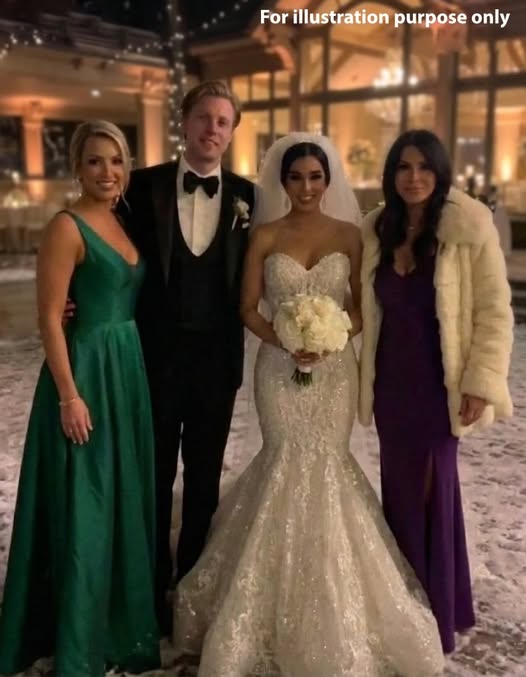
Camille was radiant. The dress fit her like it had been painted onto her frame. Her hair caught the sunlight in waves of gold, and her laughter, light and airy, cut straight through the tight knot in my chest. Guests whispered, complimenting her choice of flowers, the delicate lace, and the soft pastels of the bridesmaids’ dresses. My hands tightened around my clutch. I told myself to breathe. Slowly. Deeply. Count to ten.
Corbin stood at the altar, looking calm, collected, and utterly oblivious to the storm I carried in silence. His suit was perfect—tailored, pressed, the kind that made him look untouchable. I remembered the first time I’d seen him in a suit: our wedding day, in that small chapel, Dad whispering, “You ready?” I had nodded, eyes full of hope, dreaming of a life with him. I wanted to remember the man I thought I married, the man I had loved, not the one who betrayed me and walked so easily into my sister’s arms.
The ceremony began. Vows were exchanged with practiced elegance, smiles frozen in place. I tried to focus on the words, the beauty of the moment, the gentle notes of the string quartet—but every syllable bounced against the hollow ache inside me. Camille’s voice carried over the small crowd, sweet and confident. “I take you to be my partner, my equal, my confidant,” she said. And I wondered if she had paused to think about the person she was marrying—the past he carried, the lives he disrupted.
Corbin’s vows were measured, calm, almost emotionless. “I will stand by you,” he said, voice even. I felt a chill. I had heard those same words four years ago, and yet they had meant nothing when directed at me. I remembered sitting across from him in our kitchen, fork in hand, when he told me he didn’t think he was meant to be a husband. That quiet moment had destroyed me more thoroughly than any shouting, any argument could.
The reception followed—a blur of clinking glasses, polite laughter, and music carefully chosen to mask discomfort. Camille’s friends were effusive in their praise, showering the couple with compliments, commenting on their compatibility, the way they lit up each other’s lives. Corbin’s mother, who had once welcomed me into her home with warmth and affection, smiled proudly, as if nothing had changed.
I took my seat with my parents, positioning myself at the edge of the long table, far from the newlyweds. My mother’s hand found mine, and she squeezed gently. “Breathe, Valeria. Just breathe.” But even as I obeyed, counting in silence, I felt the weight of every memory, every slight, every moment of betrayal.
Then came the toasts. Friends, cousins, colleagues—each one spoke of love, destiny, and perfect matches. My stomach churned, and I imagined turning invisible, fading into the polished wood and white linens. I was halfway through pretending the world was as it should be when Dad grabbed the microphone.
“There’s something you all should know about the groom,” he said. The room quieted immediately. Conversations stuttered to a halt. Guests leaned forward, curious, smiling politely, expecting warmth, a charming anecdote. Corbin’s face went pale, his hands tightening into fists.
Dad didn’t falter. He was always a man of quiet authority, the kind of presence that demanded attention without raising his voice. “A few years ago,” he began, eyes sweeping the room, settling briefly on me, “right after he married my daughter, this man came into my living room. He sat across from me and told me he wanted to build a strong home, to provide so my daughter could have options—to stay home with children someday if she wanted. He asked for guidance, introductions, connections, even help securing a home.”
Murmurs spread like a ripple across the tables. Faces turned toward Corbin, watching for signs of guilt, shame, or remorse. Camille shifted in her seat, her hand lightly brushing his arm, but he didn’t look at her. He didn’t look at me either.
Dad continued, voice steady, deliberate. “I gave him advice. I made calls. I connected him with people who could help him succeed. I even assisted with the down payment on their first house. Not because he begged for money, but because he promised he wanted a future with my daughter. He promised me.”
The room went still. A few guests gasped quietly. Some looked to each other, unsure what to say. My chest tightened so severely I thought I might not be able to breathe. All those years of quiet suffering, of pretending everything was fine, of the lonely nights and whispered tears—Dad had just spoken the truth I had been too hurt, too stunned, too angry to voice.
“And then,” Dad said, voice rising with restrained anger, “he decided he no longer wanted to be a husband. That promise meant nothing. The trust, the love, everything he swore to me—it all meant nothing.”
I swallowed hard. I had rehearsed what I might say if this moment came. But hearing it spoken aloud, in front of everyone, stripped of pretense, left me momentarily speechless. Camille’s hand tightened around Corbin’s arm. I saw a flicker of panic in her eyes, but her mouth stayed shut.
I finally stood. My legs felt heavy, as if cemented to the floor, yet I knew I had to move. I passed through the crowd slowly, feeling the weight of countless stares, of whispered judgments, of silent questions. I stopped before Camille, my voice steady. “I’m going. Good luck with the leftovers, Camille.”
Dad rose beside me, followed by Mom, then my aunt, uncle, cousins. Guests shifted uncomfortably, unsure how to react. For a moment, I imagined leaving the vineyard forever, leaving behind the life that had been stolen, leaving behind the betrayal, the pain, the memory of the man who had used me.
Outside, the air was cool and heavy with the scent of vineyards and evening dew. I stepped into it, heart pounding but steady, feeling for the first time in years that I was moving on my own terms. Dad climbed into the car beside me, Mom in the back. No one spoke for a long stretch of road.
Finally, Dad exhaled slowly. “I should have spoken up sooner.”
“No,” I said softly. “You spoke when it mattered most.”
He nodded, eyes fixed on the dark horizon. For the first time in what felt like forever, I allowed myself to breathe deeply, to let the rage and grief and betrayal settle into a quiet resolve. Corbin had used me, my father’s trust, everything I had offered. Camille had chosen him anyway. But here, in the cool night, in the presence of my parents’ quiet support, I realized I didn’t have to carry it alone anymore.
I didn’t need the reception, the speeches, the tears of strangers, the carefully curated smiles of friends. I only needed this truth spoken aloud, the silent solidarity of my family, and the knowledge that I was free to stop pretending.
And in that moment, I understood the true gift of the day. Not the wedding. Not the vows. Not the wine or flowers or music. The gift was honesty, clarity, and the permission to finally walk away unburdened, my own life waiting, untangled from deceit, ready to be reclaimed.