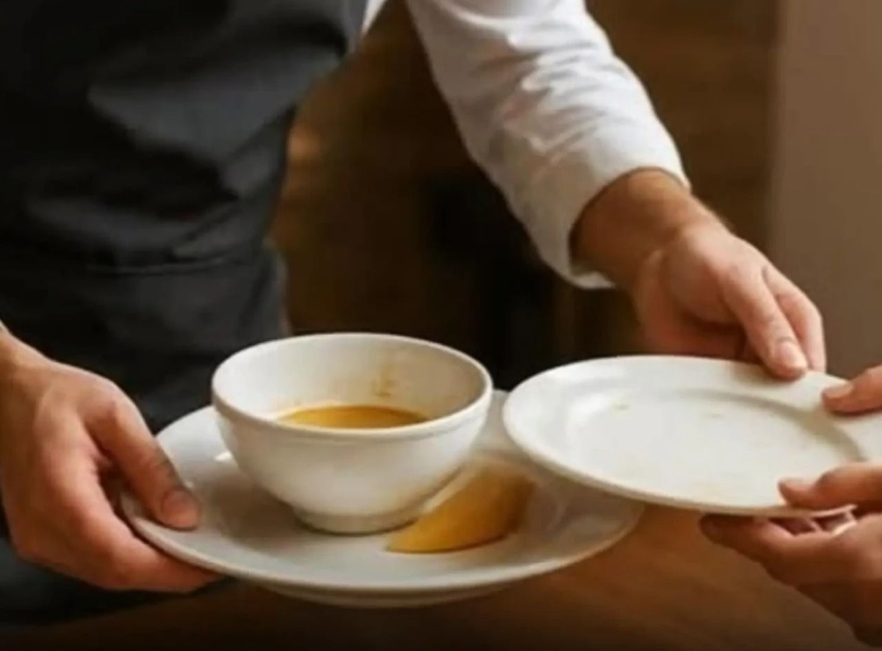
It’s a small moment that often goes unnoticed: a plate gently nudged toward the edge of the table, glasses gathered together, a hand reaching out to help a server balancing dishes in a crowded dining room. Helping a waiter may seem insignificant, but psychologists say this simple act can reveal a lot about how a person relates to the world around them.
At first glance, it might appear to be basic politeness or habit. Some people learned it as children, others picked it up from working in service jobs. But beneath the surface, this behavior reflects deeper patterns of empathy, social awareness, and perception of others—traits that appear across many areas of life.
Psychologists often see this gesture as a strong indicator of empathy. Empathy isn’t just feeling bad for someone who’s upset; it’s the ability to recognize another person’s experience without being prompted. When someone helps a server, they notice the mental and physical load of the job and respond to something unspoken.
This awareness is a key component of emotional intelligence. Emotionally intelligent people instinctively scan their environment, noticing who is overwhelmed, uncomfortable, or under pressure. They don’t need dramatic cues; subtle signals are enough.
Helping a server is rarely performative. It doesn’t usually earn praise and is often barely acknowledged. That’s what makes it meaningful: it shows the act comes from internal values, not external recognition. The person helps because it feels natural, not because they expect to be noticed.
This gesture also reflects respect for roles society often undervalues. Service workers operate in the background, their labor often taken for granted. When someone assists them, it signals they see the worker as a person, not just a function.
Research consistently shows that how people treat those with less social power reveals more about character than how they treat peers or authority figures. Kindness toward someone who “can’t give you anything” is one of the clearest signs of genuine decency.
It also shows humility. Helping a server means stepping briefly out of the “guest” role and sharing responsibility. It communicates, “I’m not above this.” People who do this are comfortable with flexible social hierarchies, seeing dignity as coming from behavior, not status.
Additionally, it demonstrates cooperation. Modern social settings often reinforce strict divisions: diners sit, servers serve. Breaking that script respectfully shows adaptability and willingness to make things easier for someone else.
Psychologists note that people who show these small cooperative behaviors often do so in other areas: helping colleagues without being asked, noticing when someone is struggling, or taking on unglamorous tasks to keep things running smoothly. They are reliable, not for recognition, but because they are attuned to shared outcomes.
This gesture also reflects comfort with control and boundaries. Some people hesitate to intervene in situations that aren’t explicitly theirs. Helping a server requires trust that your assistance will be understood, not intrusive—a sign of social confidence and low anxiety about judgment.
Context matters, of course. Not helping doesn’t mean a lack of empathy. Some servers prefer no assistance. Cultural norms vary. What matters is the pattern: empathic people look for ways to ease others’ burdens when appropriate. Clearing a plate is just one visible sign of that mindset.
There’s also a cognitive component: perspective-taking. Helping a server means imagining what the job requires at that moment. Perspective-taking is essential in healthy relationships, allowing someone to anticipate needs, avoid conflict, and respond thoughtfully.
In long-term relationships and friendships, small anticipatory acts often matter more than grand gestures. Remembering to refill someone’s water, noticing when they’re tired, or picking up the slack quietly all rely on the same psychological skill as helping clear a table.
Early social learning can also play a role. People raised in environments where mutual aid was normal are more likely to carry that instinct into adulthood. Helping feels natural, not disruptive.
Helping a server also requires tolerating small risks: awkwardness, the possibility of plates clattering, or being told, “I’ve got it.” People who offer help despite these risks value intention over perfection, which often correlates with resilience. They navigate uncertainty well, learn from mistakes, and remain emotionally steady under pressure.
Psychologists consistently emphasize that character isn’t revealed in dramatic moments but in quiet, automatic choices made when no one is keeping score. Helping clear a table doesn’t change the world, but it shows how someone moves through shared space—with awareness, respect, and a willingness to lighten someone else’s load.
In a culture that celebrates loud confidence and visible success, these understated behaviors can be overlooked. Yet they are often the foundation of trust, cooperation, and genuine connection. Helping a waiter isn’t about being “nice”; it’s about being attentive. And attentiveness—quiet, consistent, unassuming—is one of the strongest indicators of emotional maturity.