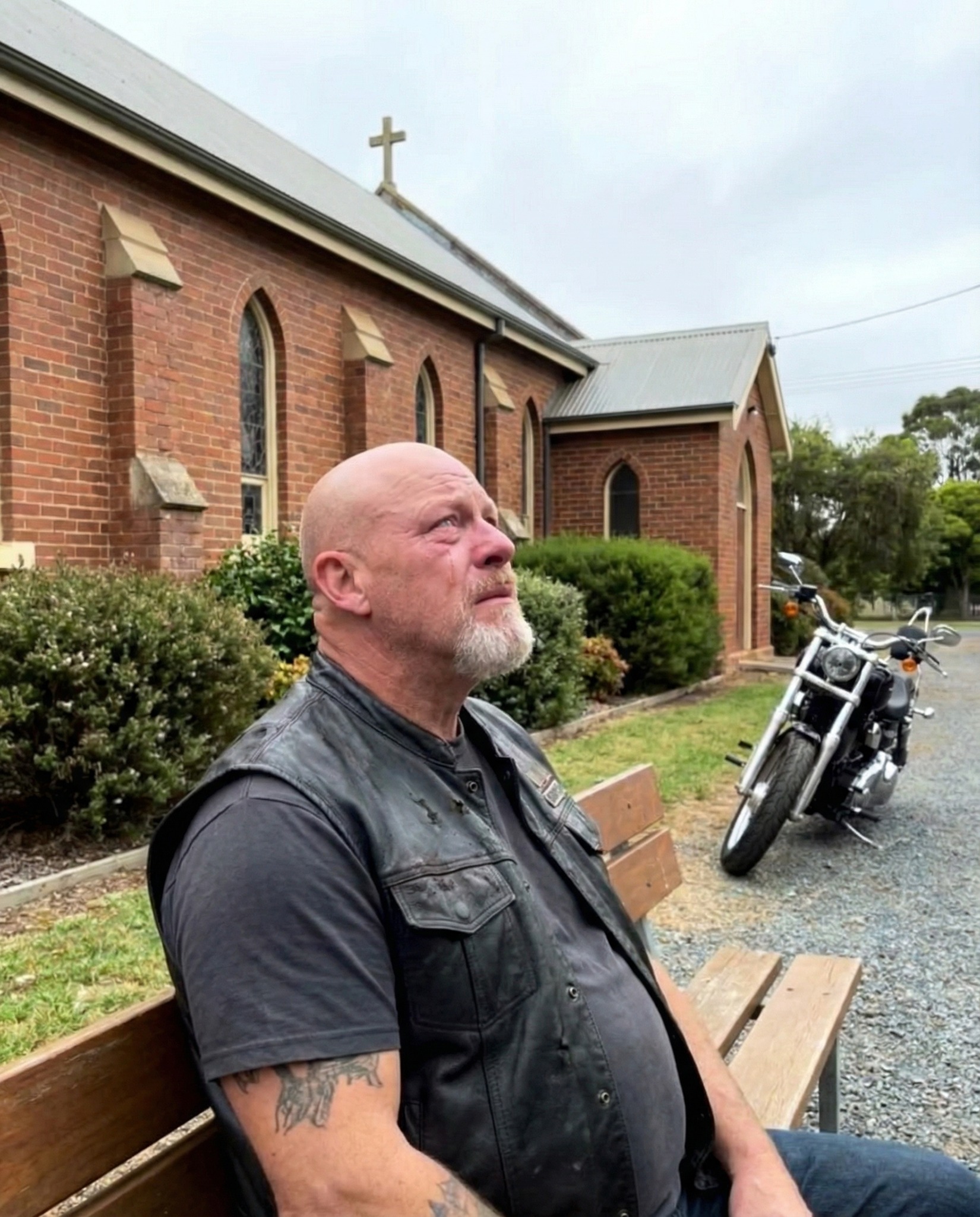
They told me I was no longer allowed to serve communion because my Harley “gave the wrong impression.”
That’s how forty-three years of service came to an end—not with gratitude, not with a conversation about faith or theology, but with a comment about appearance. One sentence, delivered by a pastor young enough to be my son, spoken in the same sanctuary where I had taught Sunday school, buried my wife, and stood as a fifteen-year-old to be baptized.
I had been a deacon at First Baptist longer than he had been alive. I was there every Sunday unless sickness made it impossible. I gave faithfully, in seasons of abundance and in seasons of struggle. I drove the church van for twenty years, repaired the roof twice, and rebuilt the playground with my own hands. But one afternoon at a church picnic, when I arrived straight from visiting shut-ins—still wearing my riding gear—everything shifted.
The new pastor pulled me aside and explained that my motorcycle clashed with the church’s “family-friendly image.” He spoke calmly, professionally, as if we were discussing décor. He said appearances mattered. That visitors might misunderstand.
What hurt most wasn’t losing the role. It was later overhearing him tell the youth group that “Brother Mike is exactly why we need to be careful about the company we keep.”
As if I were a liability. As if I were dangerous.
After that, I kept my head down. I didn’t want conflict. I stopped wearing my Bikers for Christ patch. I started attending the early service, sitting in the back, leaving before anyone could linger. I told my riding brothers I was just taking a step back. I made excuses, because the truth was too painful to voice.
But Sarah Williams noticed. She always does. She taught my daughter kindergarten thirty years ago and has missed nothing since. She stopped me in the grocery store aisle and told me plainly that I wasn’t fooling her. Standing between canned beans and cereal boxes, I finally told her everything.
Her expression hardened instantly.
“That young fool,” she said quietly. “He has no idea what he’s done.”
I assumed that was the end of it.
It wasn’t.
The following Sunday, the parking lot was full for the early service—and filled with motorcycles. Dozens of them. Chrome and leather gleaming. Christian Riders. Veterans. Men I’d prayed with beside campfires and on lonely stretches of highway. They were parked right up front, as if they belonged there.
Inside, the sanctuary was packed. Leather vests sat beside Sunday dresses. Pastor Davidson looked unsettled, his sermon notes shaking in his hands.
Then Sarah stood.
She didn’t ask permission. She walked to the front and spoke clearly, leaving no room for misunderstanding.
She told the congregation who I was. What I had given. The decades of quiet service that never made the bulletin. She told them I hadn’t been removed for wrongdoing or failure—but because I rode a motorcycle.
The atmosphere shifted. Murmurs spread. Heads turned.
Others stood up. One man spoke of his son, lost to addiction, who found faith at a bike rally because I sat with him for hours and listened. Another spoke of prayers at hospital beds, of roadside baptisms, of second chances no one else would offer.
The pastor tried to regain control, talking about procedure and proper channels.
Someone interrupted him—and accused him of misleading the deacon board.
The silence that followed was heavy.
When I finally stood, my knees trembled, but my voice held steady. I asked when we decided faith had a dress code. When Jesus began evaluating people by what they drove.
No one answered.
The board met that night. I wasn’t there. I didn’t need to be. The decision was nearly unanimous. I was reinstated. A public apology was planned.
But I wasn’t sure I wanted it.
Two days later, the pastor came to my home. Without the pulpit, he seemed smaller. Worn. Uneasy.
He apologized—without deflection. He spoke about his upbringing, fears he hadn’t recognized, and how he had mistaken respectability for righteousness.
I told him the truth: my motorcycle wasn’t just recreation—it was ministry. That shame has no place in the gospel. And that if I returned, I wouldn’t do so quietly.
He listened. Truly listened.
That Sunday, I served communion wearing my leather vest. No one flinched. The apology came—public and sincere. Soon after, the church partnered with local motorcycle ministries. The pastor asked me to teach him how to ride.
Three months later, he passed the safety course. Bought a small bike. Awkward. Careful. But willing.
Last week, a family arrived on an old, battered Harley. Tattoos. Nervous smiles. Once, they might have left early.
Instead, they were welcomed.
Their son joined the youth group. They stayed for potluck. They returned the following Sunday.
I wear my deacon badge on my vest now. Sometimes I arrive on two wheels, sometimes four. No one keeps score anymore.
Because the church remembered what it had forgotten.
Grace doesn’t inspect appearances. Faith doesn’t care how you arrive. And the ground really is level—whether you walk in, drive in, or roll up with an engine still ticking as it cools.
Sometimes, the road back to what truly matters starts with a little noise.